
4 Standing Seam Roll Formers Selected for Austrian Roofing Teams
These are the first four machine families from the original XC product selection. Product URLs and images remain unchanged. Austria-fit notes describe configuration direction only; final structural and building-physics verification remains with the project designer and local authority.

Custom Mechanical Lock Standing Seam Panel Former Manufacturers, Company
Austria fit: high snow-load seam integrity, wind-uplift resistance, CE-ready documentation and 230/400 V 50 Hz configuration.
View Austria-Ready Specification
China Nail Strip Standing Seam Panel machine Manufacturer, Factory
Austria fit: clip-free fixing logic, fast installation for residential and light-commercial roofs, and profile review for local panel widths.
View Austria-Ready Specification
China Snap lock Standing Seam Panel machine Manufacturers, Factory
Austria fit: concealed fasteners, controlled seam-leg fit and architectural roof lines for Vienna, Linz, Graz and Salzburg projects.
View Austria-Ready Specification
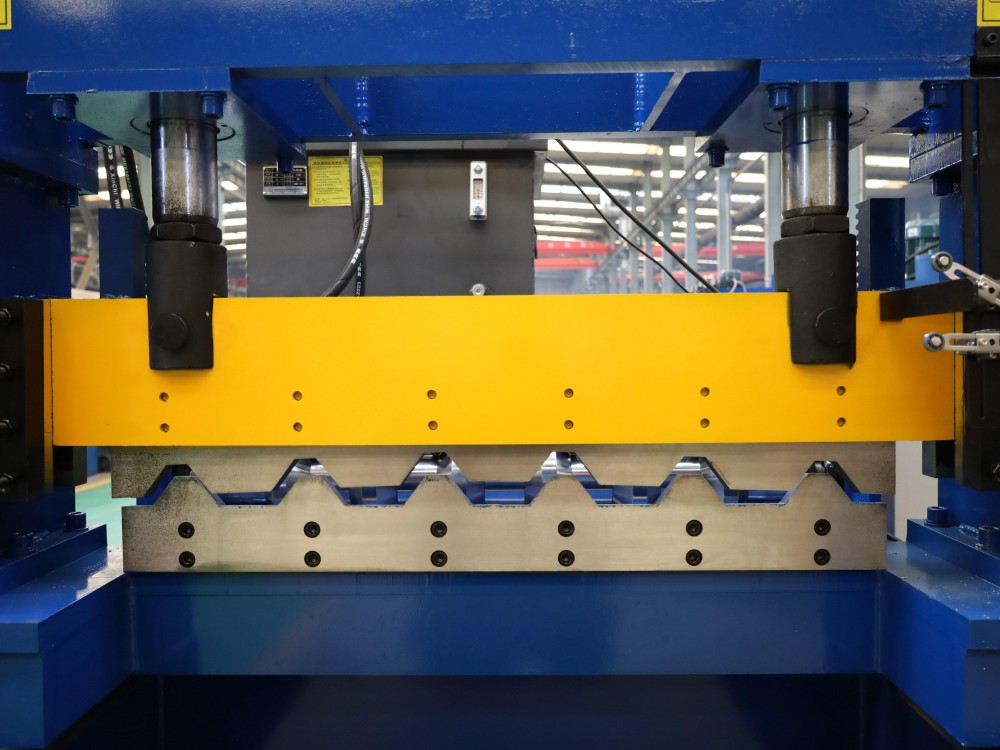
ODM Tuff rib panel(AG Panel) forming machine Company, Companies
Austria fit: agricultural, post-frame and utility buildings requiring repeatable rib height, clean lap fit and robust high-volume output.
View Austria-Ready SpecificationFor Austrian projects, the profile, seam system, clip, panel span and load assumptions must be verified together using EN 1991-1-3 snow load, EN 1991-1-4 wind action and the applicable building-product and execution standards. XC supports the machine and profile review; it does not replace the project engineer or notified body.
20+ Years, 50,000 m² and 1,000+ Clients: the Factory Behind the Line
Austria's Standing Seam Market: Alpine Loads, High Labour Costs and a Documentation-First Buying Culture
Austria's standing seam market is shaped by geography as much as by architecture. From the Danube corridor and Vienna's commercial infill to the Alpine valleys of Tyrol, Salzburg and Vorarlberg, a roof may need to resist heavy snow, wind-driven rain, freeze-thaw cycles and summer UV while remaining visually consistent across long elevations. This is why Austrian contractors, metal roofers, façade specialists and prefab building producers tend to evaluate a standing seam roll former by the stability of its flower pattern first, and by price second. A machine that produces a beautiful sample in mild conditions but drifts at the seam leg on a 0.5 mm coated coil can consume the margin of an entire project through call-backs, panel waste and delayed handover.
The Austrian construction economy is not a volume-only market. Labour costs are high, installation windows are tight, and documentation expectations are serious. Building owners, structural engineers and insurers ask for traceability: coil certificates, profile dimensions, seam type, clip spacing, load assumptions and maintenance guidance. For a factory or roofing contractor, that means a roll former must be more than a steel frame with rollers. It must be a repeatable production system with a profile-specific roll pass design, controlled strip guidance, stable hydraulic cutting, and a control package that an operator can run in German or English without guesswork.
Austria is a reference market for concealed-fastener metal roofing because standing seam solves several local problems at once: fewer penetrations, long panel runs, clean aesthetics for visible elevations, and a natural path to solar-ready roofs. Vienna, Graz, Linz, Salzburg and Innsbruck each have different project mixes, from urban infill and renovation to logistics halls, alpine tourism infrastructure and agricultural buildings. The common thread is that the profile must work with the building envelope, not just pass through the mill.
For overseas procurement teams, Austria is also a demanding entry point to the EU. A supplier that can satisfy an Austrian buyer with clear CE documentation, German-language operator support and evidence of factory testing is usually well prepared for Germany, Switzerland, Italy, the Czech Republic, Hungary and Slovenia. The opposite is also true: unresolved issues in Austria tend to surface quickly, which is why the best factory partners treat compliance and service as part of the machine, not as afterthoughts.
Inside an Austria-Ready Standing Seam Roll Former
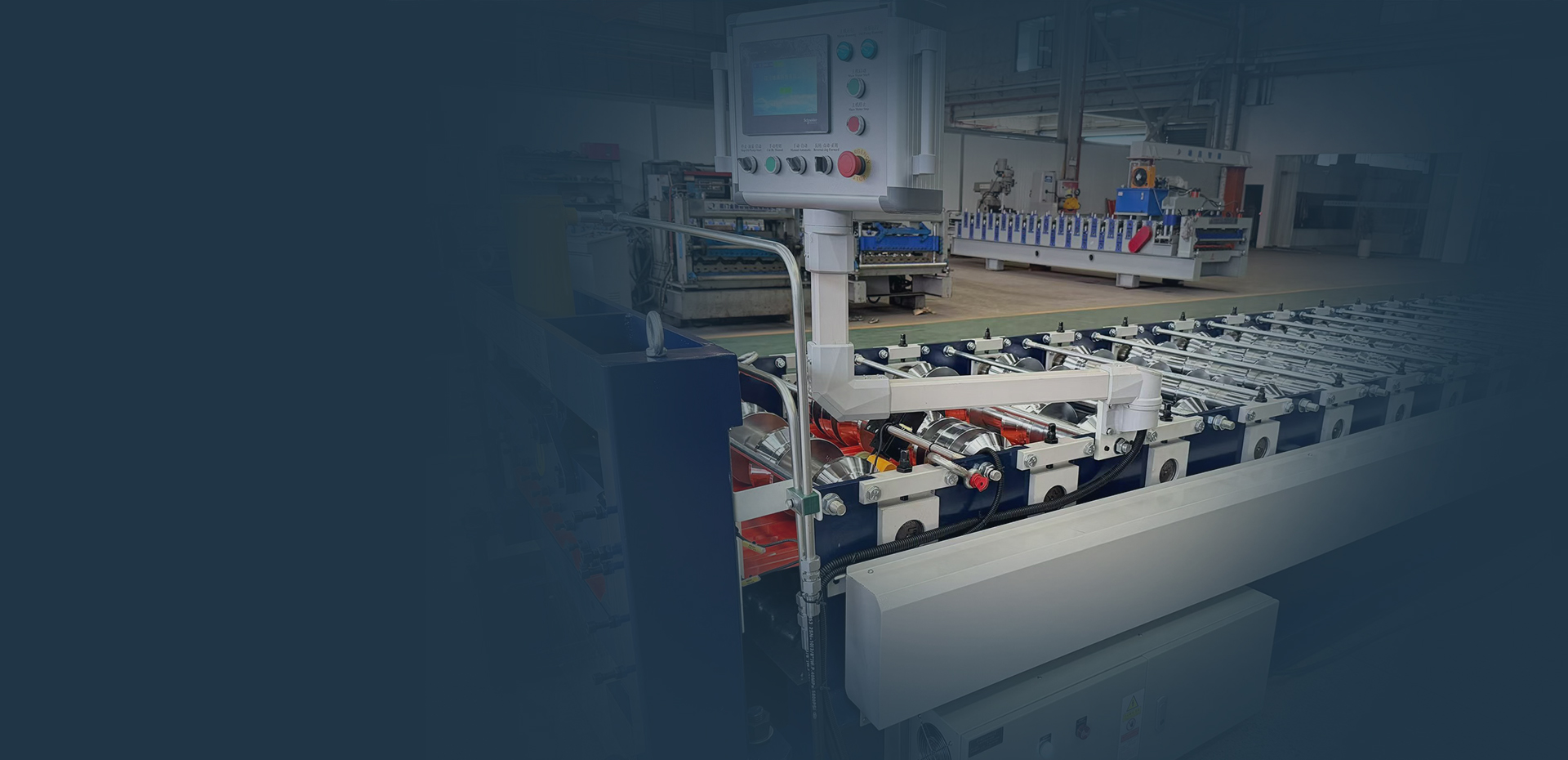
A standing seam roll former is a system, not a single machine. The useful unit of analysis is the seam system: profile geometry, roll pass design, strip guidance, cut-off, clip compatibility, seaming tool and documentation.
Flower Pattern and Coating-Safe Forming
The roll pass design distributes bend angles across 12–20 stations so thin 0.4–0.8 mm coated coil is formed without edge waves, seam-leg twist or coating cracks. This is where a quote becomes a production asset.
Seam System Compatibility
Snap lock, mechanical lock, nail strip and Tuff-Rib are not interchangeable. XC matches the roll set to the clip, seamer, panel width and end use so the panel locks reliably on an Austrian roof.
Austria Electrical and HMI Package
Motors, hydraulic stations and cabinets can be configured for 230/400 V 50 Hz, with German/English HMI options, electrical diagrams and CE technical-file support aligned with EN 60204-1 practice.
Cut-to-Length Accuracy
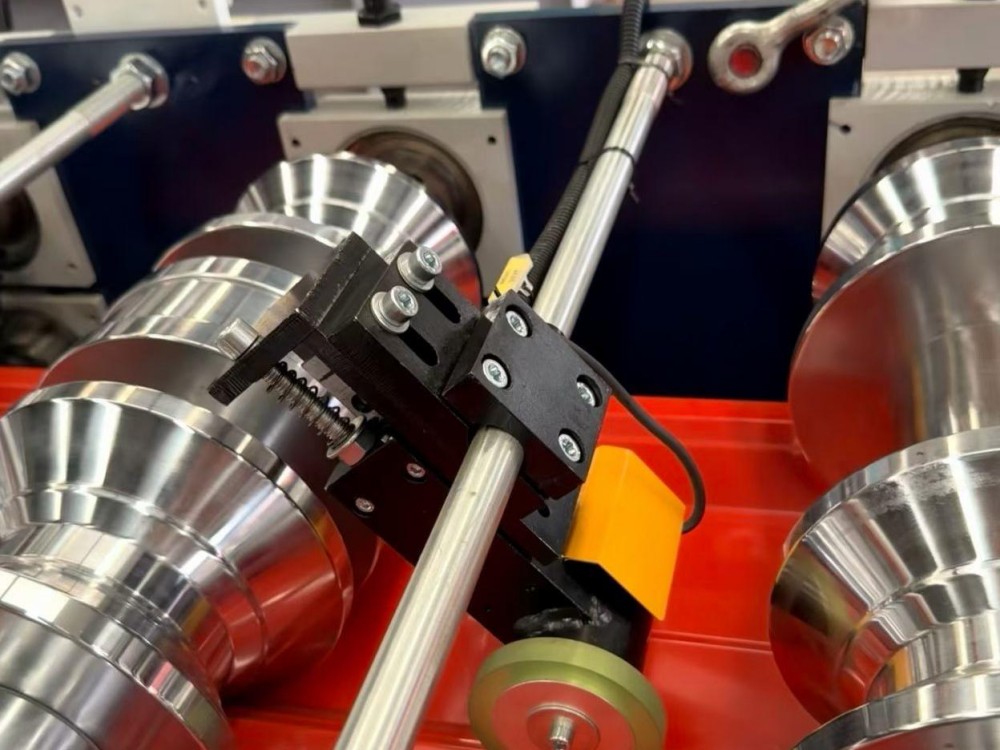
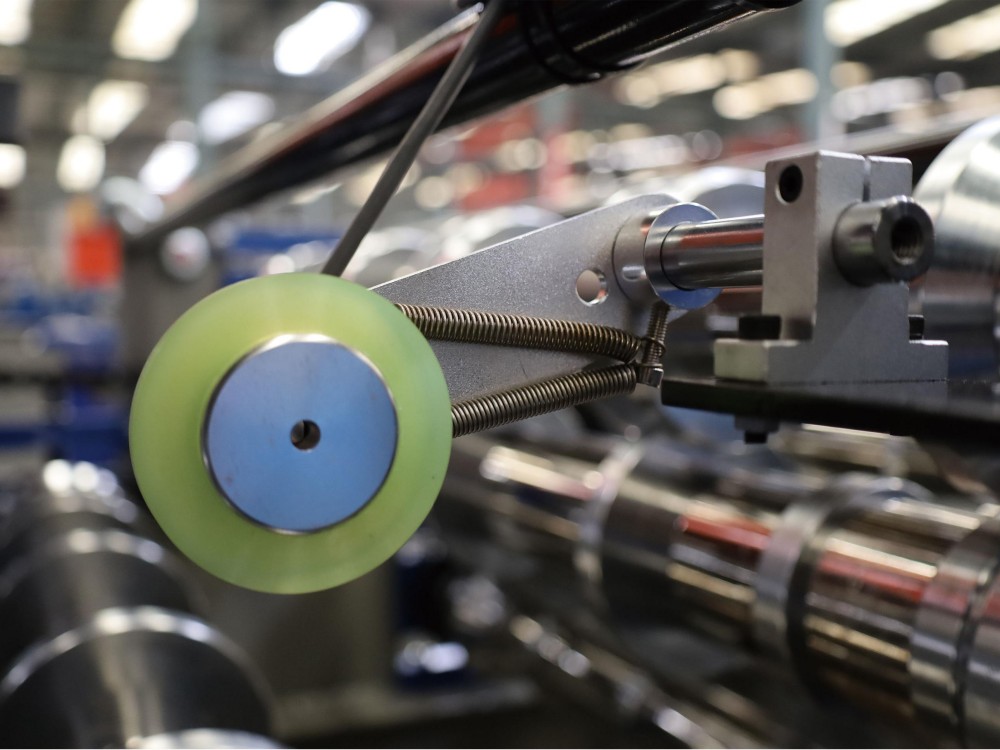
Encoder-controlled hydraulic post-cutting commonly holds ±1 mm on matched profiles. A profile-matched blade avoids crushing seam legs, which protects both waterproofing geometry and installation speed.
Coil Handling and Long Panels
Decoiler tension, entry guidance and shaft rigidity matter more on long panels. Stable unwinding reduces camber, strip wander and twisted profiles before the first forming station.
FAT, Sample Panels and Evidence
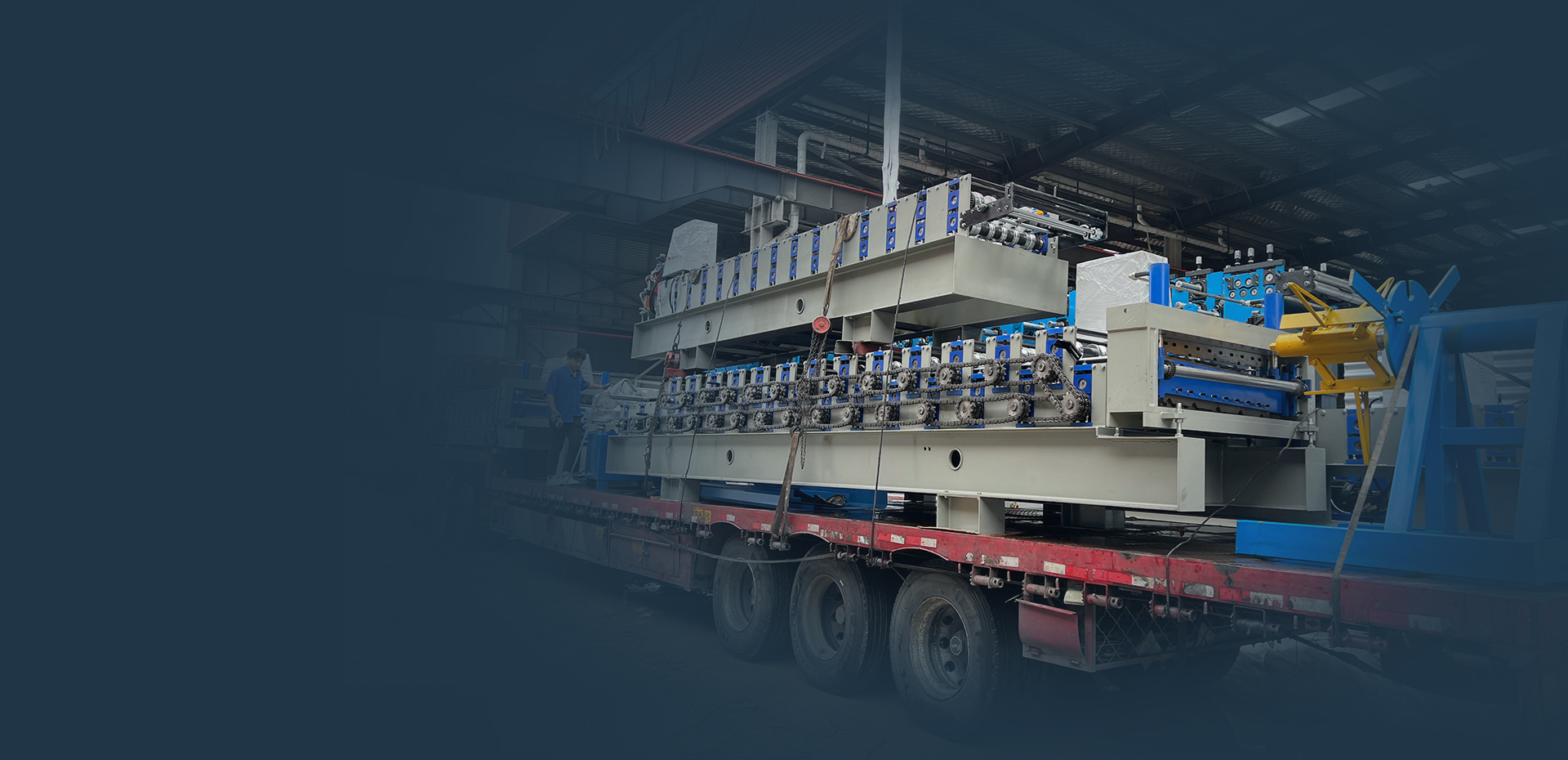
Every line can be assembled and test-run with coil matching the buyer's specification. Sample panels are measured against the drawing, and trial-run video plus inspection photos are shared before packing.
Why Austrian Buyers Compare Factory Direct: Global Demand, Local Risk
Global demand for standing seam roll formers is moving in two directions. On one side, roofing contractors want compact, fast-changeover lines that can support local profiles and short delivery cycles. On the other, industrial fabricators and distributors want higher automation, inline punching, long-panel stability and a documented factory acceptance test. Austria sits between these models: high labour cost rewards automation, while a smaller domestic market rewards flexibility and multi-profile capability.
Austrian buyers increasingly source from specialised factories in China not to replace European engineering, but to add custom profile capability and faster capital-equipment procurement. The buying committee often includes a fabricator owner, production manager, roofing contractor, structural engineer and sometimes the building owner's insurer. The decision is not just price. It is supplier risk: can the factory prove the flower pattern, deliver the CE file, respond in German or English, and ship spare parts before a roof installation window closes?
The strongest procurement teams ask for evidence before they ask for a discount. They request the roll pass design summary, roller material and chrome thickness, shaft diameter, bearing brand, cutting system, PLC model, electrical diagram, factory test video, packaging plan and warranty terms. They compare scope, not only the headline machine price.
- Scope clarity: decoiler, forming mill, hydraulic station, cutter, PLC, stacker, seamer and spare rolls must be listed separately.
- Material reality: PPGI, GI, Galvalume, zinc-aluminium and black steel behave differently at the bend line.
- Logistics to Austria: sea freight to Koper, Rotterdam, Hamburg or Bremerhaven, then rail or truck to Vienna, Linz, Graz, Salzburg or Innsbruck.
- Service model: remote commissioning, on-site engineer option, German-language manuals and spare-parts replenishment.
| Procurement risk | Why it matters in Austria | Evidence to request before order | XC configuration approach |
|---|---|---|---|
| Scope mismatch | A “cheap” line can exclude the decoiler, seamer, stacker or spare rolls, creating hidden cost. | Itemised scope list, layout drawing, utility requirements and shipping list. | Turnkey line review with optional modules identified separately. |
| CE documentation gap | EU importers and operators need a technical file, declaration and risk assessment. | Draft CE file, electrical diagram, risk assessment and manual language confirmation. | CE-ready documentation package and EU-compliant component selection. |
| Material mismatch | Austrian roofers use varying coil coatings, thicknesses and yield strengths. | Coil samples, mill certificates and target profile drawing. | Roll pass design adjusted to the buyer's coil, not only a catalogue profile. |
| Logistics delay | Austria is landlocked; port selection and customs timing affect installation schedules. | Packing drawings, Incoterms, port plan and delivery milestone schedule. | Export packing plus DAP/CIF support through Koper, Hamburg, Rotterdam or Bremerhaven. |
| Weak after-sales | A stopped line can idle a roofing crew and delay handover. | Spare-parts list, response-time commitment and remote support availability. | English/German documentation, video guidance, spare parts and on-site option. |
Localisation, Compliance and Service Support for Austria
Compliance is not a logo on a brochure. In the EU, CE marking is a declaration by the manufacturer or importer that the machinery meets the applicable legislation. For a roll forming line, the relevant package usually includes the Machinery Directive 2006/42/EC (with the transition to the Machinery Regulation (EU) 2023/1230 from 20 January 2027), the EMC Directive 2014/30/EU, the Low Voltage Directive 2014/35/EU where applicable, and a risk assessment aligned with EN ISO 12100. Electrical equipment is commonly reviewed against EN 60204-1 practice.
Austrian building projects may also require building-product and execution evidence depending on the scope. Standing seam roof and cladding products are commonly assessed against EN 508-1, while steel structures and components may fall under EN 1090-1. Snow and wind assumptions are project-specific and should follow EN 1991-1-3 and EN 1991-1-4, together with Austrian Standards, OIB guidance and local building-authority requirements. XC can support the machine and profile review, but the final building-product declaration, structural calculation and local approval remain the responsibility of the appropriate parties.
Localisation is more practical. Austrian operators expect documentation they can read, electrical compatibility, and support in a Central European time zone. A line configured for 230/400 V 50 Hz, with German/English HMI, clear fault messages and accessible spare parts, integrates faster into a Vienna, Graz, Linz or Innsbruck production team.
CE & EU Machinery File
Risk assessment, declaration support, electrical diagrams, operating manual and component documentation prepared for the importing entity.
EN 508-1 / EN 1090 Awareness
Profile and line discussions can reference the intended roof-product and steel-execution standards without replacing project certification.
Snow and Wind Review Support
Seam type, clip spacing, panel span and fixing strategy can be reviewed with the project engineer against EN 1991-1-3 and EN 1991-1-4.
German-Language HMI Option
Touch-screen menus, alarms and batch screens can be supplied in German or bilingual German/English for Austrian operators.
230/400 V 50 Hz Package
Motors, hydraulic power units and control cabinets configured for Austrian site power, with clear utility and compressed-air requirements.
Spare Parts and Remote Support
Blades, bearings, sensors and electrical components can be shipped to Austria, supported by video commissioning and optional on-site service.
Austria Deployment Scenarios: One Platform, Four Roofing Realities
These are scenario-based configurations, not claims of specific installed customer projects. They show how a standing seam roll former can be tuned for different Austrian business models.
Tyrol & Alpine Commercial Roofs
Mechanical lock or heavy-duty snap lock lines with seam integrity review, wind-uplift attention and panel handling for high-altitude construction logistics.
Upper Austria Logistics Halls
High-output snap lock lines for long roof runs, with stable cut-to-length accuracy, fast coil changes and stacking options for industrial contractors.
Vienna Architectural Renewal
Nail strip and snap lock systems for visible elevations, compact site logistics and clean roof lines where fixing penetrations and panel joins must be minimised.
Styria Solar-Ready Roofs
Standing seam profiles engineered for PV clamp compatibility, predictable seam geometry and future maintenance access on commercial and public buildings.
Technical Roadmap & Future Outlook for Austria, 2025–2030
Austrian buyers are not only buying capacity today. They are buying a line that can remain competitive as labour costs rise, energy reporting tightens and solar-ready roofs become standard.
2025–2026: Servo-Electric Options
Servo-driven forming and cutting options reduce energy use, improve repeatability and support faster changeover for multi-profile producers.
2027–2028: Digital Twin & Inline Metrology
Simulation-led roll pass design plus inline measurement can shorten first-article validation and make profile drift visible before a full coil is consumed.
2029–2030: AI Edge Control
Edge-assisted fault diagnosis, predictive maintenance reminders and remote support can reduce downtime for Austrian contractors operating multiple profiles.
Low-Carbon Steel & Circular Roofs
Coating-safe forming, lower scrap, EPD-aware material discussion and PV-integrated standing seam profiles will matter more in EU public and commercial tenders.
Roadmap items describe engineering direction and optional development paths, not standard features on every quotation. Available options and timing are confirmed per project.
Compare Standing Seam and Metal Forming Lines Before You Request a Quote
Quotes are only comparable when the specifications are. Use this matrix as a discussion tool with any supplier, including XC.
| Machine family | Typical coil / thickness | Austrian application focus | What to verify in the quote | XC configuration direction |
|---|---|---|---|---|
| Standing Seam Roll Formers | 0.4–0.8 mm steel; PPGI, GI, Galvalume | Architectural and commercial roofs; alpine and urban projects | Seam compatibility, panel width adjustment, clip system, cut tolerance | Snap lock, mechanical lock, nail strip or Tuff-Rib roll sets matched to the seam system |
| Trapezoidal / IBR Roofing | 0.3–0.8 mm | Industrial halls, agricultural buildings, wall cladding | Roller material, chrome thickness, shaft diameter, rib accuracy | 16–22 stations typical; high-speed line options; stacker and recoiler choices |
| Corrugated Roofing | 0.3–0.6 mm | Renovation, agricultural and utility buildings | Wave pitch accuracy and edge waviness on thin coil | 18–24 stations typical; coating-safe forming and tension-controlled decoiler |
| Glazed Step Tile | 0.3–0.7 mm | Residential, tourism and visible roofscapes | Press-station cycle and step-depth consistency | 12–18 stations typical; synchronized hydraulic press station |
| C/Z Purlin Machines | 1.5–3.0 mm | Steel structure buildings, halls, mezzanines | Size-change method and punching dies | 14–20 stations typical; C/Z interchangeable or dedicated Z line; pre-punching options |
| Floor Deck | 0.7–1.5 mm | Commercial slabs, industrial mezzanines, composite floors | Embossing pattern and frame rigidity for deck depth | 20–30 stations typical; heavy-duty stands and profile-matched hydraulic cutter |
| Light Gauge Steel | 0.6–1.5 mm typical | Prefab framing, stud and track, modular construction | Hole pitch, web depth and changeover speed | Super series stud and track lines with online punching and PLC length control |
Ranges reflect typical XC configurations for reference only. Final parameters are engineered to your profile drawing, material yield strength, output target and site power supply.
Original XC Categories and Resources for Austria
Standing seam is the focus of this page, but Austrian fabricators often need adjacent profiles for roofing, purlin, floor deck and light-gauge steel construction. The original category links remain available.
From Profile Drawing to First Panel: 5 Steps for Austrian Buyers
A transparent five-step process, so overseas buyers know exactly what happens and when.
Profile & Coil Review
Send your drawing, sample or photo plus coil data. Engineers check that the profile can be formed and flag any risks.
Roll Pass Design
You receive the station count, roller material, drive and cutting system, power configuration and a confirmed schedule.
Manufacturing & QC
Frames, shafts and rollers are machined and assembled in-house, with inspection at each critical stage.
Trial Run & Acceptance
The line runs with coil matching your specification. Samples are measured, and a video report is shared for approval.
Shipping & Commissioning
Export packing, documentation, then remote or on-site installation and operator training.
Manufacturing Evidence, Not Just Brochure Claims
For Austrian buyers, the most useful supplier evidence is a combination of engineering design, in-house assembly, documented testing and export experience.



Field Knowledge from XC Engineers

Roll Forming Advantages and Applications
Why continuous roll forming beats press braking for long, consistent profiles, and which industries gain the most from it.

Bearing Damage in Multi-Stand Roll Forming Stations: The Hidden Cause of Roll Runout
Six root causes of bearing failure, the diagnostic checks to run first, and how they show up as strip tracking loss and coating defects.

Zinc & Color Coating Cracking at Bending Zones: Root Causes and Fixes
From bend radius to roll pass design, this article explains what makes coatings crack at the bend line and how coating-safe forming prevents it.
Questions Austrian Buyers Ask Most About Standing Seam Roll Formers
Straight answers based on export project reviews. Need a detail not covered here? Our engineers reply directly.
What information do I need to send for an accurate standing seam roll former proposal?
How do you adapt a line for Austrian snow and wind loads?
Which seam system is best for Austria: snap lock, mechanical lock or nail strip?
Can the machine be configured for 230/400 V 50 Hz and German-language operation?
What compliance documents are needed for Austria and the EU?
How is machine quality verified before shipment?
What is the typical lead time and logistics route to Austria?
Do you support installation, commissioning and spare parts in Austria?
Can one roll former produce more than one standing seam profile?
Can XC build a machine for a local or non-standard Austrian profile?
Build Austria's Next Standing Seam Line with a Factory That Documents Every Step
Share your profile drawing, coil data, seam system and target output. XC will review the roll pass, electrical package, CE documentation needs and Austria logistics route before quoting.
8 Further Machine Categories from the Original XC Portfolio
These eight original product entries complete the supply portfolio for Austrian fabricators. Images and product URLs are preserved. Send an inquiry to compare configurations, tooling and delivery.
China Snap lock Standing Seam Panel machine Manufacturers, Factory
Austria fit: repeat category for distributors comparing snap-lock capacity, seam quality and fast installation output.
View Austria-Ready Specification
ODM Super Series Light Gauge Steel Roll Forming Machine (Stud & Track Roll Former) Manufacturers, Company
Austria fit: prefab framing, stud and track production and modular construction support for Austrian fabricators.
View Austria-Ready Specification
Custom C Z Interchangeable Purlin Machine Factories, Companies
Austria fit: steel structure buildings, halls and mezzanines requiring fast size changeover between C and Z purlins.
View Austria-Ready Specification
China LGS framing U track Roll Forming machine Company, Companies
Austria fit: light-gauge steel framing systems, online punching and repeatable U-track production.
View Austria-Ready Specification
China PBR Panel Metal Roofing forming machine Manufacturers, Company
Austria fit: exposed-fastener metal roofing for industrial, agricultural and utility buildings with robust output.
View Austria-Ready Specification
ODM Metal C Purlin Roll Forming Machine Manufacturers, Factory
Austria fit: steel structure and roof support production with PLC length control and hydraulic punching options.
View Austria-Ready Specification
China Z Purlin Cold Roll Forming Machine Factory, Factories
Austria fit: long-span roof and wall girt production with lapping capability and heavy-gauge line configuration.
View Austria-Ready SpecificationCustom Mechanical Lock Standing Seam Panel Former Manufacturers, Company
Austria fit: repeat category for buyers comparing high-strength seam options for snow-exposed and large-span roofs.
View Austria-Ready Specification