
Four Roll Forming Machines Indian Buyers Ask About First
These four product families are often the first stop for Indian roofing sheet producers, steel building fabricators and distributors evaluating an ODM partner. Each machine can be engineered around a local profile drawing, coil specification, output target and site voltage. The product links below preserve the original XC product URLs for direct technical review.

ODM Tuff rib panel(AG Panel) forming machine Company, Companies
For agricultural buildings, post-frame sheds, warehouses and exposed-fastener roofing. Indian buyers can review rib geometry, coil width, thickness range, 415V/50Hz electrical configuration and optional private-label documentation.
View product details
China Metal C Stud Roll Forming Machine Manufacturer, Companies
For drywall partitions, ceiling systems and light gauge steel framing. A well-specified C stud line combines forming accuracy, punching, cutting, stacking and operator-friendly changeovers for Indian projects with mixed stud sizes.
View product details
China Double Layer Roll Forming Machine Factory, Company
Two roofing profiles on one frame, such as trapezoidal and corrugated. The format is attractive where floor space is tight, SKU breadth matters and a distributor wants to serve mixed residential and industrial demand.
View product details
China PBR Panel Metal Roofing forming machine Manufacturers, Company
For exposed-fastener metal roofing in factories, warehouses and commercial buildings. Buyers should verify rib pitch, pan width, edge details, coil thickness range and the quality of side laps before approving a line.
View product detailsWhy India Is Rewriting the Roofing Roll Forming Opportunity
India is not a single roofing market. It is a network of industrial corridors, agricultural economies, logistics parks, tier-2 construction booms and price-sensitive distribution channels. That complexity changes how an ODM roofing sheet roll forming machine company must support local buyers—and why companies comparing suppliers need more than a machine price list.
Demand is moving from generic sheets to specified systems
Warehouses, factories, cold storage facilities, agri-sheds and commercial buildings increasingly expect panels that fit the first time. A roofing sheet roll forming machine in India must therefore be judged on repeatability: consistent rib height, stable cover width, clean cut ends, coating protection at the bend line and predictable side-lap fit. Buyers in Maharashtra, Gujarat, Tamil Nadu, Karnataka, Telangana, the National Capital Region, Punjab, West Bengal and Odisha often work across several profile families. A supplier that can adapt roll pass design to local drawings—rather than only sell a catalogue model—has a practical advantage.
Industrial clusters matter. Rajkot and Ahmedabad support engineering and metal fabrication; Pune, Nashik and the Mumbai corridor connect automotive and industrial construction; Coimbatore and Chennai serve fabrication and export manufacturing; Hyderabad and Bengaluru support pharma, logistics, commercial real estate and light steel construction; Delhi NCR and Ludhiana are strong in steel building and infrastructure supply chains; Kolkata and nearby industrial belts serve eastern India and neighbouring markets.
Coil supply, price cycles and the uptime question
PPGI, GI and Galvalume coil availability, zinc coating choice, paint systems, steel price movement and working-capital pressure all influence machine decisions. A low-cost roll former that produces rejected panels during a price swing is expensive. Indian buyers increasingly look at total output, changeover speed, operator training and spare-part response. For projects using 0.30–0.80 mm roofing coil, small differences in entry guiding, shaft rigidity and cutter alignment can decide whether a line stays profitable across multiple coil batches.
Policy and infrastructure have also changed the demand map. Logistics parks, PM Gati Shakti-linked infrastructure, manufacturing investment, cold-chain expansion, solar mounting and rural construction all create demand for metal roofing, purlins, decking and light gauge steel. The most successful ODM program is therefore not just a machine sale; it is a production plan around the buyer’s coil source, shift pattern, product mix and maintenance capability.
What Indian buyers are really evaluating
- Can the supplier read a local profile drawing or a sample panel?
- Will the line be configured for 415V/50Hz and Indian plant practice?
- Can the supplier prove profile accuracy with a factory test run?
- Are rolls, shafts, bearings, blades and PLC spares supportable?
- Does the quotation explain the full line, not just the forming mill?
- Is training clear enough for operators who rotate between shifts?
What ODM Means for Indian Roofing Manufacturers
In metal roofing equipment, “ODM” is often used loosely. For a serious buyer, it should mean an original design manufacturer can translate a market requirement into a roll forming line, then document and test that line before shipment. The work is engineering-led, not a marketplace label.
Profile-to-machine engineering
Roll pass design, or the flower pattern, is developed from the Indian buyer’s drawing, sample panel or target profile. The goal is to spread forming strain evenly and protect zinc and paint coatings.
Electrical localization
Motors, hydraulic stations, control cabinets, HMI language, sensors and safety circuits are configured to the site supply and plant standard, including 415V/50Hz for many Indian factories.
Build-to-order flexibility
Coil thickness, yield strength, cover width, line speed, cutting system, punching pattern, stacker and packaging can be matched to a defined production case rather than a generic catalogue sheet.
Documentation and training
English manuals, electrical diagrams, operating procedures, maintenance schedules and remote video guidance reduce the learning curve for Indian production teams.
Private-label and channel support
Distributors, trading companies and project suppliers may need neutral branding, export packing, spare-part kits and response workflows that protect their customer relationship.
After-sales continuity
Remote diagnostics, spare parts identification, blade and bearing supply, and optional on-site engineer service help protect uptime after the machine enters production.
Global Procurement Perspective: How India Buys Roll Forming Lines
Indian importers rarely buy a roll forming machine on FOB price alone. They compare landed cost, installation effort, spare-part availability, profile accuracy, operator learning time and the risk of a line that cannot match local coil. That is why international procurement teams and Indian project owners often evaluate an ODM partner through a technical dossier, a factory acceptance test and a clear after-sales path.
Landed cost, not sticker price
Freight to Nhava Sheva, Mundra, Chennai, Kochi, Kolkata or Visakhapatnam, insurance, port handling, inland transport, duty, installation and spares all belong in the comparison. A slightly higher machine price can be cheaper over five years if profile accuracy and uptime are stronger.
Profile fit and sample validation
Ask every supplier to form a sample from coil that matches the intended Indian specification. Measure rib height, pitch, cover width, diagonal tolerance, side-lap fit and cut squareness. Photos of a finished panel are not a substitute for measured trial results.
OEE and changeover discipline
For distributors with multiple SKUs, changeover method matters as much as line speed. Manual size adjustment, cassette systems, spacer changes and recipe storage should be reviewed against the real order mix, not only the fastest profile.
Documentation quality
Compare manuals, electrical schematics, spare-part lists, lubrication charts, troubleshooting notes and acceptance records. Clear documentation is an operational asset; poor documentation turns every minor fault into a long-distance problem.
Spare-part strategy
Blades, bearings, forming rollers, shafts, sensors, hydraulic seals and PLC components should be identified before shipment. Indian buyers should ask which parts are wear-critical and which can be sourced locally without compromising warranty.
Commissioning plan
Remote video commissioning can work well for standard lines when the plant has electrical and mechanical support. Complex purlin, decking, double-layer or high-speed lines may justify on-site engineer service, quoted clearly.
From PPGI Coil to a Roofing Panel: Inside the Forming Line
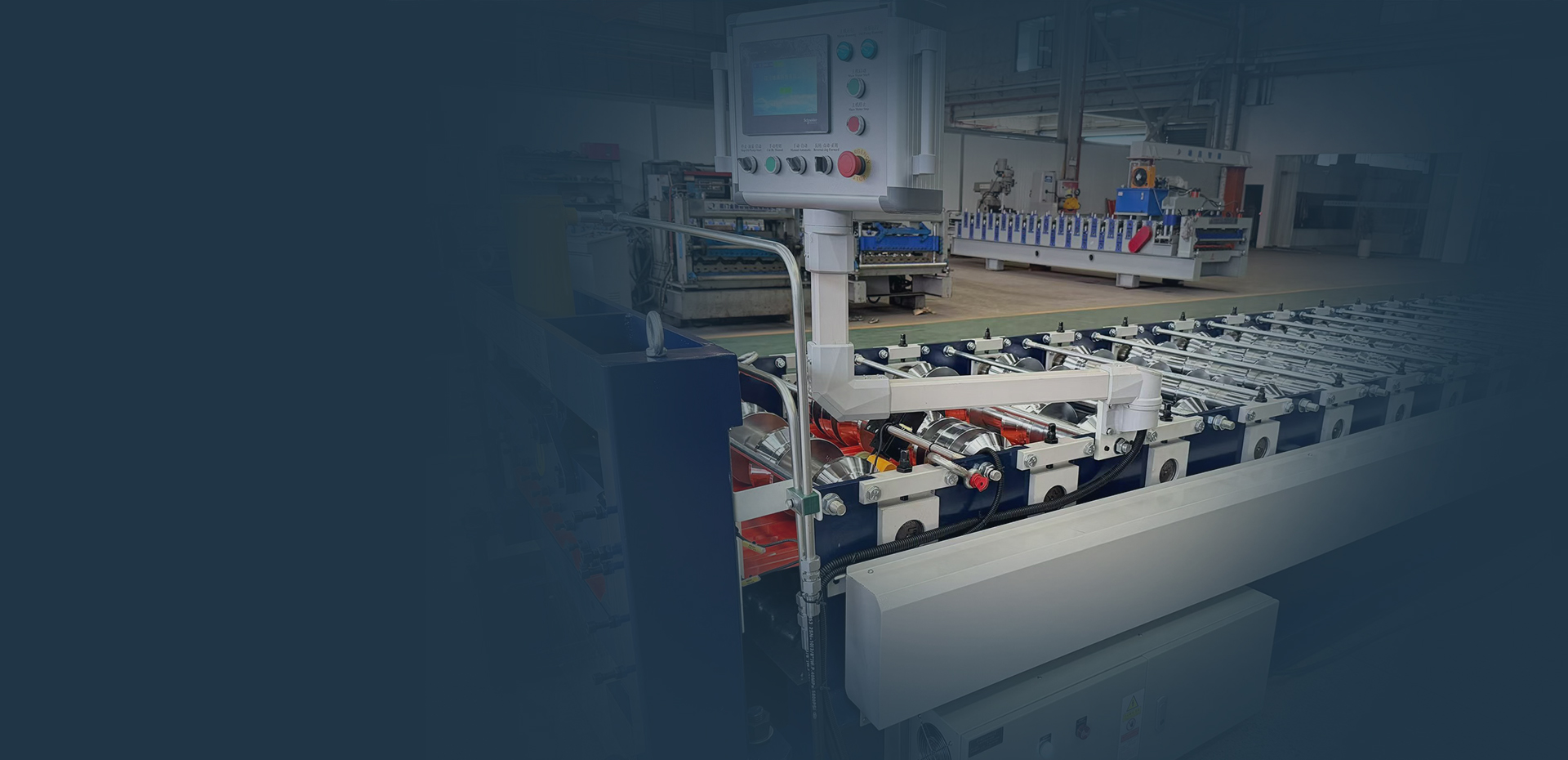
A roll former is only as good as its weakest station. The line should be reviewed as a production system: coil handling, entry alignment, progressive forming, cutting, control, stacking and maintenance access. The five stages below are the working backbone of a typical XC roofing sheet roll forming line.
Decoiler & coil feeding
A manual or hydraulic decoiler feeds coil under controlled tension. Stable unwinding prevents strip wander, which is the first cause of camber and twisted panels.
Entry guiding
Adjustable entry guides square the strip to the roll centreline before the first pass. Correct alignment here largely decides the straightness of the finished panel.
Progressive forming
Each station bends the strip a few degrees at a time. Roll pass design spreads strain evenly to protect zinc and paint coatings and avoid edge waves on thin coils.
Hydraulic post-cutting
An encoder measures strip travel and the PLC triggers a profile-matched blade. The result should be burr-free cuts within the agreed tolerance without crushing ribs or seams.
PLC & HMI control
A touch-screen HMI stores batch lengths and quantities, monitors faults and supports multi-language operation, so new operators get up to speed quickly.
Engineering details that decide panel quality
For thin roofing coil, the forming mill must control more than station count. Shaft diameter, bearing selection, stand rigidity, roll material, hard-chrome plating, gearbox quality and drive balance all affect the finished profile. A 16-station line with unstable stands can produce worse panels than a well-designed 18-station line with rigid frames and consistent roll alignment. Indian buyers should ask for the roller material, chrome thickness, shaft diameter, motor power, line speed, cutting tolerance and safety configuration in writing.
Coating protection is another practical concern. PPGI and Galvalume panels can show micro-cracking, zinc flaking or paint damage if bend radii and roll gaps are poorly matched. A supplier with genuine roll forming experience will review yield strength and coating type before confirming the flower pattern. For high-strength steel, springback and required over-bend must be considered; for thin sheet, edge wave and twist are common risks.
Finally, the line should be easy to maintain. Guards, lubrication points, manual access, sensor placement, hydraulic unit location and spare-blade replacement should be considered at design stage. In a multi-shift Indian plant, maintenance friendliness is a production advantage.
Typical parameters to confirm
- Coil material: PPGI, GI, Galvalume, black steel or aluminium
- Thickness range and yield strength
- Profile drawing, cover width and rib geometry
- Forming station count and roll material
- Shaft diameter, stand type and drive arrangement
- Cutting method, encoder accuracy and blade material
- Line speed, batch control and HMI language
- Voltage, frequency, motor efficiency class and safety devices
India Localization, Compliance & On-the-Ground Support
For an Indian plant, localization is not only about voltage. It includes documentation language, operator training, maintenance access, spare-part planning, sea-freight protection and a practical route for technical support across time zones. Compliance should be discussed precisely—without implying certifications that have not been separately verified for a specific project.
Localization points to specify
- Power supply: 415V/50Hz is common for Indian industrial sites; other voltages can be configured when required.
- Motors and drives: efficiency class, brand preference, phase protection and control-panel practice can be reviewed against plant standards.
- HMI and manuals: English is standard; simplified operating instructions can support shift teams and maintenance staff.
- Safety: guarding, emergency stop, lockout points, nip-point protection and warning labels should be included in the technical review.
- Spares: blades, bearings, sensors, seals and electrical components should be listed with part numbers and recommended stock.
- Packing: sea-worthy export packing, rust protection, moisture control and container loading plans protect the line during monsoon-season transport.
Compliance and documentation boundaries
Machine compliance depends on the final configuration, project specification and the buyer’s statutory obligations. Indian steel sheet and coil standards such as IS 513 and IS 277 may be relevant references for material selection where applicable, while electrical practice should follow the project’s approved engineering standards. CE marking is not a blanket requirement for the Indian market, but some international buyers request it; BIS requirements generally relate to specific products and should be confirmed for the particular item and project scope. XC can prepare technical documentation, electrical diagrams, test records and inspection reports, but the buyer’s consultant should confirm final regulatory applicability.
- Factory acceptance test with sample measurements
- Electrical schematics and control logic reference
- Lubrication and preventive-maintenance schedule
- Operator training outline and safety notes
- Packing list, spare-part list and loading plan
Six Industries, One Forming Expertise—and Their India Relevance
Roll forming supports many industries, but the India opportunity is concentrated in a few high-value applications. The same engineering capability can serve architecture, agriculture, transport, energy and light steel construction.
Industrial sheds & warehouses
Roofing sheets, wall cladding, purlins and floor decking for factories, logistics parks and warehousing. This is a core demand engine for IBR, PBR, standing seam and C/Z purlin lines.
Agriculture & rural roofing
Agri-sheds, cold storage, poultry, dairy and rural construction use economical corrugated and ribbed sheets. High-output lines with simple maintenance are valuable in price-sensitive markets.
Commercial architecture
Standing seam, glazed tile and architectural cladding profiles for offices, retail, institutions and mixed-use projects. Surface quality, seam consistency and panel flatness matter most.
Cold chain & food processing
Insulated panels, wall cladding and roofing for cold storage require consistent forming and clean panel interfaces. Coil coating protection is a key quality factor.
Transport infrastructure
Metro depots, airports, highways, toll plazas and railway facilities create demand for roofing, cladding, drainage profiles and structural sections. Long parts need rigid stands and accurate cut-off.
Solar & new energy
Solar mounting rails, strut channels and support brackets benefit from inline punching and fast changeover. India’s renewable build-out is a growing market for light gauge roll forming.
Compare Roll Forming Machines Before You Request a Quote
Quotes are only comparable when specifications are. Use these indicative ranges and the key verification point for each machine family to judge any supplier’s offer—including XC’s. Final parameters are engineered to the profile drawing, material yield strength, output target and site power supply.
| Machine Type | Typical Coil Thickness | Forming Stations | Typical Line Speed | What to Verify in a Quote |
|---|---|---|---|---|
| Trapezoidal / IBR Roofing | 0.3–0.8 mm | 16–22 | 15–30 m/min | Roller material and chrome thickness; shaft diameter |
| Corrugated Roofing | 0.3–0.6 mm | 18–24 | 15–30 m/min | Wave pitch accuracy and edge waviness on thin coil |
| Glazed Step Tile | 0.3–0.7 mm | 12–18 | 3–6 m/min | Press-station cycle and step-depth consistency |
| Standing Seam | 0.4–0.8 mm | 12–20 | 10–20 m/min | Seam system compatibility and panel width adjustment |
| C/Z Purlin | 1.5–3.0 mm | 14–20 | 10–20 m/min | Size-change method (manual or automatic) and punching dies |
| Floor Deck | 0.7–1.5 mm | 20–30 | 10–15 m/min | Embossing pattern and frame rigidity for deck depth |
Ranges reflect typical XC configurations for reference only. Ask for the proposed station count, motor power, shaft diameter, roller material, cutting tolerance, safety scope, spare-part list and acceptance method for the exact profile.
Technology Roadmap and Future Outlook for 2026–2030
The next wave of roll forming competition will not be won by adding more stations to a catalogue drawing. It will be won by making lines easier to set, easier to monitor and easier to keep within tolerance when coil quality, labor availability and order complexity change.
Servo-assisted setup
Motorized roll adjustment, servo-controlled sizes and stored recipes can reduce changeover time for distributors producing several roof profiles per shift.
Condition monitoring
Vibration, motor current, hydraulic pressure and bearing temperature can feed predictive-maintenance programs, helping Indian teams avoid unplanned downtime.
Digital quality records
Batch length, cut count, speed, alarm history and sample measurements can be logged for traceability. This is valuable for project suppliers who must defend panel quality.
Energy and efficiency
Efficient motors, optimized hydraulics and right-sized drives can lower power cost per panel. Indian factories facing tariff pressure will increasingly ask for documented energy data.
Quick-change cassettes
Cassette or movable-stand systems can support multi-profile production with less manual setting. The trade-off is initial cost versus real order mix and labor skill.
Coating-safe forming
As high-strength and thin-gauge coated steels spread, roll pass design and surface protection will remain a differentiator. Quality is measured at the bend line, not only at the panel face.
Global Procurement Demand and the Role of ODM Companies
Roofing sheet roll forming machines are exported within a global equipment market shaped by construction cycles, steel supply, labor cost and localization requirements. Buyers in India often compare Chinese ODM suppliers, domestic Indian machine builders, Turkish and European suppliers, and reseller listings. Each route has trade-offs in price, customization, lead time, documentation and service depth.
Asia-Pacific manufacturing
Construction, warehousing and infrastructure keep demand strong for roofing and structural roll forming lines. India and Southeast Asia are both production and consumption markets.
Middle East & Africa
Industrial sheds, logistics and urban projects create demand for durable lines. Buyers often prioritize high-temperature electrical protection, spare-part availability and commissioning support.
Europe & North America
Buyers may request CE-related documentation, stricter guarding, higher automation and traceability. ODM suppliers must be precise about which standards are actually met and tested.
Latin America
Roofing distributors and steel building fabricators often need multi-profile flexibility, Spanish-language support and practical remote commissioning for standard lines.
Engineering Evidence from XC XiongChang
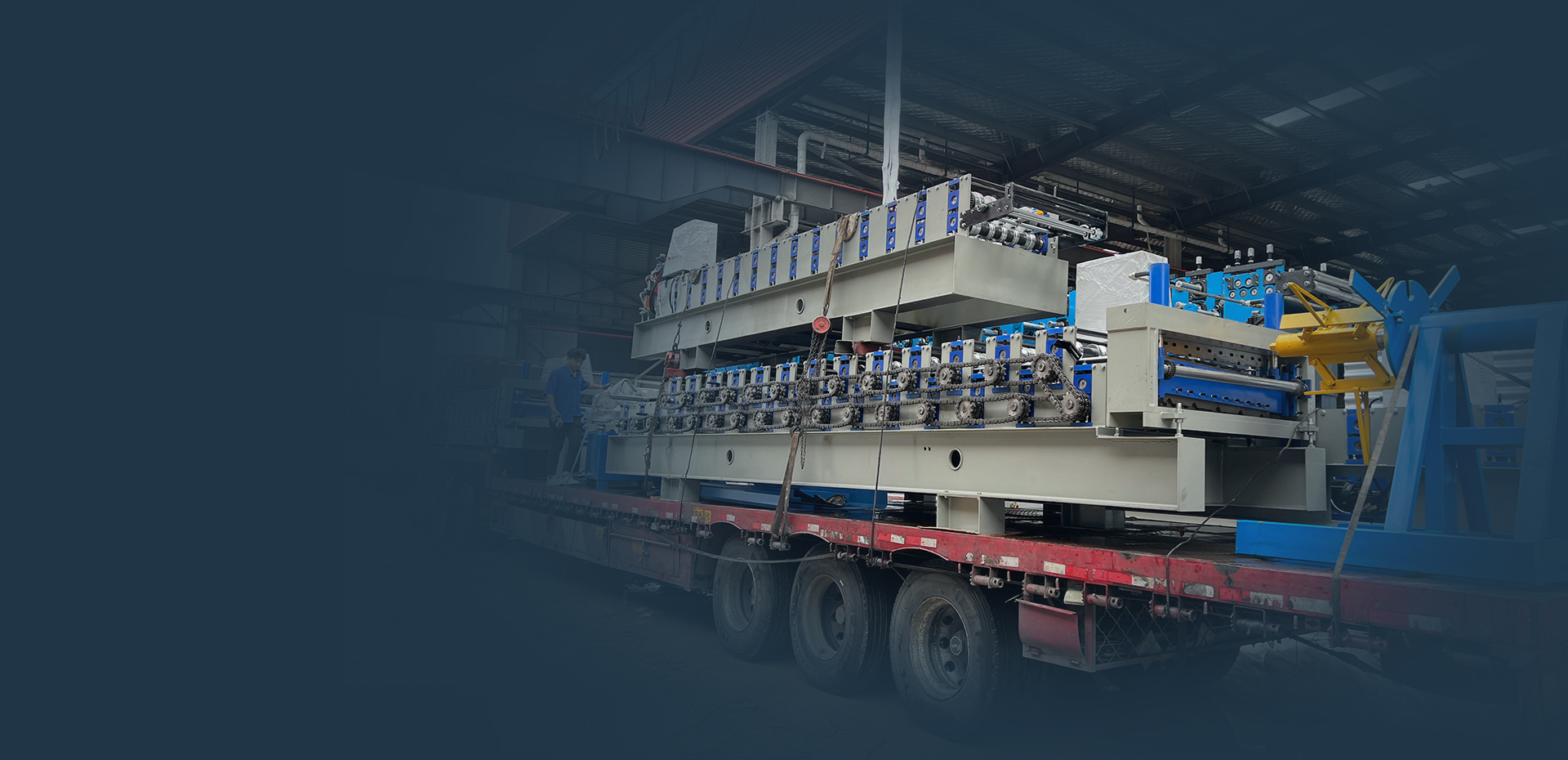
Sichuan Xiongchang Technology Co., Ltd. (XC) designs and manufactures cold roll forming equipment for roofing, flooring, door, structural and light gauge steel components, together with auxiliary line equipment. The company’s experience is grounded in profile development, machining, assembly, testing and commissioning for overseas buyers.
XC’s team brings more than 20 years of hands-on roll forming experience. That experience shows in the details buyers notice after installation: rollers that hold tolerance, coatings that do not crack at the bend, and panels that fit on the roof the first time. The company operates a 50,000 m² production base and has served more than 1,000 cooperative customers worldwide, supported by a team of over 2,000 people across engineering, production and service functions.
For Indian buyers, the value of this experience is not a slogan. It is the ability to review a profile drawing, identify forming risks, propose a station count and drive configuration, test the line with matching coil, and document the result. XC’s engineering approach focuses on the practical variables that decide production success: roll pass design, stand rigidity, shaft and bearing selection, cutter alignment, PLC logic and operator usability.
“A roll former is only as good as its weakest station. The real test is whether the same coil, the same operator and the same maintenance routine can keep producing sellable panels shift after shift.”
XC engineering principle



From Profile Drawing to First Panel: A Transparent Workflow
Overseas buyers need to know what happens, when it happens and what they must approve. The five-step process below keeps the engineering, manufacturing, acceptance and commissioning path visible.
Profile & coil review
Send the profile drawing, sample or photo plus coil data. Engineers check whether the profile can be formed and flag risks early.
Roll pass design & proposal
The proposal defines station count, roller material, drive, cutting system, power configuration and a confirmed schedule.
Manufacturing & QC
Frames, shafts and rollers are machined and assembled in-house, with inspection at critical stages before final assembly.
Trial run & acceptance
The line runs with coil matching the buyer’s specification. Samples are measured and a video report is shared for approval.
Shipping & commissioning
Export packing, documentation, remote guidance or on-site engineer service, plus operator training and spare-part advice.
Maintenance Notes and Engineering Insights for Indian Production Teams
Most roll forming problems appear before a panel reaches the customer—as strip wander, bearing noise, coating marks, burrs, edge wave or inconsistent cut length. The articles and field notes below reflect the kind of questions XC engineers answer during commissioning and after-sales support.

Roll Forming Advantages and Applications
Why continuous roll forming beats press braking for long, consistent profiles, and which industries gain the most—from industrial roofing and steel buildings to light gauge framing and solar mounting.

Bearing Damage in Multi-Stand Roll Forming Stations: The Hidden Cause of Roll Runout
Six root causes of bearing failure, diagnostic checks to run first, and how they show up as strip tracking loss, vibration, noise and coating defects.

Zinc & Color Coating Cracking at Bending Zones: Root Causes and Fixes
From bend radius to roll pass design, this article explains what makes coatings crack at the bend line and how coating-safe forming can reduce the risk.
FAQ: ODM Roofing Sheet Roll Forming Machines for India
These answers address the questions overseas buyers ask most often, with additional India-specific notes on voltage, profiles, compliance, shipping and supplier comparison.
What information do I need to send for an accurate roll forming machine proposal?
Can XC build a roll forming machine for a local or non-standard Indian profile?
How is machine quality verified before shipment?
What is the typical lead time for a roll forming machine?
What after-sales support does XC provide to overseas buyers?
Can machines be configured for my local power supply in India?
Which roll forming machine is best for India’s roofing market?
How should Indian buyers handle compliance and certification questions?
What is the difference between ODM and OEM in this equipment category?
How do Indian buyers compare quotes from different roll forming companies?
Can you support shipping and commissioning to Indian ports and inland plants?
What spare parts should an Indian roofing plant keep in stock?
Planning an ODM Roofing Line for India?
Send the profile drawing, coil specification, output target and site voltage. XC engineers can review the application and respond with a practical machine configuration, testing plan and documentation scope.
Eight More ODM and OEM Roll Forming Machines for the India Market
The lower product grid preserves the remaining original XC product links and images. Indian buyers can use these pages to compare IBR, standing seam, purlin, light gauge steel, U panel and Z purlin options before narrowing the technical brief.

China Industrial IBR Sheet Forming Machine for Metal Roofing Factories, Companies
For industrial roofing factories producing IBR profiles for warehouses, factories and steel buildings. Verify rib geometry, coil range, line speed and cutting accuracy.
View product details
China Snap lock Standing Seam Panel machine Manufacturers, Factory
For concealed-fastener architectural roofing. Confirm seam profile compatibility, panel width adjustment, forming stability and weather-tight installation requirements.
View product details
Custom C Z Interchangeable Purlin Machine Factories, Companies
For steel building fabricators producing C and Z purlins on one line. Review size-change method, punching pattern, coil thickness range and cutting tolerance.
View product details
ODM Super Series Light Gauge Steel Roll Forming Machine (Stud & Track Roll Former) Manufacturers, Company
For stud and track production, drywall systems and light steel framing. Important details include punching accuracy, speed, decoiler setup and stacking discipline.
View product details
ODM U panel roofing roll former Factories, Company
For U-panel-style roofing and wall profiles used in industrial and commercial construction. Verify profile drawing, coil width, rib shape and side-lap design.
View product details
ODM Metal C Purlin Roll Forming Machine Manufacturers, Factory
For fully automatic C-section production with PLC length control and hydraulic punching for bolt holes. Confirm punching dies, size range and frame rigidity.
View product details
Custom Mechanical Lock Standing Seam Panel Former Manufacturers, Company
For high-strength standing seam panels and field-seamed lock systems. Wind-uplift requirements, seam type, panel length and site tooling must be reviewed together.
View product details
China Z Purlin Cold Roll Forming Machine Factory, Factories
For dedicated Z-section production with lapping capability on long-span roofs and wall girts. Review size-change system, punching dies and material thickness range.
View product detailsReady to Specify Your India ODM Roll Forming Line?
Share your profile drawing, coil data, target output and site voltage. The XC team can help define the machine route, testing scope and documentation package without deleting the original product reference links.