

Custom Corrugated Steel Roofing Roll Forming Machine Manufacturer, Company
For sinuoidal corrugated roof and wall panels, with roll pass design, hydraulic cutting and PLC control configured around your coil and market profile.
View ProductXC engineers custom cold roll forming lines for corrugated wave roof tile, standing seam, roofing sheet, purlin, floor deck and light gauge steel profiles. For San Francisco buyers, every proposal can be configured around local profile drawings, 60 Hz power, coastal corrosion exposure, container shipping to Oakland and long-term spare-parts support.
These four product families are the practical starting point for many Bay Area distributors, roofing contractors and light gauge steel fabricators. Final configuration is engineered to your profile drawing, coil grade, thickness range, output target, voltage and freight plan.
For sinuoidal corrugated roof and wall panels, with roll pass design, hydraulic cutting and PLC control configured around your coil and market profile.
View Product
For light gauge steel framing U tracks and related sections, supporting prefabrication, panelization and faster dry-in schedules on tight urban sites.
View Product
A flexible stud and track platform for fabricators that need consistent web depth, clean punchouts and repeatable cut lengths across many projects.
View Product
For concealed-fastener panels with an integrated nailing flange, useful for residential, mixed-use and light commercial roofing where clean lines matter.
View ProductSan Francisco is not a single construction market. It is a dense, code-sensitive aggregation of historic districts, hillside residences, waterfront redevelopment, life-science clusters, education campuses, transit-adjacent infill and logistics nodes around the Port of Oakland, Richmond, San Leandro, Hayward and South San Francisco. That mix changes the roll forming conversation. Buyers are not only asking for the lowest machine price. They are asking for profile fidelity, coil compatibility, electrical compliance, installation support and a credible plan for spare parts when a line is down.
Corrugated wave roof tile roll forming machines remain relevant because the profile is familiar, economical and fast to install. In the Bay Area, metal roofing appears on warehouse modernization, agricultural and industrial outbuildings, accessory dwelling units, canopy and shelter structures, transit facilities, school projects and architectural accents where a corrugated rhythm is specified. For distributors, the business case is often a local panel supply model: buy coil, form to order, cut to job length and deliver without waiting for a distant factory. For contractors, the benefit is schedule control and fewer panel-joint risks on occupied sites.
The search phrase ODM Corrugated Wave Roof Tile Roll Forming Machine Manufacturer & Companies for San Francisco reveals a deeper intent than a simple product lookup. The buyer is likely assembling a supplier shortlist and comparing four things: whether the machine can match a local profile drawing; whether the electrical package fits 208 V, 240 V or 480 V at 60 Hz; whether the supplier can ship efficiently to the Port of Oakland; and whether the supplier can prove quality with a factory acceptance test rather than a brochure. XC addresses that intent with profile-to-machine engineering, documented trial runs, English manuals and remote or on-site commissioning support.
Roof panels near the Pacific coast and the Bay are exposed to moisture, salt-laden air and strong UV. Buyers should specify coil coating systems, edge protection and forming practices that reduce coating damage. A smooth roll surface, controlled bend increments and clean cut-off all help protect paint and zinc at the bend line.
Seismic design is a structural and attachment issue, not a roll former issue alone. Lightweight metal roofing can reduce dead load, but clips, fasteners, seam spacing, diaphragm requirements and edge details must be engineered by the project team. A machine that produces straight, consistent panels makes field installation more predictable.
Oakland is a natural entry point for equipment entering Northern California. For an ODM line, export packing, container loading, hydraulic-oil handling, voltage documentation and lift points should be agreed before shipment. A clear freight plan reduces drayage surprises and site-start delays.
Bay Area labor is expensive, and jobsite space is scarce. That favors machines with quick size change, reliable length control, safe guarding and straightforward maintenance. For distributors, one flexible line producing several profiles can be more valuable than a single high-speed commodity line.
Send a profile drawing or sample photo; material type such as PPGI, GI, Galvalume or black steel; thickness range; yield strength; coil width; required output per shift; panel length range; and local voltage and frequency. For Bay Area projects, also state whether the equipment will be installed in San Francisco, Oakland, San Jose or a surrounding county, so that shipping, access and commissioning discussions are grounded in the actual site.
International equipment can perform well in California only when electrical, safety, shipping and maintenance assumptions are aligned before purchase. XC cannot act as the authority having jurisdiction, but we can provide project documentation, configuration choices and practical support so your engineer, installer and electrical contractor can review the line properly.
Motors, hydraulic stations and control cabinets are configured to the site supply. For the United States, typical discussions include 208 V, 240 V, 480 V and 60 Hz, with English HMI options. Where a project requires UL-listed components or UL 508A control panels, the requirement must be specified in the inquiry and confirmed in the final bill of materials.
Projects may touch the California Building Code, California Fire Code, Title 24 energy provisions, CALGreen, local air district rules, OSHA machine guarding expectations and NFPA 70 / NEC electrical review. Final compliance is project-specific. The right approach is to share the machine data sheet, electrical diagram and layout with the licensed design team and electrical contractor early.
Every line should be assembled and test-run with coil that matches the buyer’s specification. Sample panels are measured against the drawing, and a trial-run video plus inspection photos are shared before packing. This is especially important for long-distance buyers who cannot easily visit the factory during production.
XC provides English manuals and electrical diagrams, remote video guidance for installation and commissioning, on-site engineer service on request, and spare parts supply such as blades, bearings and electrical components. For San Francisco Bay Area sites, access, crane availability, ceiling height and freight unloading should be reviewed before delivery.
Typical export packing separates the decoiler, forming mill, hydraulic station, control cabinet and run-out table. Container loading should account for long frames and fragile painted surfaces. Buyers can nominate their freight forwarder, or request FOB / CIF discussion to the Port of Oakland and onward drayage.
Downtime is expensive in a high-labor market. A recommended spare-parts kit may include cutting blades, bearings, seals, proximity sensors, relay components, hydraulic filters and a set of critical electrical parts. Consumables should be identified during commissioning so the maintenance team can stock them before the first production rush.
Compliance note: XC supplies equipment and documentation; the final installation, electrical connection, permits and code compliance must be verified by the buyer, licensed contractors and the local authority having jurisdiction.
Across North America, Latin America, Europe, the Middle East, Southeast Asia and Africa, roll forming buyers are asking similar questions. How fast is changeover? What is the true cut-length tolerance? Can the line run thin coil without edge waves? Can the control system store batch recipes? What happens when a bearing fails? The strongest suppliers answer with engineering evidence, not adjectives. That is why XC structures each project around profile review, roll pass design, factory testing, documentation and lifecycle support.
Decoiler, entry guide, forming mill, punching or embossing station, hydraulic cutter, run-out table and PLC/HMI are engineered as one integrated production unit. A single accountable scope reduces interface risk between suppliers.
Discuss ScopeThe roll pass design is developed from a drawing, sample panel, photo or physical section. Regional profiles such as IBR, Tuff-Rib, PBR, corrugated wave, Klip-Lok style and Spanish-style tile can be reviewed for manufacturability before quotation.
Global ServiceFor distributors serving mixed markets, double layer machines, interchangeable cassettes and quick-change tooling can compress floor space and capital exposure while widening the product catalog.
Double Layer MachinesC and Z purlin lines, C stud lines and light gauge steel framing machines support warehouse, mezzanine, panelized housing and commercial interior projects where dimensional repeatability drives installation speed.
Purlin MachinesCorrugated, trapezoidal, glazed tile, standing seam and mechanical-lock systems let a manufacturer serve agricultural, residential, commercial and architectural roofing demand from one platform strategy.
Roofing MachinesComposite floor deck, embossed deck and heavy-gauge structural profiles require rigid frames, profile-matched cutting and stable forming over long runs. These lines serve multi-storey construction and industrial mezzanine demand.
Floor Deck MachinesA roll former is only as good as its weakest station. The purchase decision should therefore be based on the complete line architecture: coil feeding, strip guiding, progressive forming, cutting and control. XC engineers each stage around the buyer’s material, profile, thickness, quality target and operating skill level.
A manual or hydraulic decoiler feeds coil under controlled tension. Stable unwinding prevents strip wander, which is the first cause of camber and twisted panels. Coil weight, inner diameter and mandrel support must be matched to the local supply.
Adjustable entry guides square the strip to the roll centreline before the first pass. Correct alignment here largely decides the straightness of the finished panel. This is especially important for thin coated coil used on architectural work.
Each station bends the strip a few degrees at a time. XC’s roll pass design spreads strain evenly to protect zinc and paint coatings and to avoid edge waves on thin coil. Hard-chrome plated rollers, rigid frames and precision shafts support repeatability.
An encoder measures strip travel and the PLC triggers a profile-matched blade. The goal is burr-free cutting within ±1 mm, without crushing ribs or seams. For corrugated wave profiles, blade support and die clearance matter as much as tonnage.
A touch-screen HMI stores batch lengths and quantities, monitors faults and supports multi-language operation. Recipe management, manual diagnostics and clear fault messages help new operators get up to speed quickly.
Panel width, wave pitch, rib height, camber, cut length and diagonal squareness should be measured during the factory acceptance test. A video report and sample photos reduce ambiguity before shipment.
Roll forming is a mature process, but the equipment around it is changing. Buyers increasingly expect digital documentation, faster changeover, safer operation and clearer energy data. The roadmap below reflects the direction of global machine development and the questions San Francisco buyers should ask during supplier evaluation.
Servo-electric systems can improve energy efficiency, reduce hydraulic oil handling and provide more precise motion control. Hybrid designs may retain hydraulic power where high cutting force is required while adding servo positioning for faster setup.
Laser measurement, camera inspection and automatic logging can check wave pitch, panel width, cut length and surface defects in real time. For ODM buyers, this data can support batch traceability and reduce disputes at the receiving end.
Machine layouts, electrical loads, foundation requirements and maintenance clearances can be shared as digital files for facility planning. Future lines may connect production data to BIM or ERP systems so project teams can align fabrication with installation schedules.
For distributors serving multiple profiles, modular cassettes and quick-release roll sets can reduce changeover time. The trade-off is rigidity and cost, so the correct choice depends on batch size, profile mix and operator skill.
Connected controls can support remote troubleshooting, alarm history review and maintenance reminders. Where data links are permitted, suppliers can help local maintenance teams diagnose issues faster and plan spare-parts replenishment.
As projects pursue lower embodied carbon and heat-island goals, coil specifications may shift toward recycled-content steel, high-reflectance coatings and longer-life finishes. Forming parameters may need adjustment to protect these higher-value surfaces.
Roadmap items are forward-looking planning themes, not a claim that every feature is standard on every machine. The final technical scope is confirmed in the project proposal.
Quotes are only comparable when the specifications are. Use these indicative ranges and the key verification point for each machine type to judge any supplier’s offer, including XC’s.
| Machine Type | Typical Coil Thickness | Forming Stations | Typical Line Speed | What to Verify in a Quote |
|---|---|---|---|---|
| Trapezoidal / IBR Roofing | 0.3–0.8 mm | 16–22 | 15–30 m/min | Roller material and chrome thickness; shaft diameter |
| Corrugated Roofing | 0.3–0.6 mm | 18–24 | 15–30 m/min | Wave pitch accuracy and edge waviness on thin coil |
| Glazed Step Tile | 0.3–0.7 mm | 12–18 | 3–6 m/min | Press-station cycle and step-depth consistency |
| Standing Seam | 0.4–0.8 mm | 12–20 | 10–20 m/min | Seam system compatibility and panel width adjustment |
| C/Z Purlin | 1.5–3.0 mm | 14–20 | 10–20 m/min | Size-change method and punching dies |
| Floor Deck | 0.7–1.5 mm | 20–30 | 10–15 m/min | Embossing pattern and frame rigidity for deck depth |
Ranges reflect typical configurations for reference only. Final parameters are engineered to your profile drawing, material yield strength, output target and site power supply.
Overseas buyers need to know exactly what happens and when. The process below keeps engineering, manufacturing, acceptance and commissioning visible from the first inquiry.
Send your drawing, sample or photo plus coil data. Engineers check that the profile can be formed and flag risks such as sharp bends, thin-gauge edge wave or high-strength springback.
You receive the station count, roller material, drive and cutting system, power configuration and a confirmed schedule. The proposal should state assumptions clearly.
Frames, shafts and rollers are machined and assembled in-house, with inspection at each critical stage. Buyers can request progress photos and dimensional reports.
The line runs with coil matching your specification. Samples are measured, and a video report is shared for approval before packing and shipment.
Export packing, documentation, then remote or on-site installation guidance and operator training. Spare-parts recommendations are finalized before handover.
The same roll forming discipline supports very different end markets. The key is to define the profile, material, tolerance, output and operating environment before selecting the line architecture.
Roofing sheets, wall cladding, standing seam panels, floor decking and C/Z purlins. These are the core profiles of steel buildings, warehouses and residential projects.
Roll formed structural rails, door frame sections and reinforcement beams. Repeatable cross-sections and tight length tolerances feed automated assembly.
Appliance side panels, cabinet frames and trim profiles formed from pre-painted or stainless coil. Surface protection during forming matters as much as dimension.
Container panels, truck body sections, railway car profiles and highway guardrails. These long, heavy-gauge parts need rigid stands and accurate cut-off.
Solar PV mounting rails, strut channels and support brackets. High-volume parts benefit from inline punching and fast size changeover.
Shelving uprights, racking beams, cabinet frames and partition studs. Consistent hole pitch and straightness make on-site assembly fast and safe.
These families broaden the production portfolio beyond the core four machines. They are useful when a San Francisco distributor or fabricator needs one supplier for multiple roof, structural or deck profiles.
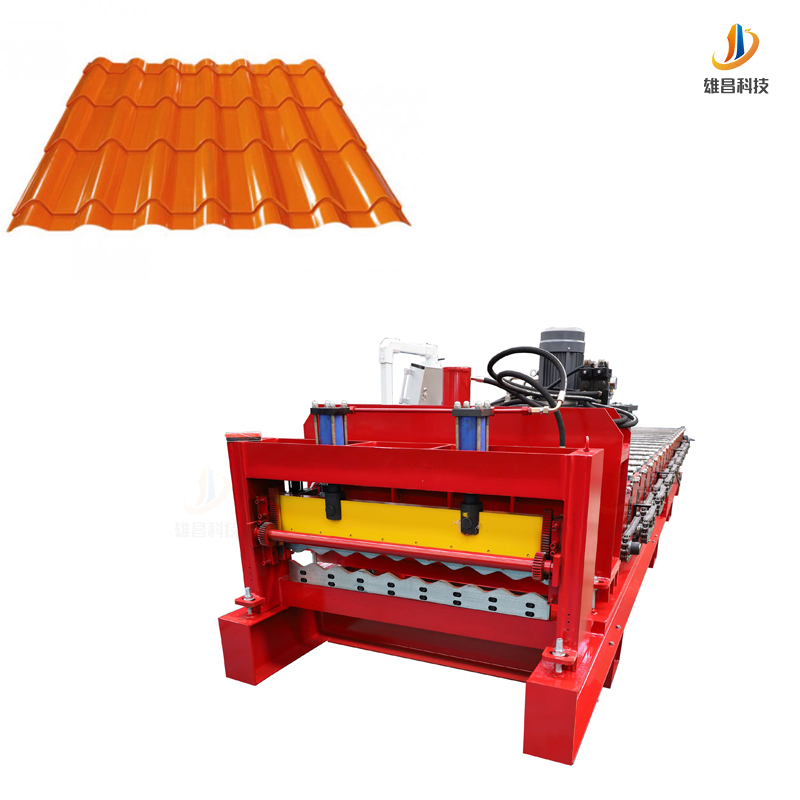
Decorative step-tile panels with synchronized hydraulic pressing for uniform step depth and clean tile lines.
View Category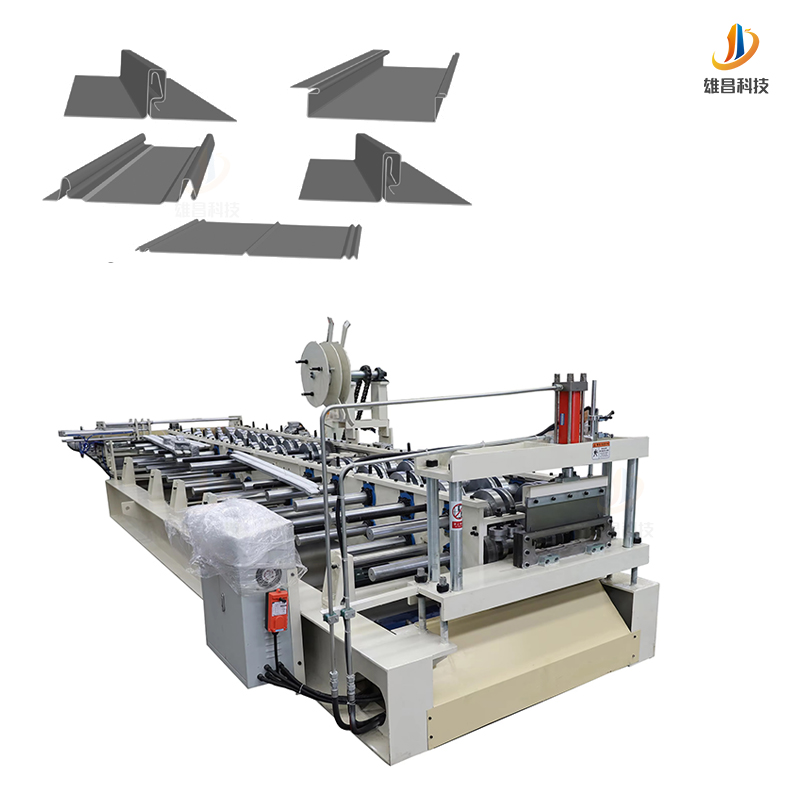
Male and female seam legs that snap together by hand, with controlled fit tolerance for field-friendly installation.
View Standing Seam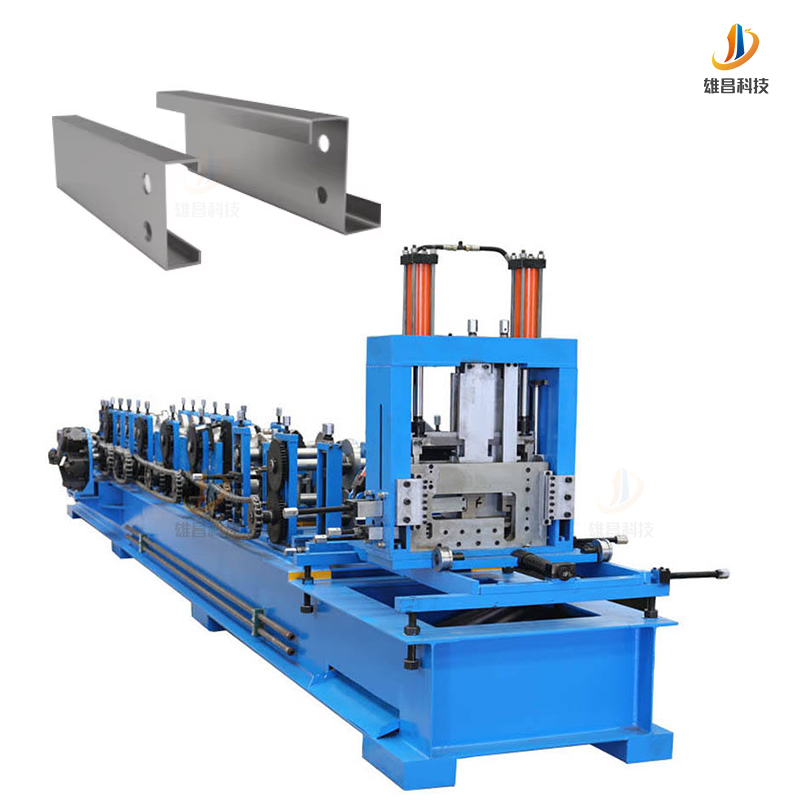
Produces both C and Z purlins on one line with fast size changeover, keeping one investment flexible across projects.
View Purlin Machines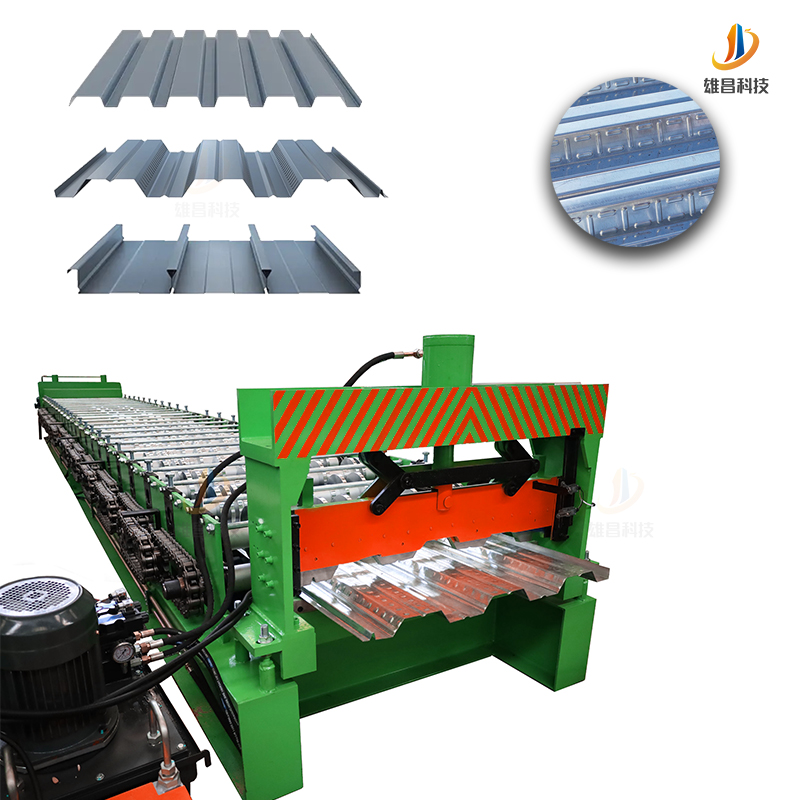
Converts galvanized coil into composite floor decking with embossing rolls and a heavy-duty frame for deck depth control.
View Floor DeckPractical technical notes for buyers who want fewer surprises after installation. These topics reflect the details that decide whether a roll forming line becomes a reliable production asset.

Why continuous roll forming beats press braking for long, consistent profiles, and which industries gain the most from it.
Read Blog
Six root causes of bearing failure, the diagnostic checks to run first, and how they show up as strip tracking loss and coating defects.
Read Blog
From bend radius to roll pass design, this article explains what makes coatings crack at the bend line and how coating-safe forming prevents it.
Read BlogStraight answers based on the projects we deliver every year. If a detail is not covered here, send your profile drawing and electrical requirements so an engineer can respond directly.
Send Inquiry NowSend your profile drawing, coil data, target output and local power supply. XC will review the forming route and explain what must be confirmed before an accurate quotation can be issued. For San Francisco buyers, include the destination port, installation city and any project-specific compliance requirements.
These eight product links complete the original product set for buyers comparing a full roll forming program. Each link goes to the original product page, and every machine can be discussed for San Francisco Bay Area distribution, fabrication or project-specific production.
Send Inquiry Now
PBR panel production for roofing and wall applications where rib geometry, cover width and fastener placement must be repeatable.
View Product
AG and Tuff-Rib panels with consistent rib height and lap fit, built for agricultural, post-frame and light commercial suppliers.
View Product
Two roofing profiles on one frame, such as trapezoidal and corrugated, reducing floor space and capital cost for mixed markets.
View ProductThe corrugated wave workhorse: economical, high-volume and adaptable to GI or PPGI coil for roof and wall panels.
View Product
Continuous C-section production with PLC length control and hydraulic punching for bolt holes, suited to steel structure suppliers.
View Product
For C studs used in interior partitions, external framing and panelized construction where punchout position and web depth must repeat.
View Product
High-strength panels for field-seamed single or double lock systems, with wind-uplift resistance for large-span and commercial roofs.
View Product
A dedicated Z-section line with lapping capability for continuous purlin runs, long-span roofs and wall girts.
View ProductLooking for a machine family not shown here? XC also supplies roofing sheet roll forming machines, trapezoidal roofing sheet machines, double layer roofing sheet making machines, standing seam roll formers, purlin roll forming machines, floor deck roll forming machines, light gauge steel roll forming machines and hot products.