


Roll Forming Advantages and Applications
Why continuous roll forming beats press braking for long, consistent profiles, and which industries gain the most from it.
Guide · Nov 09, 2026
The first four product families below represent the core profiles commonly evaluated by Kenyan roofing businesses: PBR panel, U-panel, IBR sheet and Tuff-Rib / AG panel. Every link preserves the original XC product URL and can be developed into a Kenya-specific specification with voltage, profile drawing, coil data and after-sales scope.

A high-rib metal roofing profile often specified for warehouses, factories, commercial buildings and agricultural structures. The line can be configured with 415 V / 50 Hz electrics, English HMI, profile-matched cutting and a Kenya spare-parts package.
Kenya localization available
U-panel roll forming is a practical choice for wall cladding, roofing and side cladding applications where consistent coverage and straightforward installation matter. Buyers can specify material yield strength, coil width and profile tolerances before quotation.
Custom profile review
IBR sheet forming lines are widely relevant to Kenyan manufacturers supplying roofing sheets to contractors, hardware distributors and project sites. The engineering priority is stable rib height, accurate lap geometry and repeatable cut length during long production runs.
High-volume option
The Tuff-Rib / AG panel family is often used for post-frame buildings, agricultural roofs, workshops and light industrial structures. Consistent rib geometry and lap fit reduce on-site rework and support faster installation by local roofing teams.
Agricultural & industrialFor companies searching for custom trapezoidal roofing sheet machine manufacturers and companies in Kenya, the decisive question is not simply where to buy a machine. It is how to build a repeatable local production capability that serves Kenyan roof profiles, coil supply, project deadlines, power conditions and after-sales realities.
Kenya’s construction economy is shaped by urban growth in Nairobi and the surrounding metropolitan counties, port-linked logistics around Mombasa, inland distribution through Nairobi, Nakuru, Eldoret, Thika, Athi River and Kisumu, plus continuing demand for affordable housing, schools, hospitals, warehouses, agro-processing facilities and commercial buildings. In this environment, roofing is not a secondary product: it is a visible, weather-critical building envelope component that affects project speed, waterproofing confidence, thermal performance decisions and the reputation of the contractor.
Historically, many Kenyan roofing businesses purchased finished sheets from distributors or imported pre-formed panels. That model works for standard specifications, but it has limits when project teams need long panels, fast replacement cycles, custom lengths, colour consistency and lower freight waste. A local trapezoidal roofing sheet machine allows a manufacturer or contractor to buy coil, form panels close to the market and respond to site schedules with less dependence on container lead times. It also creates an opportunity to serve both factory-based distributors and site-based production models.
At the same time, Kenya is not a single market. Coastal projects face humidity, salt-laden air and corrosion considerations. Highland and central regions may present different logistics and installation conditions. Large logistics and industrial parks demand long-span roofs, wide coverage and dependable lap details. Agricultural projects need cost-effective, durable roofing for sheds, stores and livestock structures. A machine specified for one context may not be optimal for another. That is why serious buyers compare the coil thickness range, yield strength, paint system, profile tolerance, line speed, cut accuracy and maintenance plan rather than selecting on machine price alone.
For a Kenyan distributor, the commercial advantage of local roll forming is strongest when order books contain a mix of long panels, short-run colours, replacements and project-specific lengths. Shipping finished sheets can consume container volume and risks surface damage, handling marks and length limitations. Coil is denser, more transport-efficient and easier to store in a controlled area. When the line is properly specified, local forming can reduce finished-panel logistics, improve the ability to supply exact lengths and create a more responsive service model for contractors.
For a contractor, the benefit is control. A site-based or near-site line can help when access roads, crane availability or panel handling make long finished sheets difficult to deliver. But site-based production also demands disciplined coil storage, stable power, trained operators and a maintenance schedule. A factory-based line with a delivery vehicle may be more efficient for distributors serving multiple counties. The correct model depends on output mix, expected annual volume, available floor space, financing structure and after-sales capability.
In Kenya, the real cost of a roof sheet line is not limited to the FOB machine price. It includes shipping to Mombasa, port and clearance processes, inland transport, foundation work, power connection, operator training, production trial, maintenance and downtime. A machine that saves a small amount at purchase but produces unstable laps, surface marks or frequent stoppages can damage a distributor’s service reputation far beyond the initial saving. Conversely, a well-engineered line can improve coil yield, reduce rework, raise line availability and make the business more credible with contractors and project managers.
This is why XC approaches a Kenya project as an engineering brief rather than a catalogue order. We ask for the profile drawing or sample, coil width, material type, thickness range, yield strength, target output per shift, planned panel length, site voltage, available floor space and operator experience. From these inputs, our team can propose the forming station count, roller material, drive system, cutting method, control platform and recommended spares. The result should be a line that is practical to operate in Kenya, not merely technically impressive on a specification sheet.
Across Africa, the Middle East, South Asia, Latin America and Europe, buyers are applying more disciplined procurement thinking to cold roll forming equipment. They compare engineering capability, automation, documentation, safety, lifecycle support and the supplier’s ability to translate a local profile into a production-ready line.
Global demand for metal roofing and cold-formed steel products continues to be driven by warehousing, logistics, industrial parks, commercial construction, agricultural structures, transport infrastructure and affordable building programmes. At the same time, steel prices, freight costs and currency movements have made buyers more focused on material yield, local production flexibility and reduced dependence on imported finished panels. This is particularly relevant in East Africa, where import lead times, port handling and inland transport can influence project schedules.
For manufacturers and distributors, the purchasing question has shifted from “Can this machine make a panel?” to “Can this machine make the right panel, at the required output, with acceptable surface quality, and with support that keeps it running?” That shift favours suppliers who can provide a complete production architecture: coil handling, entry guidance, forming, punching where required, cutting, stacking, control, safety, documentation, training and spare-parts planning.
A trapezoidal roofing line is part of a value chain. Coil must be stored and handled without moisture damage. The decoiler must feed strip consistently. Entry guides must square the strip. Forming stations must distribute strain across the profile. The cutter must produce clean lengths. The control system must make operation understandable. The maintenance plan must protect uptime. If any part of this chain is weak, the buyer experiences the problem as “machine quality” even when the root cause is system integration.
Experienced buyers rarely compare only one number. They compare the line as an asset. They ask how many forming stations are used, what the shaft diameter and roller material are, how the cutter is matched to the profile, whether the PLC can store batch settings, how the machine is guarded, what spares are recommended and how quickly technical answers are provided after the sale.
Roll pass design, shaft rigidity, roller finish and frame stability determine whether the profile stays within tolerance over years of production.
Clear scope, machine layout, utility requirements, lead time, packing, Incoterms and payment terms allow a realistic project appraisal.
Documentation, remote guidance, on-site service options and critical spares planning protect uptime after commissioning.
Support for import documentation, electrical configuration, safety guarding, operator instructions and local site requirements.
A roll former is only as good as its weakest station. The following stages explain what buyers should understand before approving a trapezoidal roofing sheet machine for Kenya.
A manual or hydraulic decoiler feeds coil under controlled tension. Stable unwinding prevents strip wander, which is a common cause of camber and twisted panels.
Adjustable entry guides square the strip to the roll centreline before the first pass. Correct alignment here largely decides the straightness of the finished panel.
Each station bends the strip a few degrees at a time. Roll pass design spreads strain evenly to protect zinc and paint coatings and to avoid edge waves on thinner coils.
An encoder measures strip travel and the PLC triggers a profile-matched blade. The target is burr-free cutting and clean lengths within the agreed tolerance.
A touch-screen HMI stores batch lengths and quantities, monitors faults and supports operator-friendly production. English interface and clear manuals are important for Kenyan teams.
Before shipment, the line should be assembled and test-run with coil matching the buyer’s specification. Sample panels, dimensions and trial-run video should be reviewed before packing.
A Kenya-focused FAT checklist should answer practical questions: Does the panel match the approved profile drawing? Is the cover width correct? Is the rib height consistent along the full panel? Does the cutter leave a clean edge? Is the control language understandable? Are guards in place? Are the electrical diagrams complete? Are critical spare parts identified? A supplier who can answer these questions before shipment reduces the uncertainty that overseas buyers often face.
Choose a machine family below. Every model is configured to your coil thickness, yield strength, profile drawing and site power supply. Standard catalogues are a starting point, not a limit. Original XC product images and product links are retained below.
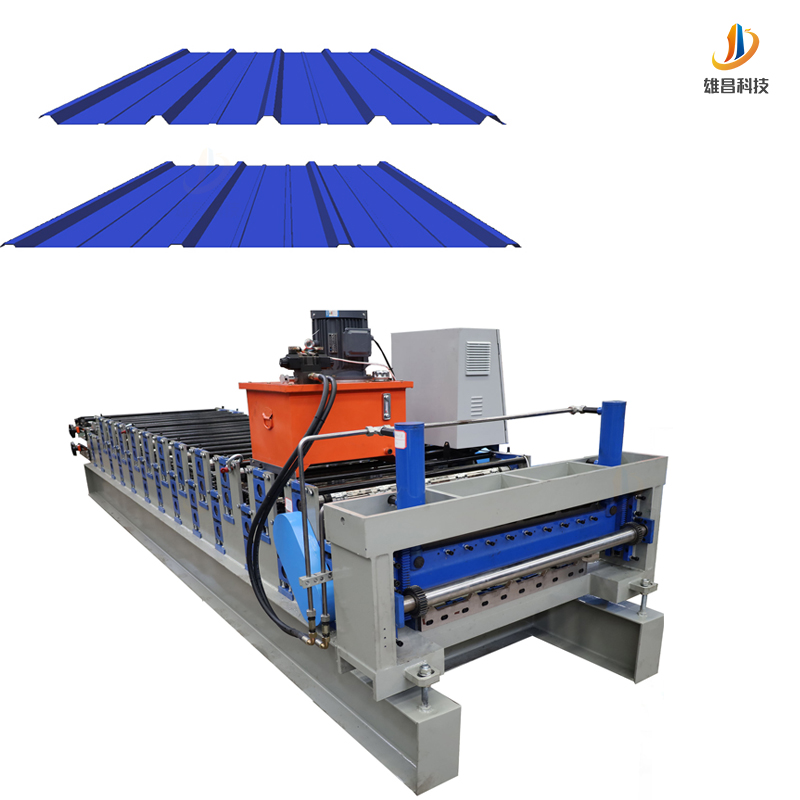
Two roofing profiles on one frame, such as trapezoidal and corrugated. This cuts floor space and capital cost for suppliers serving mixed markets.
View Details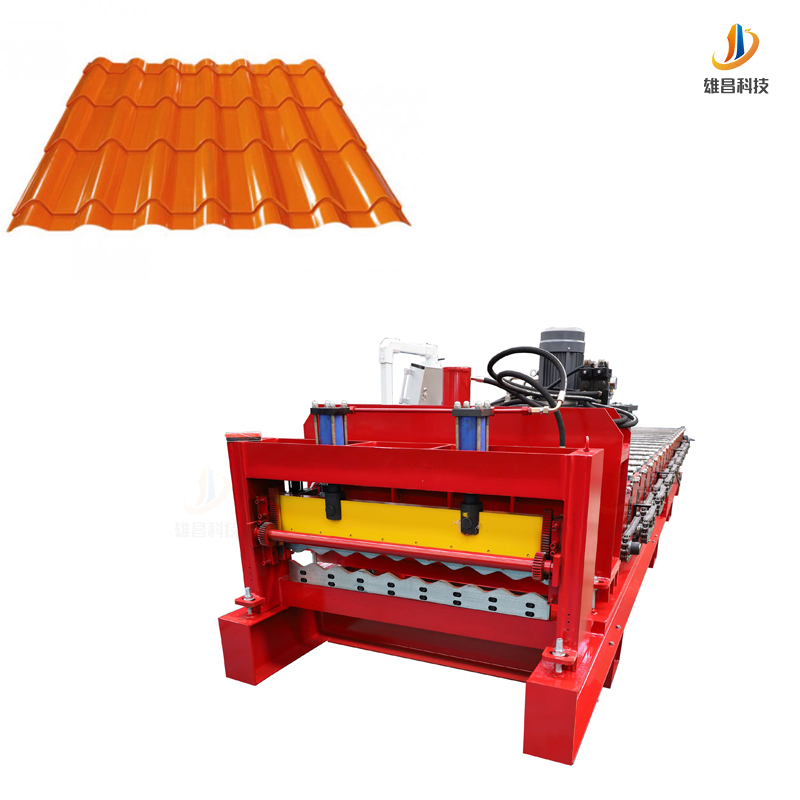
Forms decorative step-tile panels. A hydraulic press station is synchronized with the PLC to give uniform step depth and clean tile lines.
View Details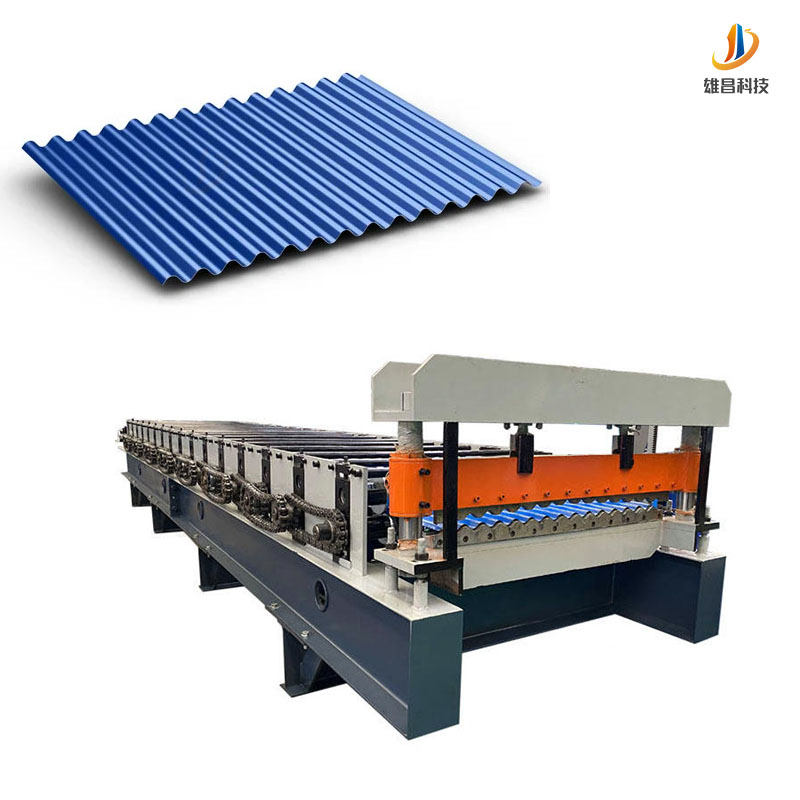
Rolls sinusoidal corrugated sheets. It is an economical, high-volume profile for agricultural, residential and warehouse roofs and walls.
View Details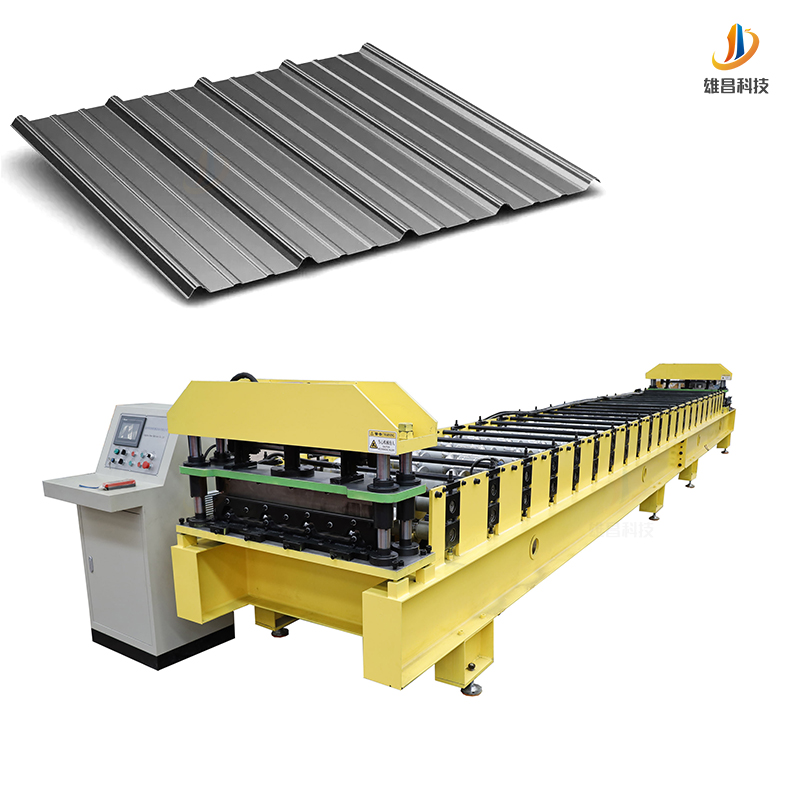
Produces AG and Tuff-Rib panels with consistent rib height and lap fit. It is built for post-frame and agricultural building suppliers.
View Details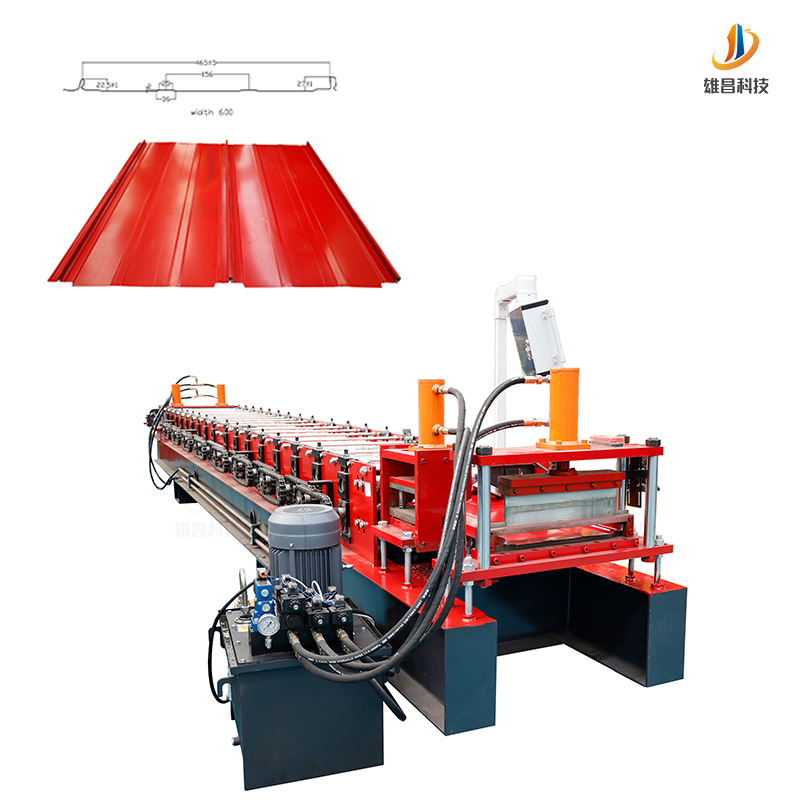
Snap-lock panels with an integrated nailing flange. No separate clips are needed, which makes it ideal for residential and light commercial roofs.
View Details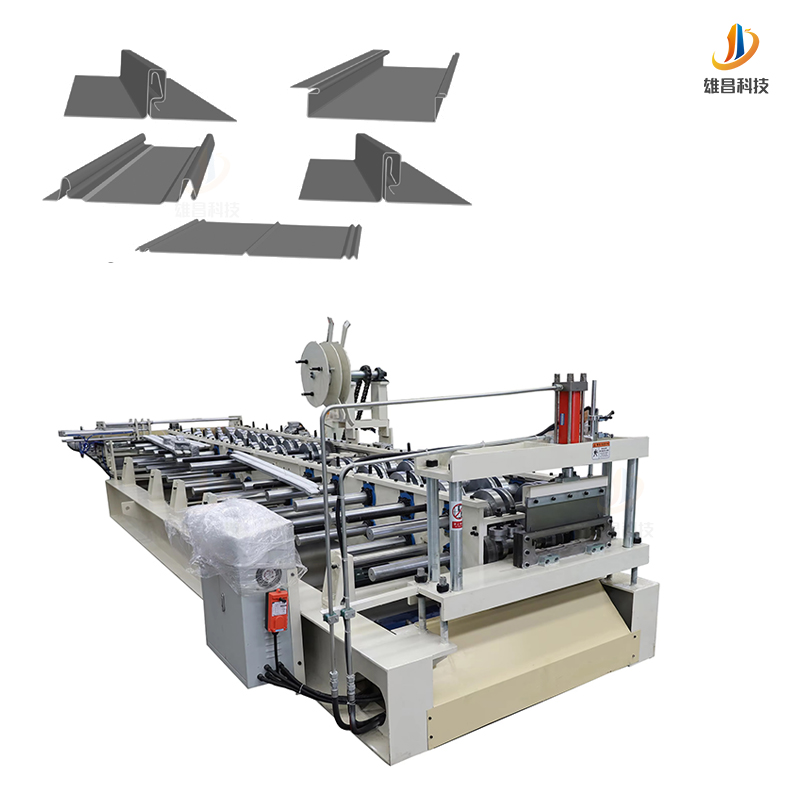
Forms male and female seam legs that snap together by hand. The fit tolerance is controlled for watertight, field-friendly installation.
View Details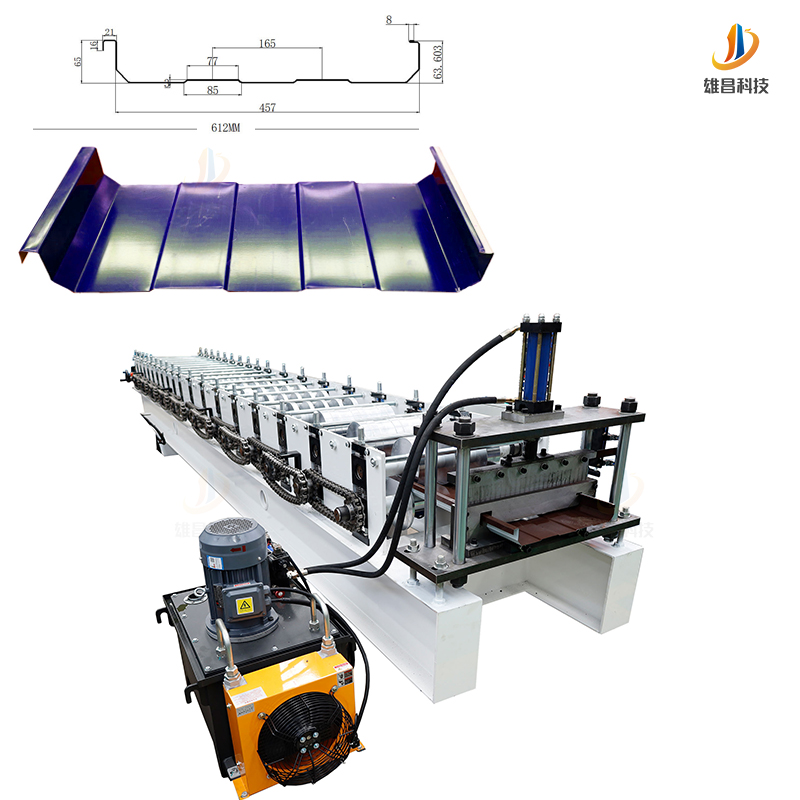
High-strength panels for field-seamed single or double lock systems. Wind-uplift resistance makes it suitable for large-span industrial roofs.
View Details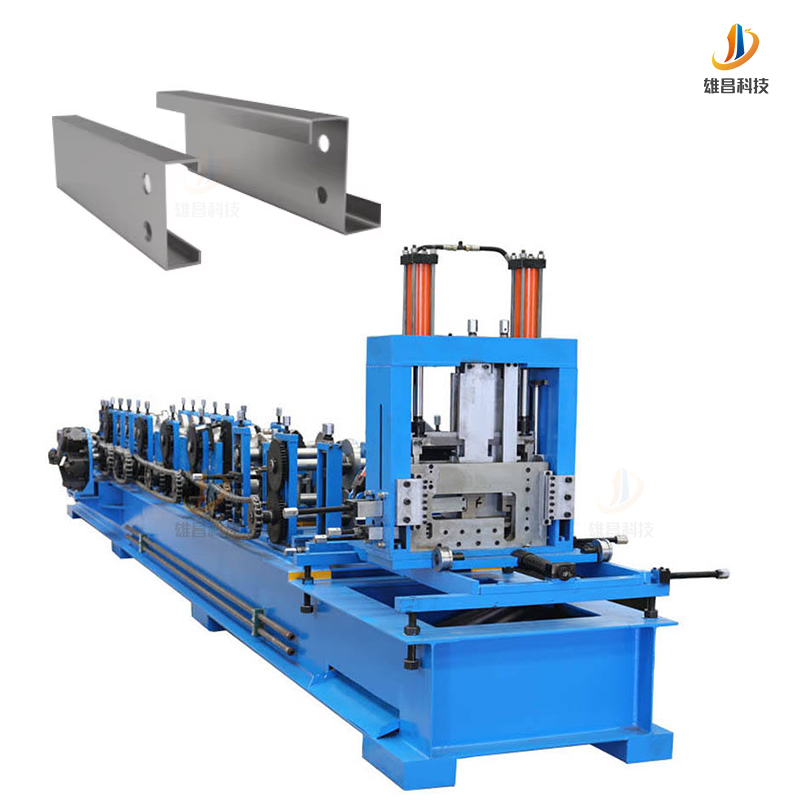
Produces both C and Z purlins on one line with fast size changeover. This keeps one investment flexible across many building projects.
View Details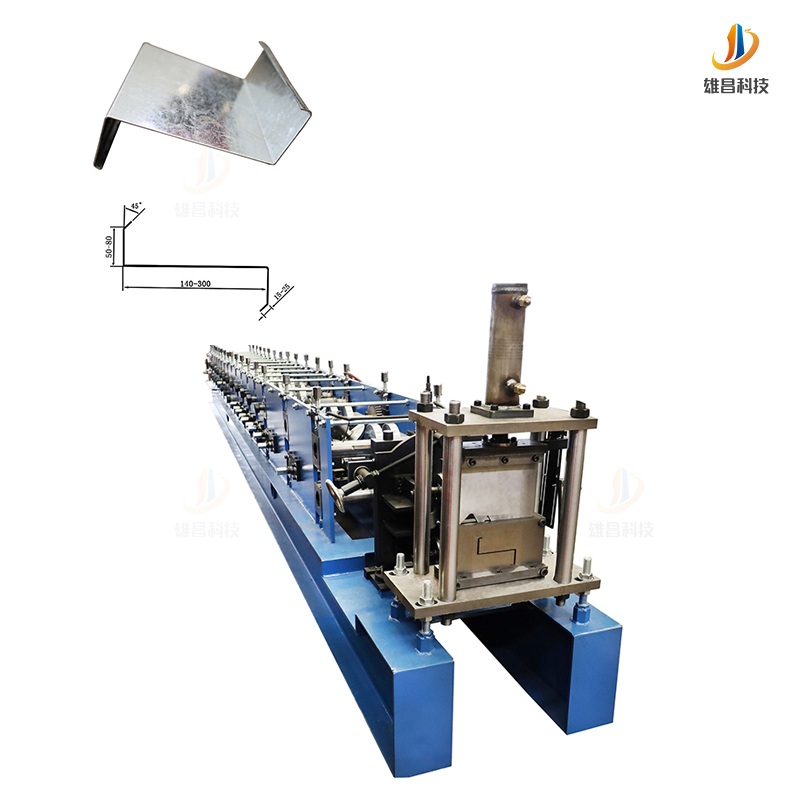
A dedicated Z-section line with lapping capability for continuous purlin runs on long-span roofs and wall girts.
View Details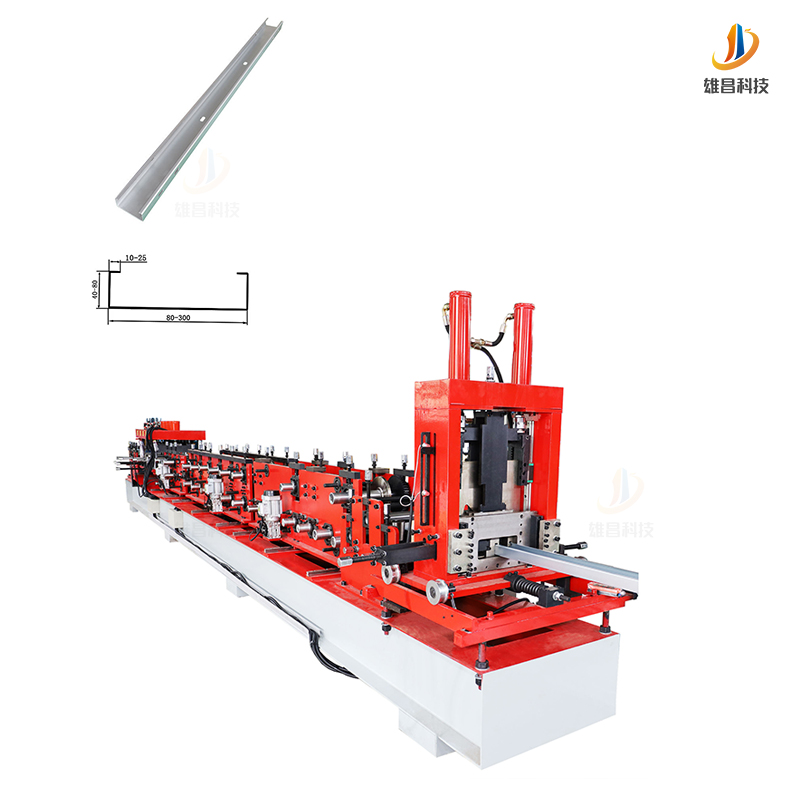
Continuous, fully automatic C-section production with PLC length control and hydraulic punching for bolt holes.
View Details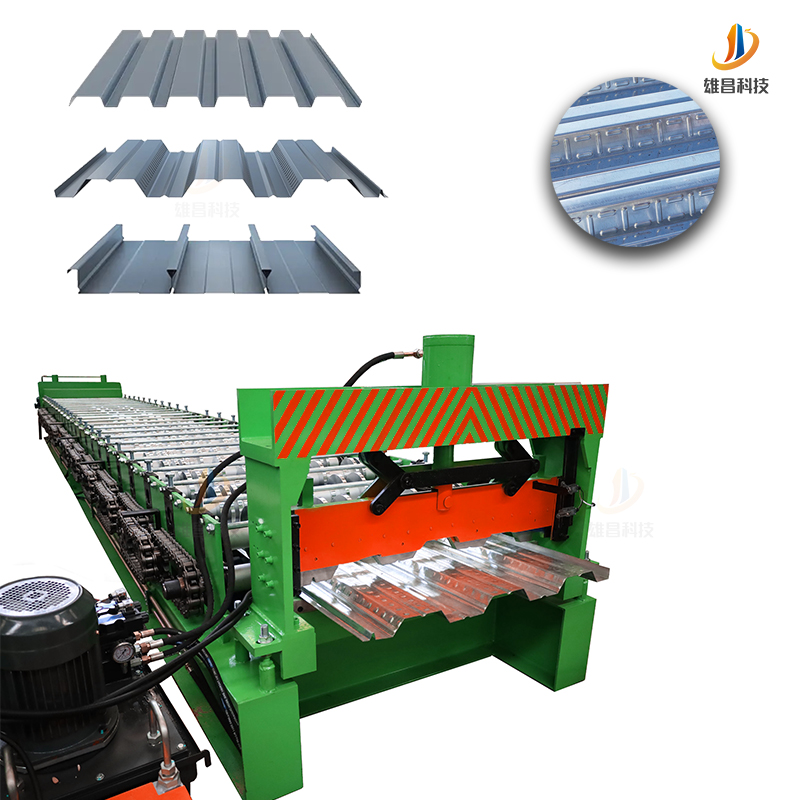
This line converts galvanized coil into composite floor decking. Embossing rolls create the mechanical bond with concrete, and a heavy-duty frame holds deck depth and cover width over long production runs.
View DetailsSend a drawing, sample panel or photo. XC engineers can review the profile, coil range, station count, cutting method, voltage and target output before quotation.
Send Inquiry NowRoll formed profiles support many sectors. For Kenyan buyers, the most relevant opportunities usually combine building materials, steel construction, agriculture, transport and new energy.

Roofing sheets, wall cladding, standing seam panels, floor decking and C/Z purlins. These are the core profiles of modern steel buildings, warehouses and residential projects.

Roll formed structural rails, door frame sections and reinforcement beams. Repeatable cross-sections and tight length tolerances feed directly into automated assembly.

Appliance side panels, cabinet frames and trim profiles formed from pre-painted or stainless coil. Surface protection during forming matters as much as dimension.

Container panels, truck body sections, railway car profiles and highway guardrails. These are long, heavy-gauge parts that need rigid stands and accurate cut-off.

Solar PV mounting rails, strut channels and support brackets. These high-volume parts benefit from inline punching and fast size changeover.

Shelving uprights, racking beams, cabinet frames and partition studs. Consistent hole pitch and straightness make on-site assembly fast and safe.
Quotes are only comparable when the specifications are. Use these indicative ranges and the key check for each machine type to judge any supplier’s offer, including ours.
| Machine Type | Typical Coil Thickness | Forming Stations | Typical Line Speed | What to Verify in a Quote |
|---|---|---|---|---|
| Trapezoidal / IBR Roofing | 0.3–0.8 mm | 16–22 | 15–30 m/min | Roller material and chrome thickness; shaft diameter |
| Corrugated Roofing | 0.3–0.6 mm | 18–24 | 15–30 m/min | Wave pitch accuracy and edge waviness on thin coil |
| Glazed Step Tile | 0.3–0.7 mm | 12–18 | 3–6 m/min | Press-station cycle and step-depth consistency |
| Standing Seam | 0.4–0.8 mm | 12–20 | 10–20 m/min | Seam system compatibility and panel width adjustment |
| C/Z Purlin | 1.5–3.0 mm | 14–20 | 10–20 m/min | Size-change method, manual or automatic, and punching dies |
| Floor Deck | 0.7–1.5 mm | 20–30 | 10–15 m/min | Embossing pattern and frame rigidity for deck depth |
Ranges reflect typical XC configurations for reference only. Final parameters are engineered to your profile drawing, material yield strength, output target and site power supply. Kenyan buyers should confirm coil supply, spare-parts plan and electrical conditions before order confirmation.
A transparent six-step process, so overseas buyers know exactly what happens and when.
Send your drawing, sample or photo plus coil data. Engineers check that the profile can be formed and flag any risks.
You receive the station count, roller material, drive and cutting system, power configuration and a confirmed schedule.
Frames, shafts and rollers are machined and assembled in-house, with inspection at each critical stage.
The line runs with coil matching your specification. Samples are measured, and a video report is shared for approval.
Export packing, documentation, then remote or on-site installation and operator training according to the agreed scope.
Spare-parts planning, maintenance guidance, technical support and improvement suggestions after the line enters production.
The next stage of competitiveness in Kenya will not be defined only by the ability to form a basic trapezoidal panel. It will be defined by how well a producer can combine profile flexibility, automation, traceability and service responsiveness. Buyers should consider a machine not only for today’s order book but for the profiles, materials and customer expectations likely to emerge over the next five to ten years.
A future-ready machine strategy should therefore include operator training, maintenance culture and a plan for expanding the product mix. The supplier’s ability to provide drawings, documentation, spare parts and technical answers after shipment is part of the technology roadmap, not an afterthought.
A machine is only “Kenya-ready” when it can be integrated into the buyer’s site, power, workforce and import process with minimal friction. Localization is an engineering and documentation process, not a label.
Motors, hydraulic stations and control cabinets can be configured for the project’s supply, commonly 415 V / 50 Hz three-phase where applicable. Buyers should confirm voltage stability, earthing, cable sizing, breaker protection and generator compatibility. For mixed-grid sites, voltage protection and clear operating procedures are essential.
Kenyan importers may need to coordinate with KEBS, PVoC service providers, clearing agents and customs. XC can support with nameplates, machine manuals, electrical diagrams, packing lists and technical descriptions. The buyer remains responsible for confirming applicable standards, duties, classification and import approvals with local authorities.
Delivery can include English manuals, electrical diagrams, remote video guidance and, when requested, on-site engineer service. Operator training should cover safe start-up, coil loading, profile checks, batch setting, cutter maintenance and fault response.
Plan a critical spares package before the machine leaves the factory: cutting blades, bearings, chains, hydraulic seals, sensors, relays and recommended electrical components. Fast access to technical advice can prevent a small fault from becoming a long production stoppage.
Before installation, confirm the machine foundation or floor loading, available production length, coil storage area, power connection, compressed-air requirement if applicable, lifting equipment, panel stacking space and safe operator access. For site-based production, factor in weather protection, dust control, security and material handling. For factory production, plan traffic flow so coil delivery and finished-panel dispatch do not interfere with forming operations.
Compliance should be treated as a shared responsibility. XC engineers can provide technical information and documentation support, but the importer and operator should verify local requirements for electrical safety, occupational health and safety, machine guarding, noise, hydraulic oil handling and waste disposal. This is particularly important for production teams working around moving rollers, cutters and coil handling equipment.
Sichuan Xiongchang Technology Co., Ltd. (XC) designs and manufactures cold roll forming equipment for roofing, flooring, door and structural components, together with auxiliary line equipment. The guide is written from our export engineering perspective and should be used alongside project-specific technical review.
Sichuan Xiongchang Technology Co., Ltd. (XC) brings more than 20 years of hands-on roll forming experience across its team. That experience shows in details buyers notice after installation: rollers that hold tolerance, coatings that do not crack at the bend, panels that fit on the roof the first time, and controls that operators can learn without unnecessary complication.
Our team supports profile-to-machine design from a drawing, sample or photo; in-house machining and assembly; factory trial runs with video acceptance; export documentation; and after-sales support through manuals, remote guidance, on-site service when required and spare-parts supply. For Kenya, we emphasize clear communication on voltage, profile tolerances, coil data, shipping scope and commissioning expectations.








Practical notes on roll forming performance, maintenance and coating quality. These topics matter in Kenya because line uptime and panel appearance directly influence contractor confidence.
Why continuous roll forming beats press braking for long, consistent profiles, and which industries gain the most from it.
Guide · Nov 09, 2026

Six root causes of bearing failure, the diagnostic checks to run first, and how they show up as strip tracking loss and coating defects.
Maintenance · Sep 22, 2026

From bend radius to roll pass design, this article explains what makes coatings crack at the bend line and how coating-safe forming prevents it.
Quality · Aug 25, 2026
Explore more XC engineering articles, search-intent topics and profile development notes for roofing, purlin, floor deck and light-gauge steel applications.
Straight answers based on the projects we discuss. Need a detail not covered here? Our engineers reply directly through the inquiry channel.
Send your profile drawing, sample photo, coil data, target output and site voltage. Our engineers will review the application and help define a practical line configuration for Kenya.
These eight product links are retained from the original XC product list. Kenyan buyers can request localization notes for any of them, including profile adaptation, voltage configuration, manual language, spare-parts planning and commissioning support.

Step-tile roofing capability for residential and architectural projects, with press-station timing and step depth to review during specification.
Villa & residential roofing
Concealed-fastener standing seam panels for architectural and commercial roofs, with seam geometry and panel width to be confirmed against the project.
Standing seamU-panel roll forming for cladding and roofing applications where profile consistency, coil width and panel handling are central to the production plan.
Cladding & roofing
Metal C stud production for light steel framing and partition systems. Buyers should specify web depth, flange, lip, material thickness and punching requirements.
Light steel framingTuff-Rib and AG panel forming for agricultural buildings, workshops and post-frame structures, with rib height and lap fit confirmed by sample.
Agricultural buildings
Light gauge steel U-track production for framing systems. Hole pitch, straightness, cut length and stacking method should be agreed before purchase.
LGS constructionPBR panel roofing production for warehouses, commercial buildings and industrial projects, with profile drawing and coil data reviewed before quotation.
Industrial roofing
C and Z purlin production on one line with size-change flexibility. Kenyan steel builders should review punching, length control and section range during specification.
Steel structure purlins