

C Stud
China Metal C Stud Roll Forming Machine Manufacturer, Companies
For partition, ceiling and infill framing lines where straightness, web width and punching consistency matter.
View Product DetailsThese are the core product entries for buyers who need a fast technical starting point for light gauge steel studs, U tracks, multi-profile framing and ribbed panel production in Japan.
For partition, ceiling and infill framing lines where straightness, web width and punching consistency matter.
View Product Details
Matched U track production for steel stud systems, with adjustable web and flange dimensions for Japanese projects.
View Product Details
A flexible stud and track platform for factories serving residential, commercial and retrofit projects.
View Product Details
Ribbed panel forming for agricultural, warehouse and industrial envelopes where lap fit and rib height are critical.
View Product DetailsJapan’s construction supply chain is not a volume-only market. It rewards suppliers that can combine profile accuracy, documentation discipline, delivery reliability and after-sales responsiveness. Light gauge steel is embedded in interior partitions, ceiling grids, prefabricated housing, steel-frame buildings, logistics facilities, renovation works and disaster-resilient structures. Buyers therefore evaluate a roll forming machine as a production asset, not a catalogue item.
The 2024 workstyle reform in Japanese construction has accelerated the shift from labour-intensive site work to factory-controlled prefabrication. With an ageing workforce, strict quality expectations and urban sites that offer limited storage, contractors prefer panelised and pre-cut components that arrive straight and fit the first time. That is exactly where a custom LGS roll forming line creates value: predictable studs, tracks, purlins and panels, produced close to the project or in a regional factory.
Japan also creates engineering demands that generic machines often miss. Coastal salt exposure influences coating and galvanising choices. Typhoon and snow loads influence section design. The country’s two power regions require equipment configured for 200V or 400V at 50Hz or 60Hz. Japanese documentation expectations commonly include electrical diagrams, operating manuals, maintenance schedules and clear safety labelling. A serious manufacturer should discuss these points before quoting, not after the container arrives.

Japan-specific demand is rarely a single profile. It is a combination of tight site conditions, high labour cost, seismic detailing, corrosion control and fast renovation cycles. These are the application scenarios that create the clearest business case for a custom line.

C studs and U tracks for offices, condominiums, hotels, hospitals and retail fit-outs. Straightness, punch spacing and bundle handling directly influence installer productivity.

Wall framing, floor joists, roof support members and service cavities. Factory production improves dimensional consistency and reduces wet trades on tight urban sites.

Short runs, frequent profile changes and tight delivery windows. A compact line with fast changeover helps fabricators support renovation contractors without overstocking.

Purlins, roof and wall cladding, floor deck and mezzanine framing. Corrosion protection and consistent section depth are especially important in coastal and cold-chain facilities.

Mounting rails, strut channels and support brackets for rooftop and ground-mounted PV. Inline punching and repeatable hole pitch reduce site drilling and installation time.

Rapid production of bracing supports, partition framing and repair components. Local stock of blades, bearings and electrical parts is part of business continuity planning.
Across Japan, Europe, North America, the Middle East and Southeast Asia, equipment buyers are moving away from “lowest initial price” decisions. Labour shortages, energy volatility, shipping disruption and stricter project deadlines have made total cost of ownership the dominant lens. A custom roll forming line must deliver stable output, fast changeover, accessible spare parts and remote technical support.
Japanese buyers often sit inside a China plus one or regional inventory strategy. They may source the custom machine from an experienced Chinese factory, keep coil supply with local steel service centres, and arrange installation or first-line maintenance through a local partner. This hybrid model works when the machine builder provides clear drawings, English and optionally Japanese documentation, FAT videos, and responsive engineering communication.
Global demand is strongest for lines that can produce regional profiles without compromising quality: IBR and trapezoidal roofing, standing seam panels, C/Z purlins, floor deck, glazed tile and LGS stud/track. Buyers increasingly ask for proof of trial-run samples, measured against the drawing, not only photographs of a machine frame.

The modern Chinese roll forming factory is no longer a simple fabrication workshop. Leading suppliers combine in-house roll pass design, CNC machining, laser cutting, controlled assembly, PLC testing and documented quality checks. This vertical integration shortens the feedback loop between engineering and production, which is critical for custom profiles and repeat orders.
For Japanese buyers, the supply-chain advantage is not only cost. It is the ability to source forming rollers, shafts, hydraulic stations, motors, PLC components and safety parts from a mature industrial cluster, then assemble and test the line under one roof. When a profile change is required, engineers can revise the flower pattern, re-check the roll set and validate the sample panel without sending critical work to multiple subcontractors.
Efficiency advantages include: shorter engineering-to-production cycles, modular line design, export-ready packing, factory acceptance testing with video evidence, and spare-part documentation. Resilience advantages include: dual sourcing of key components, buffer stock for common wear parts, and remote commissioning support that reduces travel delays.
For a Japan project, the practical result is a line that arrives with fewer unknowns. The buyer can review the proposed station count, roller material, shaft size, punching method, cutting system, voltage/frequency configuration and safety layout before manufacturing begins. That level of transparency is the real meaning of Factory 4.0 in this industry.
Explore XC Global Service
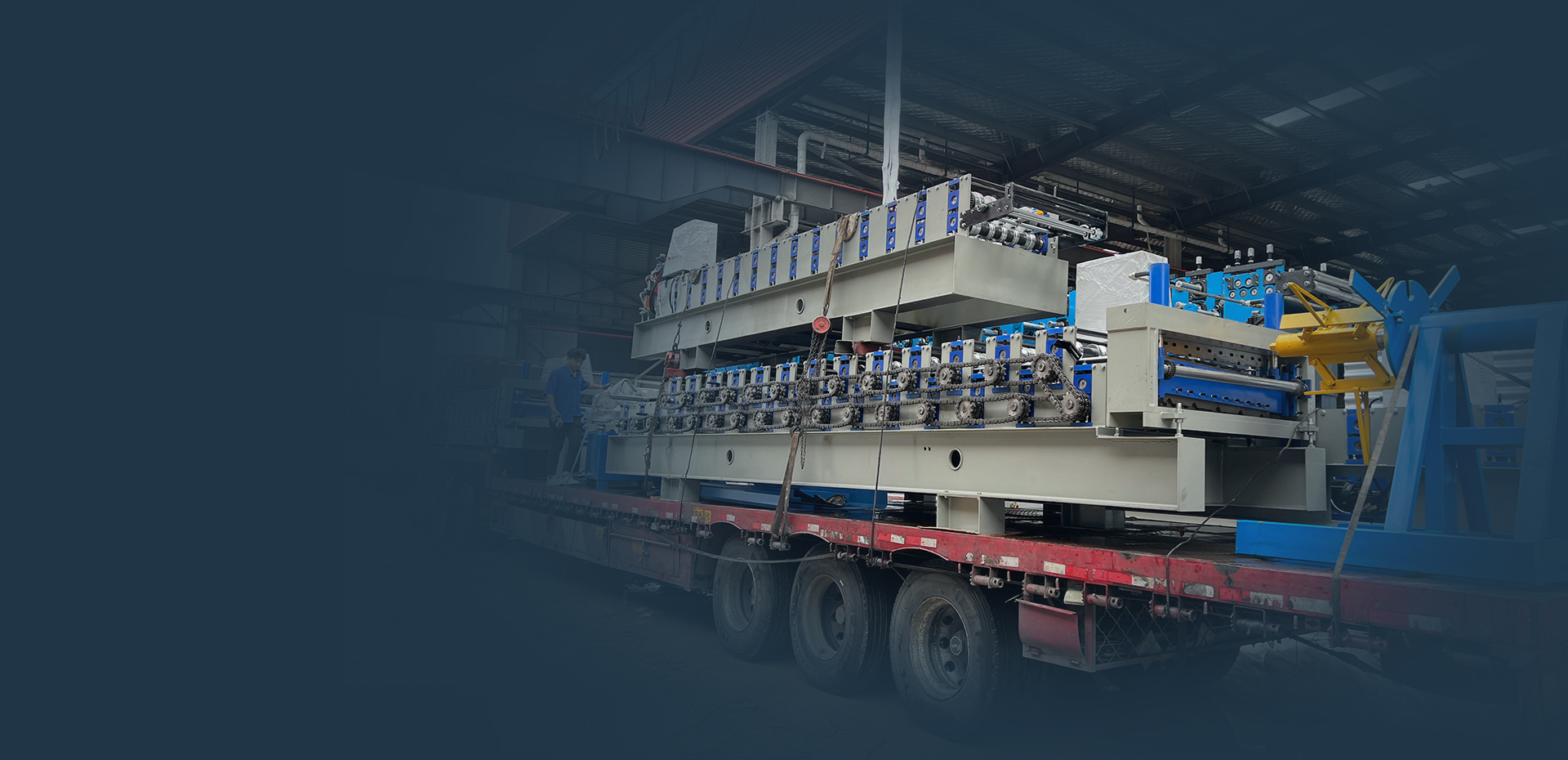

Sichuan Xiongchang Technology Co., Ltd. (XC) designs and manufactures cold roll forming equipment for roofing, flooring, door and structural components, together with the auxiliary line equipment each system needs to run efficiently. Our team brings more than 20 years of hands-on roll forming experience, and that experience shows in details buyers notice after installation: rollers that hold tolerance, coatings that do not crack at the bend, and panels that fit on site the first time.
Our customers range from residential roofing suppliers to industrial and infrastructure contractors. Each line ships with manuals, electrical diagrams, spare parts and remote or on-site commissioning, which supports long-term operational reliability. For Japanese buyers, we can align the technical file and training plan with the way your factory team actually works.
Send Inquiry Now

Two decades of profile development across roofing, structural and decking applications. We address edge waves, flare and coating cracks before shipment.

Rigid frames, precision-machined shafts and hard-chrome plated rollers keep profiles within tolerance shift after shift.

Engineers answer technical questions directly, from pre-sale profile review to commissioning and spare parts.
A roll former is only as good as its weakest station. These are the five stages that determine whether a light gauge steel or panel line will hold tolerance in daily production.
A manual or hydraulic decoiler feeds coil under controlled tension. Stable unwinding prevents strip wander, the first cause of camber and twisted panels.
Adjustable entry guides square the strip to the roll centreline before the first pass. Correct alignment largely decides the straightness of the finished panel.
Each station bends the strip a few degrees at a time. Roll pass design spreads strain evenly to protect zinc and paint coatings and avoid edge waves.
An encoder measures strip travel and the PLC triggers a profile-matched blade for burr-free cuts within ±1 mm, without crushing ribs or seams.
A touch-screen HMI stores batch lengths and quantities, monitors faults and supports multi-language operation for faster operator adoption.
Confirm the available floor space, coil loading direction, finished-panel run-out, maintenance access and control-cabinet position before the layout is frozen. In Japan, factory space is often tight and site delivery windows are short. A line that fits the building and the logistics flow is more valuable than a larger line that cannot be operated efficiently.
Also ask for the hydraulic power unit location, noise considerations, safety guarding details and the list of wear parts. These are practical commissioning issues that influence start-up time.
Quotes are only comparable when the specifications are. Use these indicative ranges and the key check for each machine type to judge any supplier’s offer, including ours.
| Machine Type | Typical Coil Thickness | Forming Stations | Typical Line Speed | What to Verify in a Quote |
|---|---|---|---|---|
| Trapezoidal / IBR Roofing | 0.3–0.8 mm | 16–22 | 15–30 m/min | Roller material and chrome thickness; shaft diameter |
| Corrugated Roofing | 0.3–0.6 mm | 18–24 | 15–30 m/min | Wave pitch accuracy and edge waviness on thin coil |
| Glazed Step Tile | 0.3–0.7 mm | 12–18 | 3–6 m/min | Press-station cycle and step-depth consistency |
| Standing Seam | 0.4–0.8 mm | 12–20 | 10–20 m/min | Seam system compatibility and panel width adjustment |
| C/Z Purlin | 1.5–3.0 mm | 14–20 | 10–20 m/min | Size-change method and punching die set |
| Floor Deck | 0.7–1.5 mm | 20–30 | 10–15 m/min | Embossing pattern and frame rigidity for deck depth |
| LGS Stud & Track | 0.6–1.6 mm | 10–20 | 15–35 m/min | Punching accuracy, web/flange adjustment and stack handling |
Ranges reflect typical XC configurations for reference only. Final parameters are engineered to your profile drawing, material yield strength, output target, local voltage/frequency and site power supply.
The original product architecture remains relevant for Japan: roofing and cladding owners need high-output profile lines, architectural projects need standing seam accuracy, and steel structure fabricators need purlin and deck capacity. The right starting point is the application, not the model number.
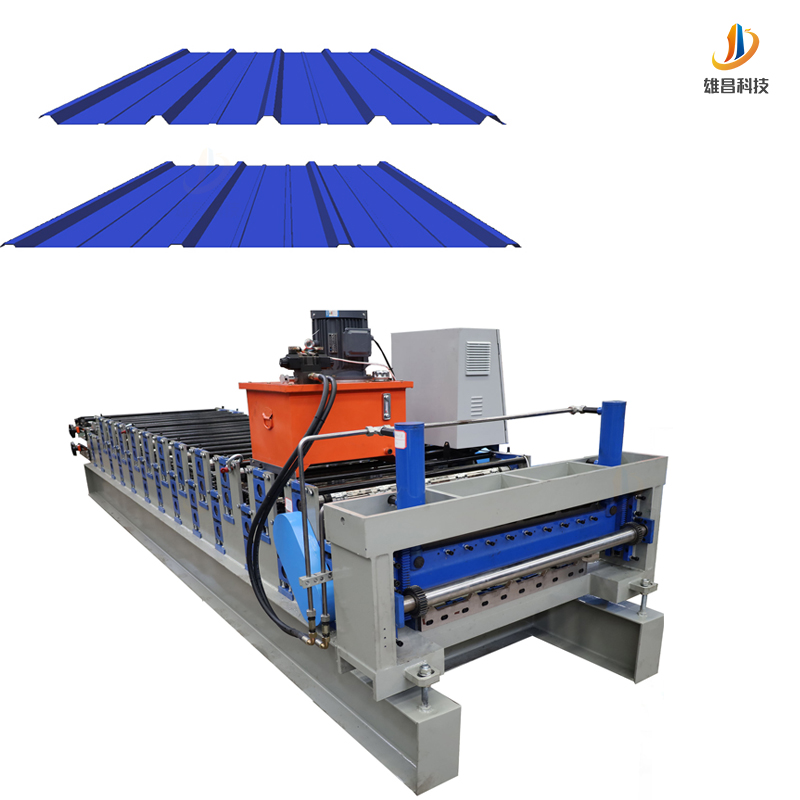
Two roofing profiles on one frame. This cuts floor space and capital cost for suppliers serving mixed markets.
View Details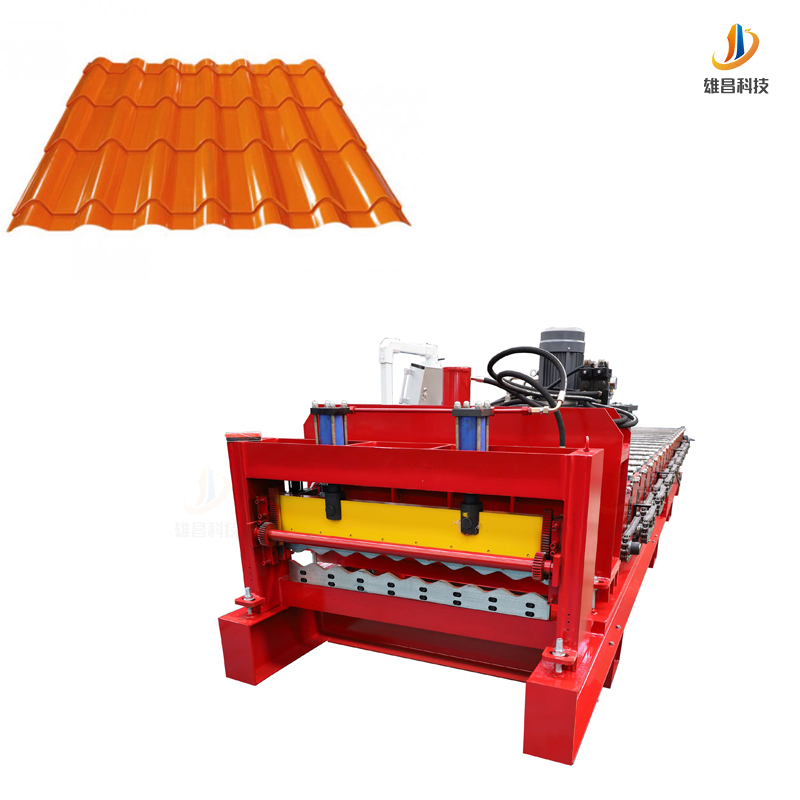
Forms decorative step-tile panels with a hydraulic press station synchronized to the PLC for uniform step depth.
View Details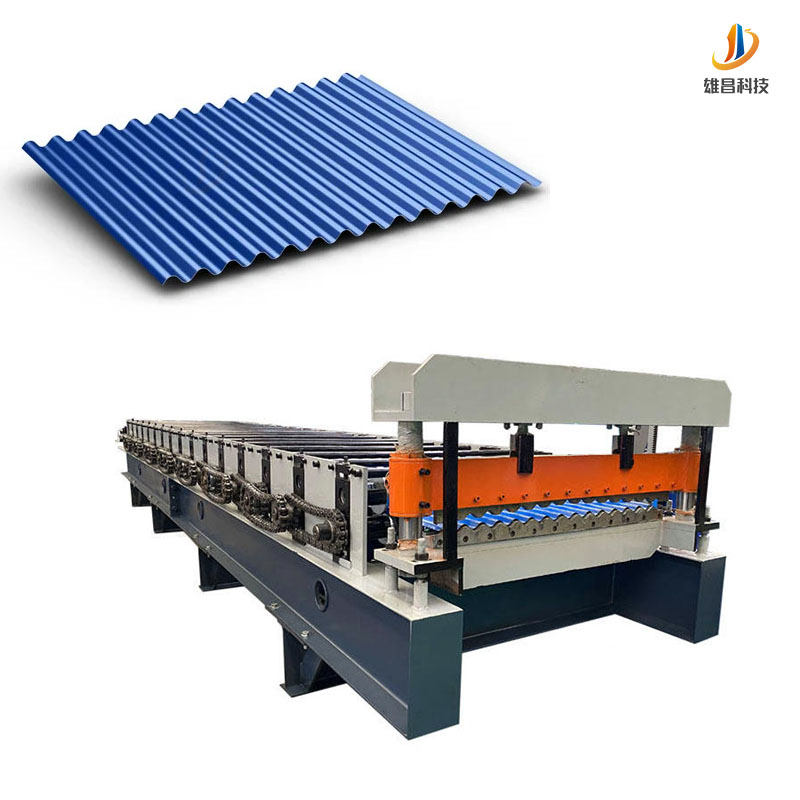
Rolls sinusoidal corrugated sheets for agricultural, residential and warehouse roofs and walls.
View Details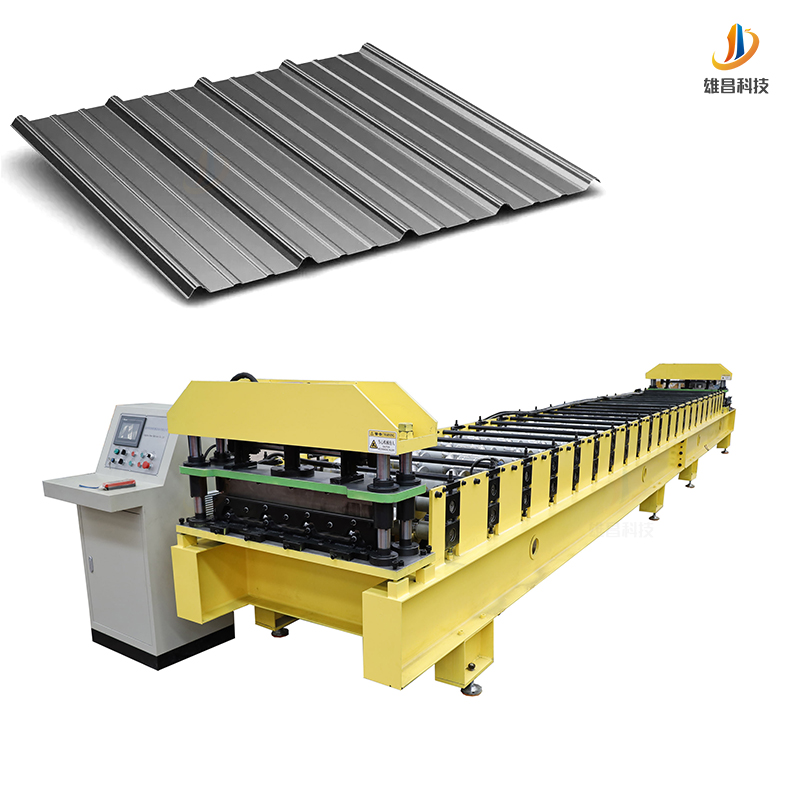
Produces AG and Tuff-Rib panels with consistent rib height and lap fit for post-frame and agricultural suppliers.
View Details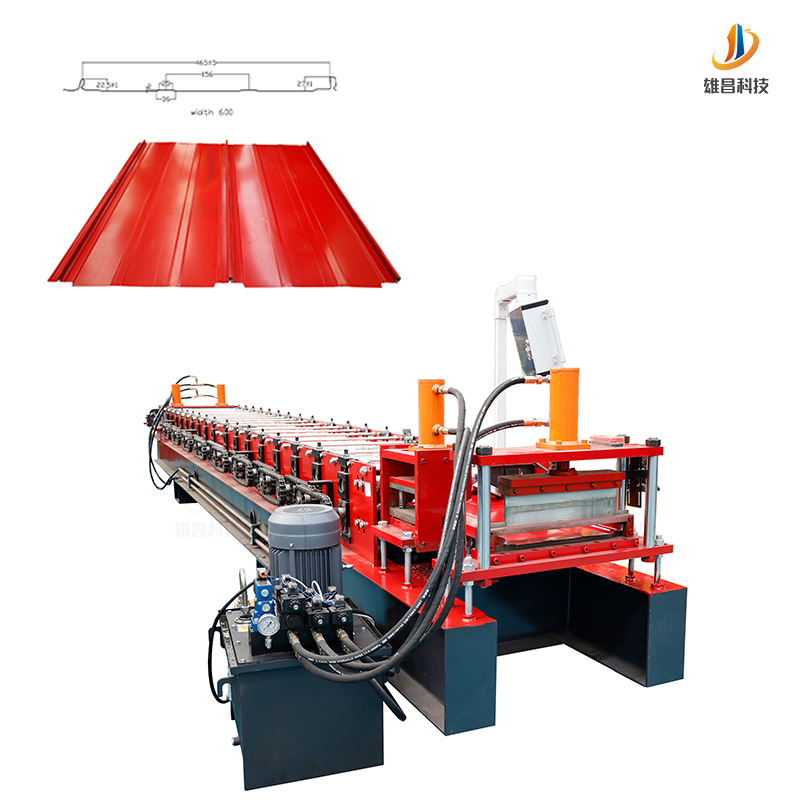
Snap-lock panels with an integrated nailing flange. No separate clips are needed, making it suitable for residential and light commercial roofs.
View Category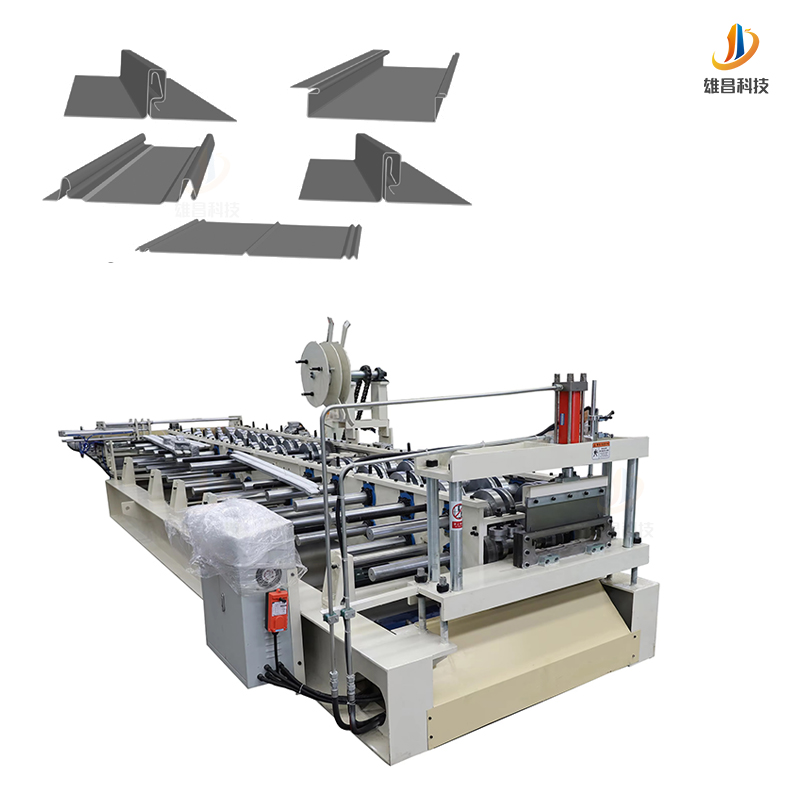
Forms male and female seam legs that snap together by hand. Fit tolerance is controlled for watertight, field-friendly installation.
View Category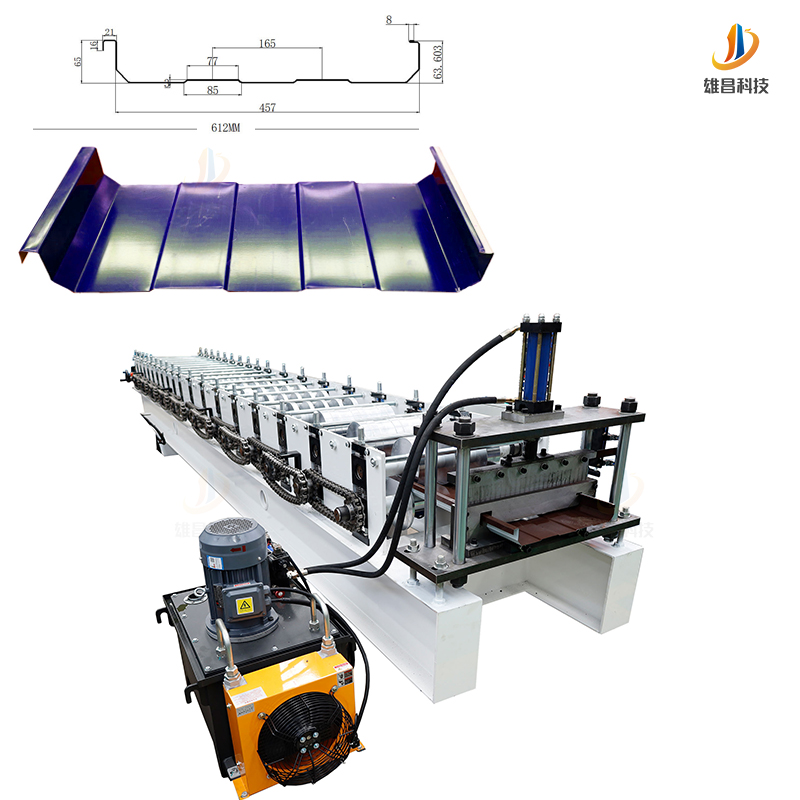
High-strength panels for field-seamed single or double lock systems, with wind-uplift resistance for large-span roofs.
View Category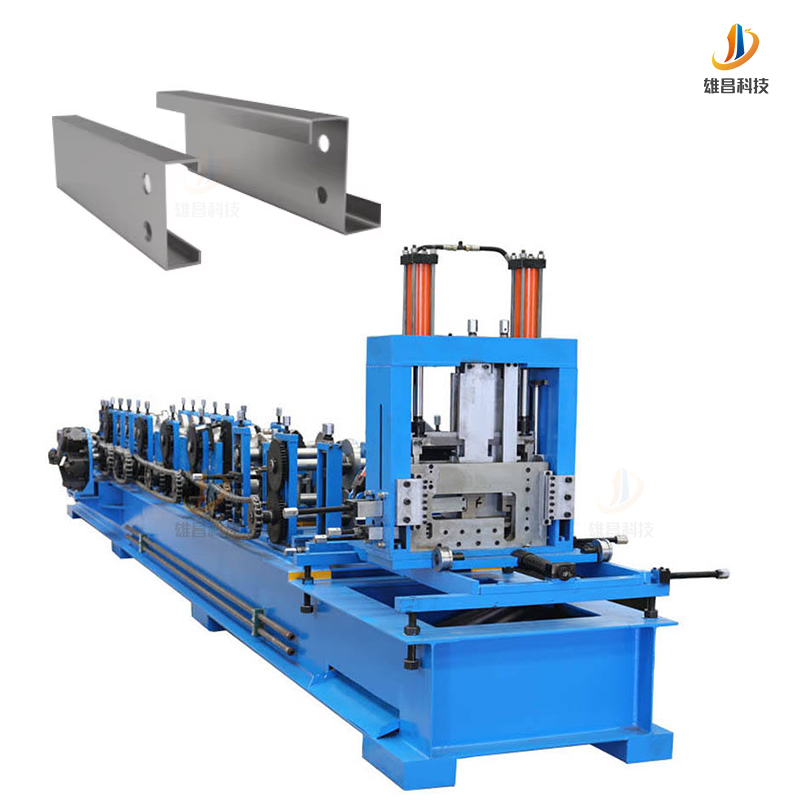
Produces both C and Z purlins on one line with fast size changeover to keep one investment flexible.
View Category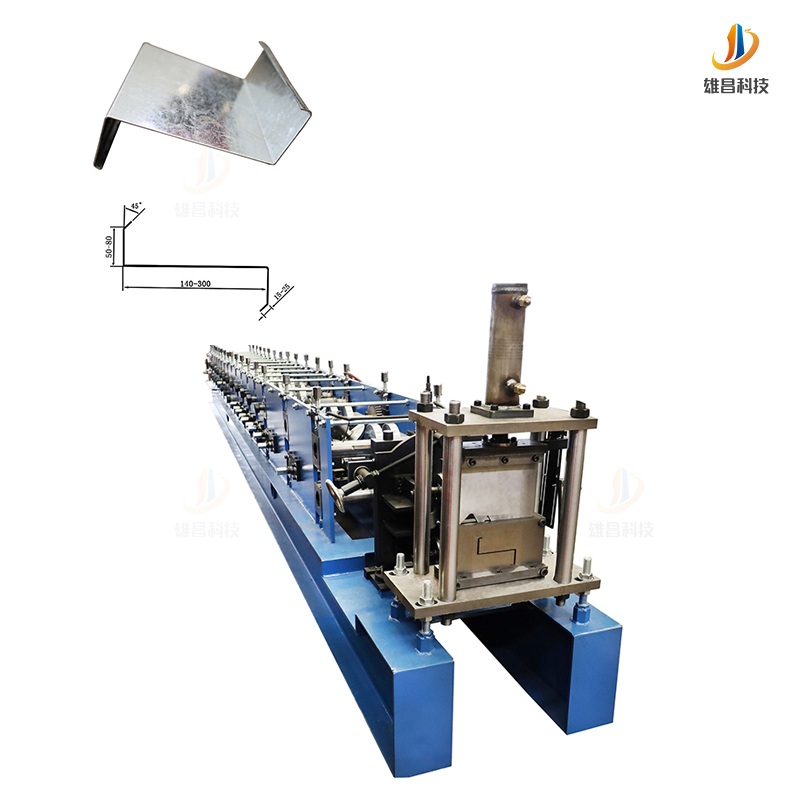
A dedicated Z-section line with lapping capability for continuous purlin runs on long-span roofs and wall girts.
View Category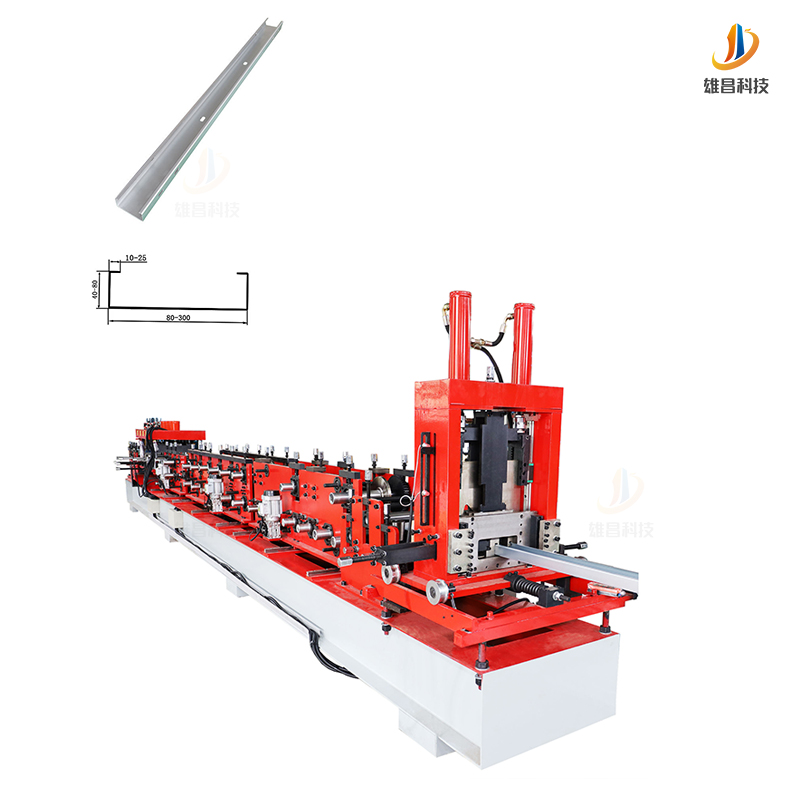
Continuous C-section production with PLC length control and hydraulic punching for bolt holes.
View Category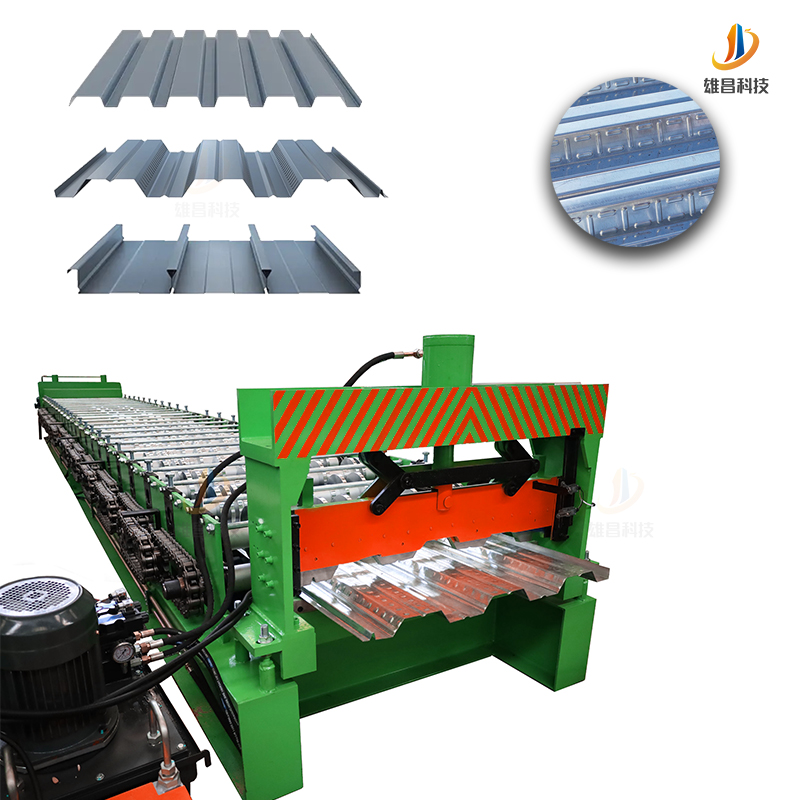
Converts galvanized coil into composite floor decking, with embossing rolls for mechanical bonding to concrete.
View CategoryA transparent five-step process, so overseas buyers know exactly what happens and when.
Send your drawing, sample or photo plus coil data. Engineers check that the profile can be formed and flag risks.
You receive station count, roller material, drive and cutting system, power configuration and a confirmed schedule.
Frames, shafts and rollers are machined and assembled in-house, with inspection at each critical stage.
The line runs with coil matching your specification. Samples are measured, and a video report is shared for approval.
Export packing, documentation, then remote or on-site installation and operator training.

Why continuous roll forming beats press braking for long, consistent profiles, and which industries gain the most from it.

Six root causes of bearing failure, the diagnostic checks to run first, and how they show up as strip tracking loss and coating defects.

From bend radius to roll pass design, this article explains what makes coatings crack at the bend line and how coating-safe forming prevents it.
Straight answers based on the projects we deliver every year. Need a detail not covered here? Our engineers reply directly.
Send Inquiry NowGet our full catalog with machine layouts, technical specifications and profile options. It is the fastest way to brief your team, compare suppliers and prepare a realistic project schedule.
Use these product entries to compare standing seam, floor deck, glazed tile, IBR, purlin and C/Z interchangeable solutions. Every button keeps the original product URL.






