 Since 2010 · Sichuan, China · ODM / OEM Roll Forming Partner
ODM Steel Frame Solution Factory & Company
Custom cold roll forming lines for light gauge steel framing, roofing, standing seam, purlins and floor deck — engineered from your drawing, tested with your coil, and supported in your market with voltage, profile and documentation alignment.
ODM Steel Frame & Roll Forming Machines Below the Banner
The eight product families below represent the practical starting point for many ODM steel frame solution factory projects: LGS framing, floor deck, glazed tile, stud and track, AG panel, U panel roofing, double layer roofing, and snap-lock standing seam. Every link and image is preserved from the original product range.

China LGS framing U track Roll Forming machine Company, Companies
For light gauge steel U tracks used in wall, floor and roof framing. Profile, hole pattern, coil width and cut length are aligned to your framing system and local installation detail.
China LGS framing U track Roll Forming machine Company, Companies
Custom Floor Deck roll forming machine Manufacturer, Factory
Composite steel deck lines with embossing, rib geometry and heavy-duty frames for multi-storey slabs, mezzanines and industrial floors.
Custom Floor Deck roll forming machine Manufacturer, Factory
China Glazed Tile Roll Forming Machine Factory, Company
Step-tile production with synchronized hydraulic pressing and PLC control, matched to decorative villa roofing and regional tile profiles.
China Glazed Tile Roll Forming Machine Factory, Company
ODM Super Series Light Gauge Steel Roll Forming Machine (Stud & Track Roll Former) Manufacturers, Company
High-output stud and track production for prefabricated steel framing. Servo or PLC length control supports repeatable batch output and fast size changeover.
ODM Super Series Light Gauge Steel Roll Forming Machine (Stud & Track Roll Former) Manufacturers, Company
ODM Tuff rib panel(AG Panel) forming machine Company, Companies
Agricultural and post-frame panels with controlled rib height, lap fit and panel flatness. A practical ODM choice for regional building-material distributors.
ODM Tuff rib panel(AG Panel) forming machine Company, Companies
ODM U panel roofing roll former Factories, Company
U-panel roofing lines for warehouse, workshop and agricultural roofs. Roll pass design can be tuned for thin PPGI, GI or Galvalume coil.
ODM U panel roofing roll former Factories, Company
China Double Layer Roll Forming Machine Factory, Company
Two roofing profiles on one frame, such as trapezoidal and corrugated. This saves floor space and capital cost for suppliers serving mixed markets.
China Double Layer Roll Forming Machine Factory, Company
China Snap lock Standing Seam Panel machine Manufacturers, Factory
Concealed-fastener snap-lock panels with male and female seam legs formed for reliable hand snapping and watertight field installation.
China Snap lock Standing Seam Panel machine Manufacturers, FactoryWhat Buyers Should Expect from an ODM Steel Frame Solution Company
An ODM steel frame solution is a co-developed manufacturing system, not a catalog machine. The factory receives a drawing, sample or BIM family, converts the geometry into a roll pass design, defines coil width and yield strength, selects station count, punching and cutting strategy, tests the line with representative coil, and documents the result. The delivered output is a repeatable steel frame profile: U track, C stud, truss chord, floor deck, purlin, roofing sheet or standing seam panel.
The real differentiator is engineering logic: how strain is distributed across stations, how coating is protected at bend lines, how hole pitch is maintained, how cut-length tolerance is held at ±1 mm, and how the machine is commissioned in the buyer’s language and voltage. This guide is written from XC’s 20+ years of roll forming experience, field notes from factory acceptance tests, and commissioning feedback from buyers in roofing, steel framing, prefabrication and industrial construction.
Search intent for “ODM Steel Frame Solution Factory” is mixed. A contractor wants a supplier. A distributor wants a machine. An EPC wants a local production node. An architect or structural engineer wants compliance evidence. This article separates machine capability from project application, and commercial claims from verifiable factory acceptance data, so each buyer can evaluate the right decision.
Steel Frame Solution Capability at a Glance
Verifiable capability matters more than a brochure claim. These indicators reflect XC’s manufacturing base, engineering depth and export support model.
What an ODM Steel Frame Solution Includes
A steel frame solution factory must connect profile design, machine design, material behavior and construction practice. The following four layers are the information gain that separates an engineered ODM project from a simple machine sale.
1. Profile & Roll Pass Design
Engineers develop the flower pattern, station count, roll gap and shaft layout from your profile drawing. Thin gauges need gentler bend increments to avoid edge waves, twist and coating cracks. Heavy purlins need rigid stands and adequate motor torque.
- U track, C stud, truss chord
- Roofing, wall cladding, standing seam
- C/Z purlin and floor deck
2. Coil & Material Strategy
PPGI, GI, Galvalume, black steel and stainless coil behave differently. Yield strength, zinc coating, paint thickness and coil width influence springback, bend radius and tooling clearance. Material data is requested before the proposal is finalized.
- Thickness range review
- Yield strength and coating check
- Coil width and inner diameter
3. Machine & Automation
The line is configured with decoiler, feeding guide, forming mill, hydraulic punching, profile-matched cutting, output table and PLC/HMI control. For steel framing, hole patterns and web notches can be integrated to reduce site drilling.
- Servo or hydraulic options
- Encoder length control
- HMI language and batch memory
4. Documentation & Localization
Export projects need more than iron. English manuals, electrical diagrams, spare-parts lists, packing lists, test videos and commissioning guidance reduce installation risk. Local voltage and frequency are configured at the factory.
- 220V, 380V, 415V or 440V
- 50Hz or 60Hz
- Remote or on-site commissioning
Steel Frame Solution Applications by Region and Building Type
A steel frame solution must fit local construction culture, climate, code review and labor availability. The same roll forming machine can be configured differently for wind uplift, seismic demand, corrosion exposure or architectural finish.
AG panels, PBR, Tuff-Rib and standing seam
Buyers often need Tuff-Rib, PBR, corrugated and snap-lock standing seam panels for post-frame, agricultural, commercial and residential roofs. ODM configuration should address ASTM material references, local building-code submittals, UL-listed electrical components where required, coil yield and panel lap detail.
Architectural standing seam and insulated envelopes
European projects often demand tighter visual tolerances, concealed fasteners, long panel runs and coordinated documentation. Machine design should support coating-safe forming, low oil-canning risk and profile data that the local engineer can review against EN and Eurocode requirements.
IBR, Klip-Lok style and cyclonic detailing
High wind uplift and cyclonic regions require robust seam systems, accurate rib geometry and reliable clip spacing. Profiles such as IBR and Klip-Lok style standing seam are common, and local structural verification remains essential.
Heavy-gauge purlins and long-span roofing
Large industrial warehouses, logistics parks and labor accommodations need heat-tolerant coatings, stable long panels and rigid frames. C/Z purlin lines and floor deck lines are often paired with roofing lines to create a local production node.
Light gauge framing for rapid housing
LGS framing, U track, C stud and floor deck systems support rapid low-rise housing and commercial construction. Buyers value simple maintenance, available spare parts and profile documentation for local structural review.
Corrosion-resistant framing and roofing
Humid and typhoon-prone markets need attention to zinc coating, edge protection, drainage detail and wind uplift. Double-layer roofing machines and compact LGS lines can reduce capital cost for distributors serving mixed local demand.
From Roll Pass Design to a Digital Steel Frame Factory
The next competitive advantage for an ODM steel frame solution factory is not only faster forming; it is the digital thread from design intent to machine parameters, production data and maintenance insight.
BIM-to-Machine Workflow
Profile families and framing schedules from BIM can be translated into machine recipes, batch lengths and hole patterns. This reduces manual programming and improves repeatability across projects.
AI-Assisted Roll Pass Review
Simulation and AI-assisted rules can flag excessive strain, edge-wave risk and springback issues earlier in the design process. Engineers still approve the final flower pattern, but iteration becomes faster.
Servo & Intelligent Controls
Servo feeding, automatic size changeover and recipe memory support higher mix, lower waste and faster changeover. HMI dashboards can record batch count, length and fault history.
Predictive Maintenance
Bearing temperature, vibration and motor current can indicate wear before a line stops. For export buyers, condition monitoring reduces dependence on expensive emergency service visits.
Robotic Stacking & Packing
Automated stacking reduces handling damage and labor dependence for long panels. It also improves container loading efficiency when panels are packed by project or length.
Coating-Safe Forming
Thin PPGI and architectural coatings are sensitive to bend radius and roll surface finish. Hard-chrome plated rollers and optimized pass lines protect paint and zinc, reducing site callbacks.
Green Steel & Carbon Data
Buyers increasingly request material origin, recycled content and carbon data. Machine-side production records can support project-level environmental reporting when integrated with coil documentation.
Micro-Factory Deployment
Containerized or compact production nodes allow distributors to move closer to projects. The China factory supplies core engineering and modules; local partners handle assembly, service and compliance review.
Why a China ODM Steel Frame Factory Remains Efficient
China’s advantage is not a single low-cost factor. It is the density of steel supply, machine-tool capability, component clusters, engineering talent, export logistics and iterative manufacturing know-how. Buyers who manage risk with clear specifications and factory acceptance testing can use this depth to shorten project timelines.
Raw Material Depth
Galvanized, Galvalume, PPGI and black steel coil are available across thickness and coating grades. This supports rapid material verification and trial-run preparation with representative coil.
In-House Machining & Assembly
Frames, shafts, rollers and assemblies can be controlled inside one production base. A 50,000 m² factory area and 2,000+ team members support engineering and production coordination.
Component Ecosystem
Motors, hydraulics, PLCs, bearings, sensors and electrical components can be sourced from multiple qualified suppliers. This reduces single-source risk and supports spare-parts continuity.
Flexible ODM Engineering
Regional profiles such as IBR, Tuff-Rib, Klip-Lok style, PBR and Spanish-style tiles can be matched from drawings or samples. Roll pass design is completed before final machine configuration.
Export Logistics
Export packing, container loading plans, documentation and port access support predictable delivery. For combined lines, modules are packed by installation sequence to reduce site confusion.
Quality Documentation
Inspection records, trial-run videos, sample measurements, electrical diagrams and manuals are prepared before shipment. Documented acceptance is a practical risk-control mechanism for overseas buyers.
Compliance, Local Support and the Buyer’s Risk Map
Global demand for steel framing is being driven by labor shortages, prefabrication, faster construction cycles and low-carbon building targets. At the same time, buyers cannot treat compliance as a machine-only issue. The roll forming machine supplies dimensional consistency; the building system still needs local structural engineering, connection design, material certification and code review. A responsible ODM factory supports that process with profile data, sample panels, material records and machine acceptance evidence.
| Market Focus | Typical Compliance / Documentation | Localization Support in the Machine | Buyer Verification |
|---|---|---|---|
| North America | ASTM material references, local building-code submittals, UL-listed electrical components where required | Voltage 230/460V, 60Hz, inch hardware options, English HMI | Panel sample dimensions, paint and zinc data, electrical component list |
| Europe | EN and Eurocode coordination by local engineer, CE/UKCA machinery compliance where applicable | 400V/50Hz, CE-oriented guarding, European terminology in documentation | Risk assessment, guarding plan, profile data for structural review |
| Australia & New Zealand | AS/NZS structural verification by local engineer, wind-uplift and cyclonic detailing | 415V/50Hz, robust guarding, profile matching to local systems | Seam type, clip compatibility, sample panel and wind-uplift data |
| Middle East | Project specification, consultant approval, high-temperature and corrosion review | 380–415V/50–60Hz, heat considerations for electrical cabinets, English/Arabic HMI options | Coil coating, panel length, purlin gauge and spare-parts package |
| Latin America | Local engineering review, seismic and housing-system requirements | 220/380/440V, Spanish HMI options, robust packaging for long ocean transit | FAT video, sample lengths, installation training plan and spare list |
| Southeast Asia | Local building approval, humidity and typhoon exposure review | 380/415V/50Hz, corrosion-aware electrical protection, English HMI | Zinc coating, edge quality, drainage detail and container-loading plan |
Compliance is project-specific. XC supplies machine and profile evidence; local engineering approval, structural design and site certification remain with the buyer’s qualified local professionals.
Compare Roll Forming Machines Before You Request a Quote
Quotes are only comparable when specifications are comparable. Use these indicative ranges and verification points to judge any supplier’s offer, including XC’s.
| Machine Type | Typical Coil Thickness | Forming Stations | Typical Line Speed | What to Verify in a Quote |
|---|---|---|---|---|
| Trapezoidal / IBR Roofing | 0.3–0.8 mm | 16–22 | 15–30 m/min | Roller material and chrome thickness; shaft diameter |
| Corrugated Roofing | 0.3–0.6 mm | 18–24 | 15–30 m/min | Wave pitch accuracy and edge waviness on thin coil |
| Glazed Step Tile | 0.3–0.7 mm | 12–18 | 3–6 m/min | Press-station cycle and step-depth consistency |
| Standing Seam | 0.4–0.8 mm | 12–20 | 10–20 m/min | Seam system compatibility and panel width adjustment |
| C/Z Purlin | 1.5–3.0 mm | 14–20 | 10–20 m/min | Size-change method and punching dies |
| Floor Deck | 0.7–1.5 mm | 20–30 | 10–15 m/min | Embossing pattern and frame rigidity for deck depth |
Ranges reflect typical XC configurations for reference only. Final parameters are engineered to your profile drawing, material yield strength, output target and site power supply.
From Profile Drawing to First Panel
A transparent five-step process helps overseas buyers know exactly what happens, when approval is required, and how quality is verified before shipment.
Profile & Coil Review
Send your drawing, sample or photo plus coil data. Engineers check whether the profile can be formed and flag risks.
Roll Pass Design & Proposal
You receive station count, roller material, drive and cutting system, power configuration and a confirmed schedule.
Manufacturing & QC
Frames, shafts and rollers are machined and assembled in-house, with inspection at each critical stage.
Trial Run & Acceptance
The line runs with coil matching your specification. Samples are measured and a video report is shared for approval.
Shipping & Commissioning
Export packing and documentation are completed, followed by remote or on-site installation and operator training.
Six Industries, One Forming Expertise
Roll forming is not limited to roofing. The same discipline — controlled material flow, accurate station sequencing and repeatable cut length — supports many industrial profile families.

Architecture & Building Materials
Roofing sheets, wall cladding, standing seam panels, floor decking and C/Z purlins for modern steel buildings, warehouses and residential projects.

Automobile Manufacturing
Roll formed structural rails, door frame sections and reinforcement beams, where repeatable cross-sections and tight length tolerances feed automated assembly.

Home Appliances, Kitchen & Bath
Appliance side panels, cabinet frames and trim profiles formed from pre-painted or stainless coil. Surface protection during forming matters as much as dimension.

Transportation
Container panels, truck body sections, railway car profiles and highway guardrails: long, heavy-gauge parts that need rigid stands and accurate cut-off.

New Energy
Solar PV mounting rails, strut channels and support brackets. High-volume parts benefit from inline punching and fast size changeover.

Furniture & Office Equipment
Shelving uprights, racking beams, cabinet frames and partition studs. Consistent hole pitch and straightness make on-site assembly fast and safe.
Factory, Profile and Field Evidence
Visual evidence supports E-E-A-T: engineering review, in-house assembly, profile samples and delivery preparation. Images are displayed proportionally and fully within their frames.
 Cold roll forming production line
 Multi-profile output review
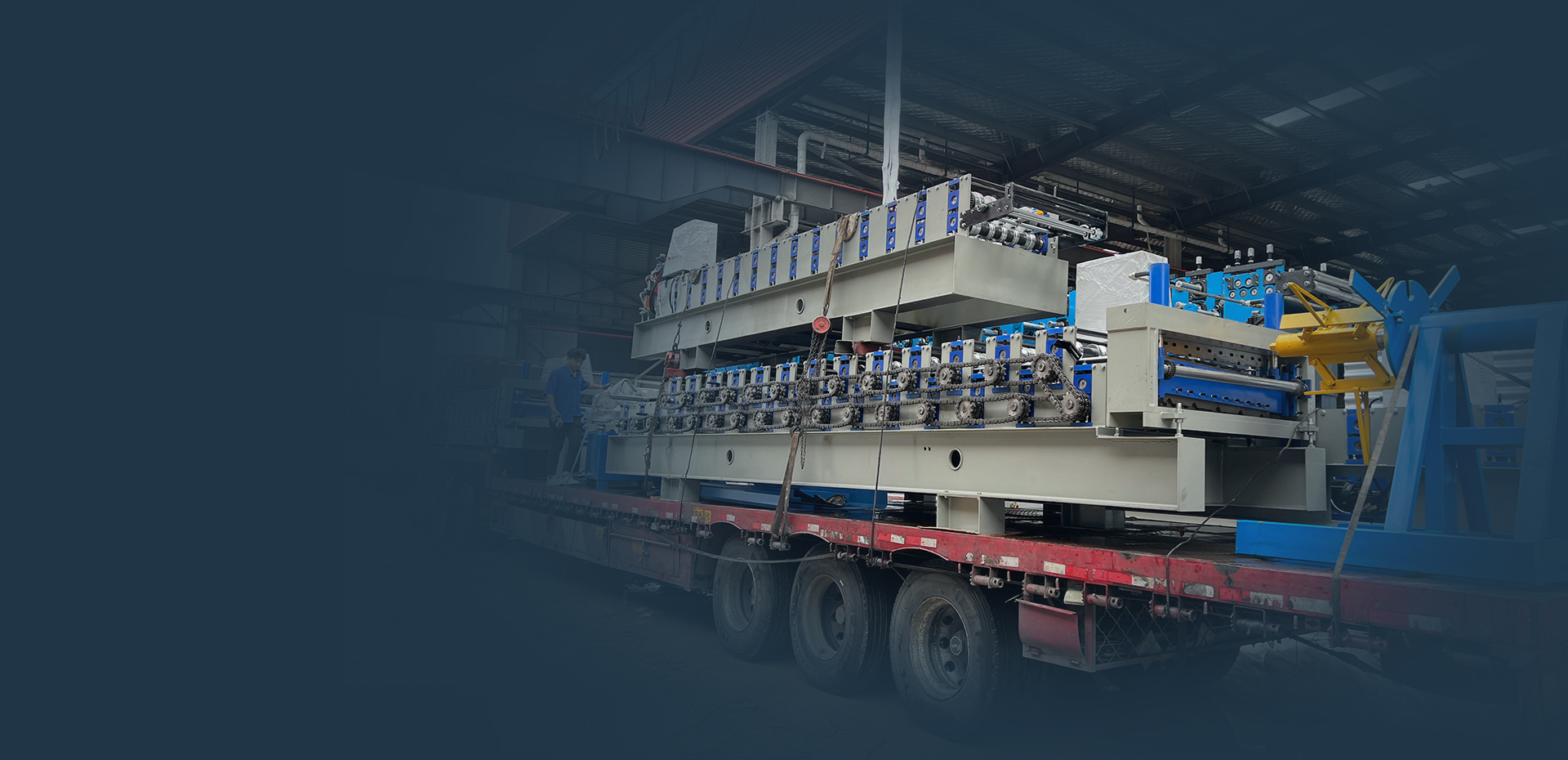 Export preparation
 Custom machine assembly
 Delivery and after-sales readiness
 Manufacturing facility
 Engineering and innovation
 Durability for production
 Profile delivery support
 Application engineering
 Maintenance insight
 Coating quality review
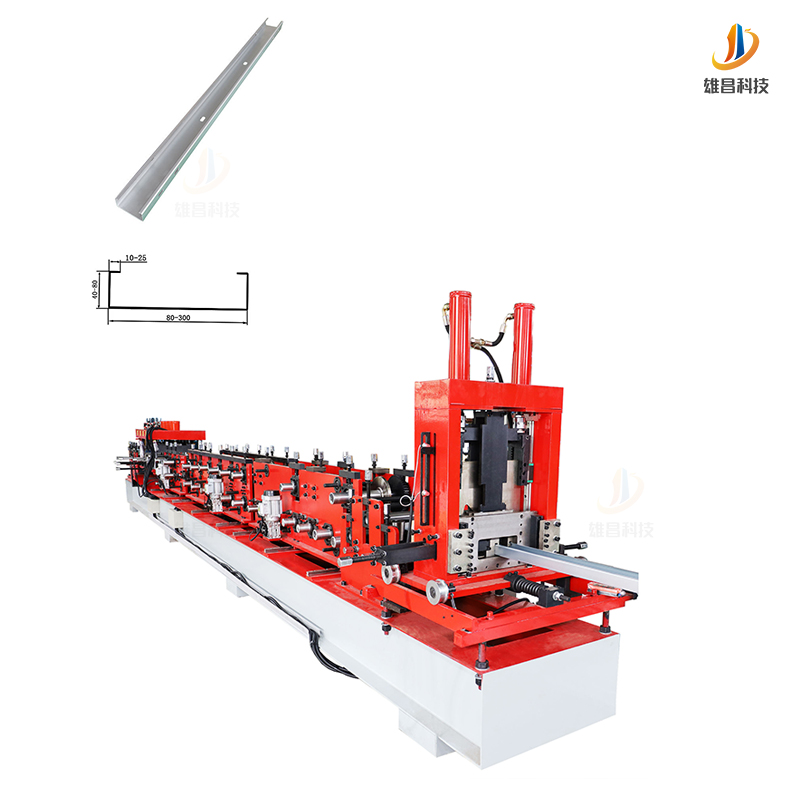 C purlin profile evidence
 Profile geometry close-up
Q&A: ODM Steel Frame Solution Factory Questions
Straight answers based on the projects XC delivers every year. If a detail is not covered here, the engineering team can review your drawing and coil data directly.
What information do I need to send for an accurate roll forming machine proposal?
Can XC build a roll forming machine for a local or non-standard profile?
How is machine quality verified before shipment?
What is the typical lead time for a roll forming machine?
What after-sales support does XC provide to overseas buyers?
Can machines be configured for my local power supply?
How should buyers compare an ODM line with a catalog machine?
How does XC support local compliance without replacing local engineers?
More ODM Steel Frame & Roll Forming Machine Solutions
The remaining eight product families complete the range. Together with the top section, all sixteen original product images and product URLs are preserved with button styling for fast navigation.

Custom Corrugated Steel Roofing Roll Forming Machine Manufacturer, Company
Economical, high-volume sinusoidal corrugated sheets for agricultural, residential and warehouse roofs. Roll design protects thin coatings at the wave crests.
Custom Corrugated Steel Roofing Roll Forming Machine Manufacturer, Company
Custom Mechanical Lock Standing Seam Panel Former Manufacturers, Company
High-strength panels for field-seamed single or double lock systems. Wind-uplift resistance makes it suitable for large-span industrial roofs.
Custom Mechanical Lock Standing Seam Panel Former Manufacturers, Company
Custom C Z Interchangeable Purlin Machine Factories, Companies
Produces both C and Z purlins on one line with size changeover. Keeps one investment flexible across many steel building projects.
Custom C Z Interchangeable Purlin Machine Factories, Companies
China Industrial IBR Sheet Forming Machine for Metal Roofing Factories, Companies
IBR trapezoidal roofing lines for warehouses, factories and commercial buildings. Roll pass design is tuned for rib height, cover width and panel flatness.
China Industrial IBR Sheet Forming Machine for Metal Roofing Factories, Companies
China Metal C Stud Roll Forming Machine Manufacturer, Companies
Metal C stud production for drywall, partition and light gauge steel framing. Hole punching, web notch and cut length can be coordinated with your assembly method.
China Metal C Stud Roll Forming Machine Manufacturer, Companies
China Nail Strip Standing Seam Panel machine Manufacturer, Factory
Snap-lock panels with an integrated nailing flange. No separate clips are needed, making it practical for residential and light commercial roofs.
China Nail Strip Standing Seam Panel machine Manufacturer, Factory
China Z Purlin Cold Roll Forming Machine Factory, Factories
Dedicated Z-section production with lapping capability for continuous purlin runs on long-span roofs and wall girts.
China Z Purlin Cold Roll Forming Machine Factory, Factories
China PBR Panel Metal Roofing forming machine Manufacturers, Company
PBR panel lines for metal roofing contractors and distributors. Controlled rib geometry and lap fit support fast installation and clean finished roofs.
China PBR Panel Metal Roofing forming machine Manufacturers, CompanyPlanning a Steel Frame Production Node?
Send a profile drawing, sample photo, coil specification and target output. XC’s engineers will review the roll pass, station count, punching strategy, voltage and documentation scope, then return a practical ODM proposal for your market.