
ODM PEB Roofing Panel Roll Former Factories & Company
A buyer-focused engineering guide to custom PEB roofing panel roll formers, localized profile support, factory acceptance testing, China supply chain resilience and long-term overseas service.
8 ODM PEB Roofing Panel Roll Former Product Paths
The first eight machine families below connect directly to the relevant product routes. They cover standing seam, metal stud, floor deck, U panel, Z purlin, snap lock, C purlin and Tuff-Rib / AG panel demand.








ODM PEB Roofing Panel Roll Former: What Serious Buyers Are Really Evaluating
The search phrase “ODM PEB Roofing Panel Roll Former Factories & Company” usually signals a buyer who is beyond the catalog stage. They need a manufacturing partner that can interpret a profile drawing, match a regional roofing system and deliver a tested production line into an operating PEB or metal building supply chain.
A PEB roofing panel roll former is not a generic box of rollers. In pre-engineered building projects, the roof and wall panel profile affects weathertightness, wind uplift, installation speed, coil yield, finish warranty and the visual quality of the finished building. For an ODM project, the machine builder must connect profile geometry with roll pass design, shaft rigidity, bearing selection, hydraulic cutting, PLC control and operator usability. That is the difference between a machine that produces panels and a machine that produces sellable panels.
ODM should mean engineering accountability, not badge engineering. The factory should be able to explain how the flower pattern protects coating at tight bends, how the cutter avoids rib deformation, how the line handles your local voltage and how the acceptance test proves dimensional repeatability before the machine leaves China.
Sichuan Xiongchang Technology Co., Ltd. (XC) designs and manufactures cold roll forming equipment for roofing, flooring, door and structural components, together with the auxiliary line equipment each system needs to run efficiently. XC’s team brings more than 20 years of hands-on roll forming experience. That experience is most visible after installation: rollers that hold tolerance, coatings that resist cracking at the bend, and panels that fit on the roof the first time.
- ✓Profile-to-machine design from drawing, sample panel or photo.
- ✓In-house machining and assembly for better control of lead time and quality.
- ✓Factory acceptance test with trial-run video and sample measurement.
- ✓Global support with English manuals, electrical diagrams and spare parts.
Information Gain for Buyers
A proper ODM proposal should include station count logic, roller material, shaft diameter, drive configuration, cutting method, power supply, profile tolerance and the acceptance-test protocol. If those items are missing, the quotation is not yet comparable.
Inside the Line: How a PEB Roofing Panel Roll Former Creates Repeatable Value
A roll former is only as good as its weakest station. The production line should be evaluated as a system: coil feeding, strip guiding, progressive forming, hydraulic cutting and PLC control all interact. Each stage below translates directly into panel quality, operator safety and maintenance cost.
01 · Decoiler & Coil Feeding
A manual or hydraulic decoiler feeds coil under controlled tension. Stable unwinding prevents strip wander, which is the first cause of camber and twisted panels. For ODM projects, the decoiler capacity must match coil weight, inner diameter and the handling method used in your factory.
02 · Entry Guiding
Adjustable entry guides square the strip to the roll centreline before the first pass. Correct alignment here largely decides the straightness of the finished panel. Buyers should confirm guide adjustment range, lock stability and access for quick coil changes.
03 · Progressive Forming Stations
Each station bends the strip a few degrees at a time. XC’s roll pass design spreads strain evenly to protect zinc and paint coatings and to avoid edge waves on thin coils. The station count should be engineered from the profile, material yield strength and thickness range, not copied blindly from a catalogue.
04 · Hydraulic Post-Cutting
An encoder measures strip travel and the PLC triggers a profile-matched blade. The result should be burr-free cuts within ±1 mm, without crushing ribs or seams. For standing seam and glazed tile lines, cutter design must respect the seam leg and step geometry.
05 · PLC & HMI Control
A touch-screen HMI stores batch lengths and quantities, monitors faults and supports multi-language operation, so new operators get up to speed quickly. Local-language screens, unit settings and voltage compatibility are practical localization features, not marketing extras.
Data Point to Verify
Ask for the roller material, hard-chrome thickness, shaft diameter, bearing brand or grade, motor power, cutting tolerance and trial-run panel report. These details show whether a factory is quoting a production asset or a low-cost frame with rollers.
Where ODM PEB Roofing Panel Roll Formers Create ROI
Local roofing systems differ by profile, span, wind load, color finish and installation habit. An ODM line should be tuned to the market it serves, not just the factory that builds it.

Architecture & Building Materials
Roofing sheets, wall cladding, standing seam panels, floor decking and C/Z purlins are core profiles of modern steel buildings, warehouses and residential projects. In these markets, color consistency, rib height and lap fit influence both weather performance and the architect’s visual approval.

Agriculture & Post-Frame Buildings
Tuff-Rib, AG panel, corrugated and IBR profiles are widely used for barns, workshops, grain storage and rural commercial buildings. The roll former must tolerate practical coil variation while keeping rib geometry stable enough for fast lap and screw installation.

Warehouse & Logistics Parks
Large warehouses need long roof runs, consistent purlin spacing and efficient panel output. High-speed IBR, trapezoidal and standing seam lines reduce site delays, while C/Z purlin lines support the structural frame from the same supplier ecosystem.

Cold Storage & Food Facilities
Cold storage envelopes demand tight installation tolerances and reliable vapor control. Roll forming panels close to the project site reduces handling damage and allows the contractor to match roof and wall profiles to insulation and fastening details.

Residential, Villa & Re-Roofing
Glazed tile, corrugated and snap lock standing seam systems serve residential and villa projects where appearance matters. Local contractors benefit from machines that can switch lengths, minimize scratches and produce panels that install cleanly with small crews.

New Energy & Industrial Structures
Solar PV mounting rails, strut channels, support brackets and light gauge steel frames benefit from inline punching and fast size changeover. These are high-volume parts where repeatable hole pitch and straightness reduce assembly labor.
Technical Roadmap and Future Outlook for PEB Panel Roll Forming
The next stage of competitiveness is not simply faster forming. It is measurable consistency, faster changeover, lower scrap, better coating protection and stronger data feedback from the line. A roll former factory that can support these priorities becomes a long-term ODM partner.
Flower Pattern Simulation
Buyers will expect profile drawings, strip width calculations and station-by-station forming rationale before steel is cut. Simulation reduces trial-and-error and shortens first-panel approval.
Higher Efficiency With Better Control
Servo-assisted feeding, hydraulic optimization and energy-efficient drive choices help lower power consumption while improving cut-length repeatability and line response.
Measured Quality, Not Assumed Quality
Vision-based rib measurement, laser length verification and HMI fault logs can move quality control from the end of the line into every production batch.
More Profiles From One Investment
Quick-change tooling, cassette stations and standardized controls allow distributors to serve multiple regional profiles without duplicating every line.
Lower Scrap, Longer Finish Life
More attention will go to coating-safe roll passes, thinner high-strength steel, recyclable packaging and energy monitoring. The target is lower total cost per square meter of finished panel.
What This Means for an ODM Buyer
A machine should be specified for the next five to seven years of operation, not only today’s order. Confirm whether the control architecture supports future recipe additions, whether profile changeover is practical, and whether spare parts and electrical components can be sourced after commissioning.
China Factory Supply Chain Resilience and Efficiency Advantages
China’s roll forming equipment supply chain is strong because it combines engineering talent, machining capacity, electrical component access, steel industry knowledge and export logistics in one manufacturing ecosystem. For buyers, the real advantage is not simply price. It is the ability to compress design, machining, assembly, trial-run and shipment into a predictable project schedule.
XC’s production base in Sichuan supports in-house machining and assembly, which gives the company tighter control over frames, shafts, rollers, cutting units and assembly quality. When a buyer changes a profile dimension, adds batch-length recipes or requires a different voltage, the engineering change can be handled inside the same supply chain instead of being passed between disconnected workshops.
- ✓Integrated mechanical, hydraulic and electrical assembly reduces coordination risk.
- ✓Local access to steel, bearings, motors, PLCs and hydraulic components shortens the critical path.
- ✓Modular machine design supports later profile upgrades and spare-parts planning.
- ✓Export packing, documentation and trial-run approval are built into the production rhythm.


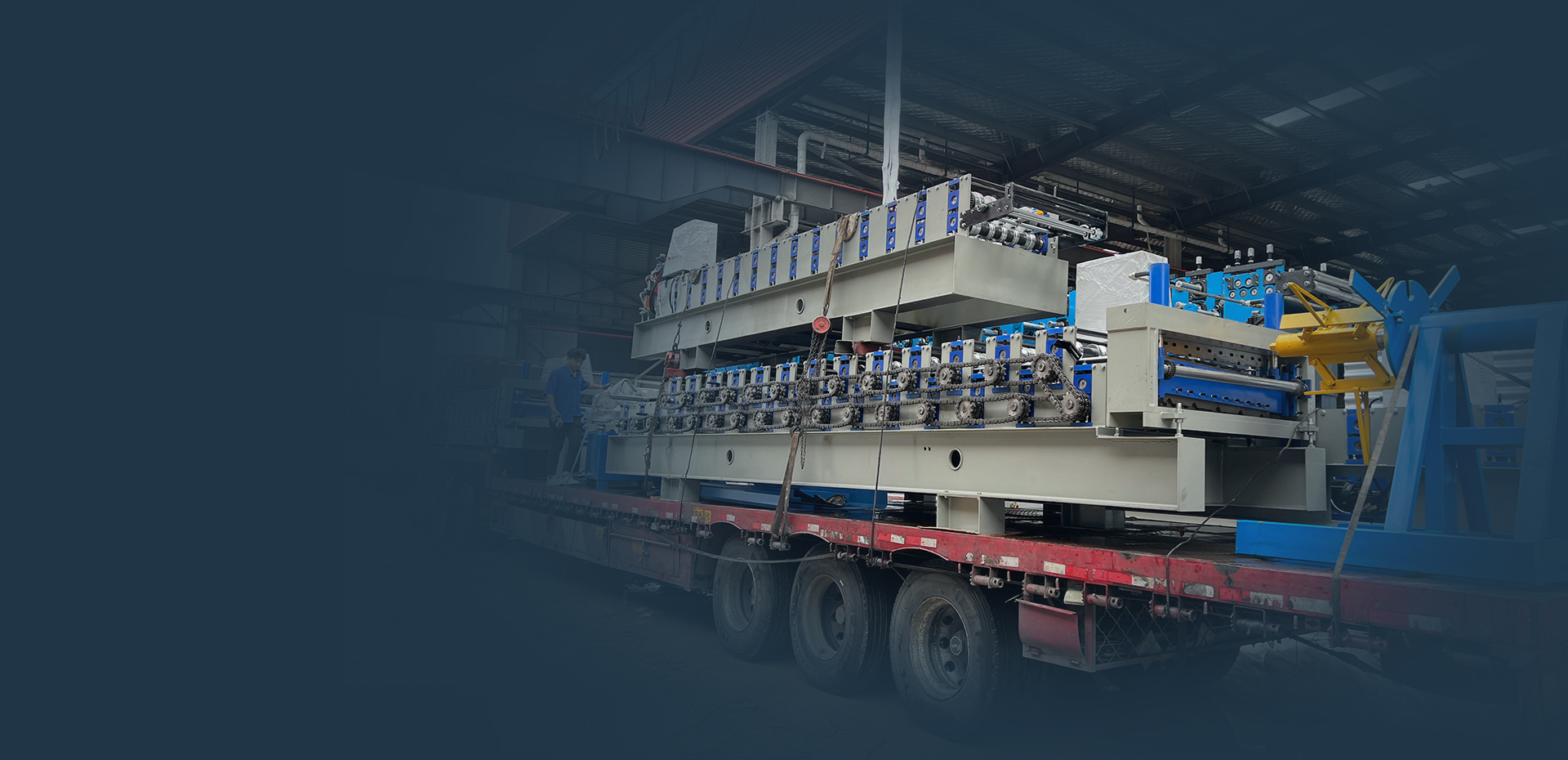
Built in China. Tuned for Your Market.
Local profiles, voltages and coil standards matter. A machine configured for 380V/50Hz will not serve every site. A line designed around 0.3–0.8 mm coated coil must be adjusted for a market using thinner or higher-strength material. Export readiness is a specification discipline.
Efficiency Is a System Outcome
Fast forming is wasted if coil changes take too long, cutting creates burrs or changeover requires a full day. Evaluate total line efficiency: coil loading, feed alignment, recipe recall, cut accuracy, scrap rate, maintenance access and operator training.
Schedule Transparency
Standard roofing sheet lines are commonly ready within 30 to 45 working days after drawing confirmation. Purlin, floor deck, double layer and fully customized lines may take longer. The confirmed schedule should be stated in each proposal.
Global Commercial and Industrial Status: What Is Driving Demand?
Across North America, Latin America, the Middle East, Southeast Asia, Africa and Europe, metal building systems continue to gain share in warehouses, factories, cold storage, agricultural buildings, retail sheds and re-roofing projects. The reasons are practical: speed of construction, recyclability, long spans, predictable quality and the ability to form panels close to the job site.
In mature markets, labor availability and installation speed push contractors toward standing seam and snap lock systems that reduce fasteners and improve weathertightness. In fast-growing industrial markets, IBR, trapezoidal, corrugated and PBR panels remain high-volume workhorses because they balance cost, coverage and familiar installation practice. In agricultural regions, Tuff-Rib and AG panel lines are essential for post-frame construction.
This creates a dual demand pattern. Buyers want a machine that is robust enough for daily production, but flexible enough to handle regional profile changes, different coil finishes and future product expansion. An ODM factory must therefore offer more than a fixed model. It must offer a configuration process that starts with the buyer’s market, profile drawing and operating conditions.
Demand Signals to Watch
Warehouse construction, food and cold-chain investment, solar mounting, factory relocation, re-roofing cycles and government infrastructure programs all create downstream demand for metal panels and purlins.
Commercial Implication
A roofing supplier that can produce multiple profiles and lengths on demand reduces inventory risk and improves service to contractors. That is why double layer, interchangeable purlin and quick-change concepts continue to attract buyers.
Industrial Buyer Behavior
Professional buyers increasingly request trial-run videos, sample measurements, electrical diagrams and commissioning plans before releasing the balance payment. This is a healthy shift toward verifiable quality.
Localized Support and Compliance Assurance for Overseas Projects
A roll forming line crosses borders. The support system must cross them too. Localization includes power supply, language, documentation, maintenance access, spare-parts planning and a realistic path for site acceptance.
Power Supply Configuration
Motors, hydraulic stations and control cabinets are configured to your site voltage and frequency, for example 220V, 380V, 415V or 440V at 50Hz or 60Hz, with HMI language options for operators.
Documentation Package
English manuals and electrical diagrams support installation, commissioning and daily maintenance. Project-specific documents can include profile drawings, line layout, component list and trial-run records.
Factory Acceptance Test
Every line is assembled and test-run in our factory with coil that matches your specification. Sample panels are measured against your drawing, and a trial-run video plus inspection photos are shared for approval before packing.
Commissioning Support
Remote video guidance is available for installation and commissioning, with on-site engineer service on request. Operator training can cover safety, recipe setup, coil changes and first-line troubleshooting.
Spare Parts Planning
Blades, bearings, rollers and electrical components should be listed in the proposal so buyers can plan a critical spare set. Long-term support depends on component availability as much as machine design.
Compliance Review
Electrical configuration, guarding, emergency stop architecture and documentation can be aligned to the scope agreed for your project. Final certification requirements should be confirmed against the destination country and buyer specification.
An Integrated Roll Forming Specialist for ODM Projects
Sichuan Xiongchang Technology Co., Ltd. (XC) designs and manufactures cold roll forming equipment for roofing, flooring, door and structural components, together with the auxiliary line equipment each system needs to run efficiently.
Our team brings more than 20 years of hands-on roll forming experience. That experience shows in the details buyers notice after installation: rollers that hold tolerance, coatings that do not crack at the bend, and panels that fit on the roof the first time.
- ✓Design from drawing, sample or photo.
- ✓In-house machining and assembly.
- ✓Video acceptance before payment balance.
- ✓Lifetime technical support.



Proven Expertise & Innovation
Two decades of profile development across roofing, structural and decking applications. We have solved the edge waves, flare and coating cracks that cheaper machines leave to the buyer.

Built for Performance & Longevity
Rigid frames, precision-machined shafts and hard-chrome plated rollers keep profiles within tolerance shift after shift. That protects your margin and your reputation with contractors.

Commitment to Customer Success
Engineers answer technical questions directly, from pre-sale profile review to commissioning and spare parts. You get one accountable team for the full life of the machine.

Industry Solution: Turnkey Cold Roll Forming
XC supplies more than a machine. We deliver complete production lines, including the decoiler, forming mill, punching, cutting, stacking and control system, engineered as one integrated unit so your output starts on schedule.

Equipment Supply & After-Sales Support
Our customers range from residential roofing suppliers to large industrial and infrastructure contractors. Each line ships with English manuals, electrical diagrams, spare parts and remote or on-site commissioning, which supports long-term operational reliability.
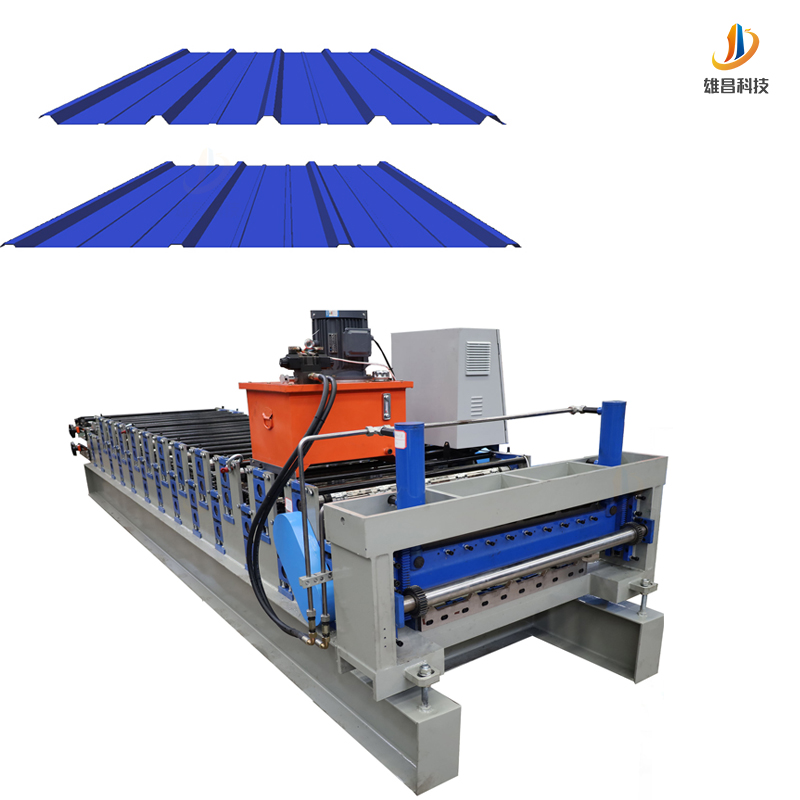
Double Layer Roll Forming Machine: One Frame, Two Roofing Profiles
Two roofing profiles can run on one frame, such as trapezoidal and corrugated. This cuts floor space and capital cost for suppliers serving mixed markets. Ask for the shared cutter arrangement, PLC switching logic and the maintenance plan for two profile families.
Compare Roll Forming Machines Before You Request a Quote
Quotes are only comparable when the specifications are. Use these indicative ranges and the key check for each machine type to judge any supplier’s offer, including ours.
| Machine Type | Typical Coil Thickness | Forming Stations | Typical Line Speed | What to Verify in a Quote |
|---|---|---|---|---|
| Trapezoidal / IBR Roofing | 0.3–0.8 mm | 16–22 | 15–30 m/min | Roller material and chrome thickness; shaft diameter |
| Corrugated Roofing | 0.3–0.6 mm | 18–24 | 15–30 m/min | Wave pitch accuracy and edge waviness on thin coil |
| Glazed Step Tile | 0.3–0.7 mm | 12–18 | 3–6 m/min | Press-station cycle and step-depth consistency |
| Standing Seam | 0.4–0.8 mm | 12–20 | 10–20 m/min | Seam system compatibility and panel width adjustment |
| C/Z Purlin | 1.5–3.0 mm | 14–20 | 10–20 m/min | Size-change method (manual or automatic) and punching dies |
| Floor Deck | 0.7–1.5 mm | 20–30 | 10–15 m/min | Embossing pattern and frame rigidity for deck depth |
Ranges reflect typical XC configurations for reference only. Final parameters are engineered to your profile drawing, material yield strength, output target and site power supply.
From Profile Drawing to First Panel: A Transparent Five-Step Route
A transparent process matters for overseas buyers. The goal is to remove uncertainty before the machine leaves China.
Profile & Coil Review
Send your drawing, sample or photo plus coil data. Engineers check that the profile can be formed and flag any risks.
Roll Pass Design & Proposal
You receive the station count, roller material, drive and cutting system, power configuration and a confirmed schedule.
Manufacturing & QC
Frames, shafts and rollers are machined and assembled in-house, with inspection at each critical stage.
Trial Run & Acceptance
The line runs with coil matching your specification. Samples are measured, and a video report is shared for approval.
Shipping & Commissioning
Export packing, documentation, then remote or on-site installation and operator training.
Field Knowledge from Our Engineers
Roll forming quality problems rarely begin at the finished panel. They begin at strip alignment, bearing condition, roll pass design or coating strain. These field notes help buyers ask better questions.

Roll Forming Advantages and Applications
Why continuous roll forming beats press braking for long, consistent profiles, and which industries gain the most from it.

Bearing Damage in Multi-Stand Roll Forming Stations
Six root causes of bearing failure, the diagnostic checks to run first, and how they show up as strip tracking loss and coating defects.

Zinc & Color Coating Cracking at Bending Zones
From bend radius to roll pass design, this article explains what makes coatings crack at the bend line and how coating-safe forming prevents it.
Questions Overseas Buyers Ask Us Most
Straight answers based on the projects we deliver every year. Need a detail not covered here? Our engineers reply directly.
Contact Our EngineersWhat information do I need to send for an accurate roll forming machine proposal?
Can XC build a roll forming machine for a local or non-standard profile?
How is machine quality verified before shipment?
What is the typical lead time for a roll forming machine?
What after-sales support does XC provide to overseas buyers?
Can machines be configured for my local power supply?
What does ODM mean for a PEB roofing panel roll former?
How do you protect pre-painted and zinc-coated steel during forming?
What should be included in a local compliance review?
Planning Your Next Forming Line?
Get our full catalog with machine layouts, technical specifications and profile options. It is the fastest way to brief your team and compare suppliers. You can also send a panel drawing, sample photo or coil specification for an engineering review.
8 More ODM PEB Roofing Panel Roll Former Factories and Product Lines
The second product group completes the sourcing path for nail strip standing seam, interchangeable purlin, super series light gauge steel, IBR, corrugated roofing, PBR, LGS U track and glazed tile production.



ODM Super Series Light Gauge Steel Roll Forming Machine (Stud & Track Roll Former) Manufacturers, Company
View Product Route



