
◈ IBR Roofing & Structural Roll Forming Machines
A focused selection of roll forming machines for IBR roof sheeting, purlins, floor deck, light gauge steel framing, standing seam and related profiles. Every line can be configured to your coil thickness, yield strength, profile drawing and site voltage.

Custom C Z Interchangeable Purlin Machine Factories, Companies
One flexible line for C and Z purlins with fast size changeover, pre-punching and hydraulic cutting for steel structure projects.
View product
ODM Tuff Rib Panel(AG Panel) Forming Machine Company, Companies
Built for agricultural and post-frame markets where rib height, lap fit and coating protection decide installation speed.
View product
Custom Floor Deck Roll Forming Machine Manufacturer, Factory
Composite floor deck lines with embossing, heavy-duty frames and profile-matched cutting for multi-storey steel construction.
View product
China PBR Panel Metal Roofing Forming Machine Manufacturers, Company
PBR panel production for warehouse, commercial and industrial roofing, with controlled rib geometry and clean cut-off.
View product
ODM Super Series Light Gauge Steel Roll Forming Machine (Stud & Track Roll Former) Manufacturers, Company
Stud and track production for drywall, ceiling and light gauge framing, engineered for repeatable dimensions and fast changeover.
View product
China Snap Lock Standing Seam Panel Machine Manufacturers, Factory
Concealed-fastener snap lock panels for architectural roofs, with controlled seam tolerances and weathertight field installation.
View product
Custom Corrugated Steel Roofing Roll Forming Machine Manufacturer, Company
Sinusoidal corrugated sheet lines for agricultural, residential and warehouse roofs, with high-volume and economical output.
View product
China LGS Framing U Track Roll Forming Machine Company, Companies
U track roll forming for light gauge steel framing systems, supporting fast, accurate and repeatable wall and ceiling assembly.
View product⌁ Complete Roll Forming Range by Application
The machine family is only the starting point. XC develops the roll pass design, forming stations, cutting system and control logic around the profile you actually sell in your market.
◎ Executive Summary: The IBR Roof Is a Manufactured System
IBR — Inverted Box Rib — is a high-rib trapezoidal metal roofing and wall cladding profile used across industrial, agricultural, commercial and residential construction. Its deep ribs, wide cover width and strong spanning behaviour make it efficient for warehouses, factories, logistics parks, cold stores and large-span buildings. The profile is only as reliable as the roll forming line that produces it.
1 Profile geometry is the product
IBR sheet buyers judge rib height, pitch, cover width, straightness, camber and coating condition. A machine that loses tolerance at high speed creates lap problems, oil-canning and site rework. Roll pass design and stand rigidity matter more than catalogue tonnage.
2 Local production is reshaping supply
Roofing distributors increasingly prefer local IBR sheet production because it cuts freight cost, reduces damage, allows made-to-length panels and shortens lead time. This shifts demand from imported finished sheet toward custom roll forming machines that can serve regional construction cycles.
3 The machine must fit the market
Coil standards, voltage, safety expectations and profile names vary by country. A successful IBR line is engineered around local coil width, yield strength, paint system, required output and the contractor installation method — not simply copied from a standard catalogue.
◌ Global Business and Industrial Context for IBR Roll Forming
The global market for metal roofing is being pulled by warehousing, cold-chain investment, industrial relocation, agricultural modernization, public infrastructure and the energy transition. IBR and trapezoidal profiles sit at the centre of that demand because they combine structural efficiency, fast installation and competitive cost per square metre.
◍ Construction demand is local, supply chains are global
Industrial parks, logistics hubs, food processing plants, workshops and agricultural buildings require large roof areas. Buyers want panels close to the project, but machinery, engineering and service can be sourced globally. This creates a strong role for IBR roll forming machine factories that can support distributors and contractors across multiple markets.
◎ Steel roofing continues to replace traditional roofs
Pre-painted galvanized and Galvalume steel offer long service life, lower maintenance and fast installation. IBR profiles use the stiffness of the rib to span purlins efficiently. As steel construction grows in emerging economies, local roll forming capacity becomes a strategic advantage for roofing companies.
⌁ Standards and climate shape the machine
Coastal corrosion, high wind uplift, heavy rain, snow load and intense UV exposure all influence profile choice, coating specification and machine settings. Export buyers increasingly ask for lines that can reproduce local profiles accurately and run consistently with locally available coil.
Indicative procurement weighting based on common overseas buyer requirements for roofing roll forming lines. Final priorities vary by project, country and business model.
⚙ China Factory Efficiency Advantage: Engineering, Integration and Verification
China’s roll forming equipment sector is not efficient only because of scale. The real advantage comes from dense supplier networks, in-house machining, fast engineering iteration, mature electrical component sourcing and factory acceptance testing before export. For IBR roofing lines, those factors directly affect panel quality and project risk.
✎ Roll pass design in-house
Engineers convert a profile drawing, sample panel or photo into a flower pattern. Station count, bend angles, roller profile and shaft spacing are defined before cutting steel.
⚙ Integrated machining and assembly
Frames, shafts, rollers, cutting dies and hydraulic stations are manufactured and assembled under one quality system. This shortens lead time and improves traceability.
⌁ Modular electrical and drive design
PLC, HMI, encoder, inverter and hydraulic controls are configured to the buyer’s voltage and frequency, with operator language options and clear electrical documentation.
✓ Factory trial run before shipment
Each line is assembled and test-run with coil matching the specification. Sample panels are measured against the drawing, and video plus inspection photos support acceptance.
▤ Why this matters for IBR roofing
IBR panels are long, visible and expensive to rework. A small tracking error can create camber; uneven forming can damage paint at the rib radius; a poor cut-off can crush the profile. Integrated manufacturing and a real trial run reduce these risks before the machine leaves the factory.
⇄ Faster customization for regional profiles
Regional profiles may be called IBR, Tuff-Rib, PBR, AG panel, trapezoidal or clip-lock style. The engineering task is to match the dimensional intent while adapting to local coil width, thickness and installation practice. In-house roll pass design makes that adaptation faster.
◎ Export readiness
Export packing, machine documentation, voltage configuration, spare parts lists and commissioning guidance are part of the delivery scope. For overseas buyers, that reduces installation uncertainty and protects production start-up.
▦ Localized Application Scenarios for IBR Roofing Machines
The same IBR forming technology can serve very different markets. The configuration changes when the application changes — coil thickness, line speed, cut-off design, safety guarding and automation level must all follow the use case.
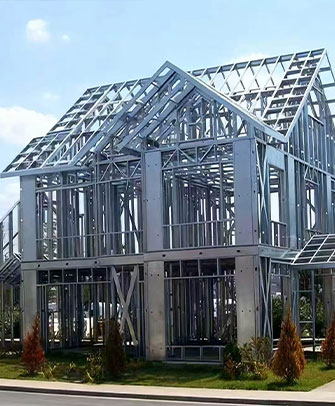
Industrial warehouses and logistics parks
Large roof and wall areas need fast coverage, long panel runs and reliable lap fit. IBR lines with high output and stable cut-length accuracy support just-in-time roofing installation.
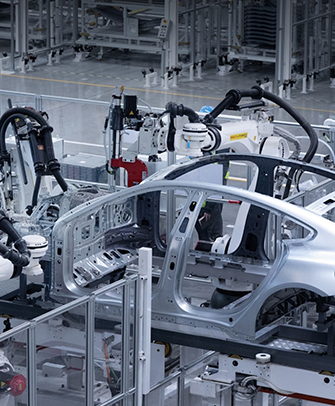
Agricultural and post-frame buildings
Poultry houses, equipment sheds and storage buildings require economical, wide-cover panels. Robust forming and coating-safe rollers help maintain appearance in dusty or humid environments.

Cold storage and food processing
Roof and wall envelopes must be weathertight and cleanly formed. Controlled rib geometry and burr-free cutting support insulated panel systems and hygienic construction.

Commercial and architectural roofing
Retail, office and public buildings often require neat visual lines, consistent colour and concealed fastening. Standing seam and IBR lines can be configured for architectural finish.
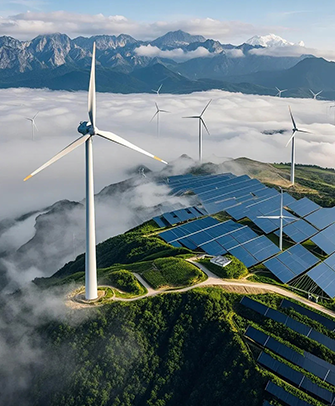
Solar-ready and energy-efficient roofs
Roofs increasingly support solar mounting, ventilation and rainwater systems. Accurate IBR panels make layout, penetration planning and mounting installation more predictable.
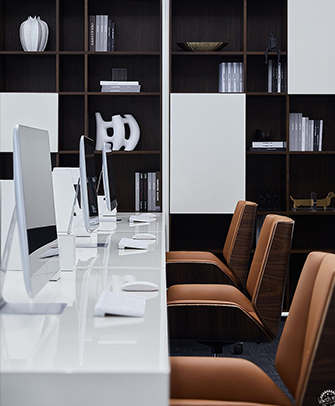
Infrastructure and regional distribution
Transport terminals, workshops, stores and regional distributors benefit from local roll forming because panel lengths can follow the project and replacement panels remain available.
⌁ Inside an IBR Roll Forming Line: From Coil to Finished Panel
An IBR line is a continuous production system. Each stage must support the next. Weak link analysis is far more useful than comparing only motor power or machine weight.
Decoiler & coil feeding
Manual or hydraulic decoiling controls coil tension. Stable unwinding prevents strip wander, camber and twisted panels before forming begins.
Entry guiding
Adjustable guides square the strip to the roll centreline. Correct alignment at entry strongly influences finished panel straightness.
Progressive forming
Rollers bend the strip gradually. The flower pattern must distribute strain evenly to protect zinc and paint while holding rib height and pitch.
Hydraulic cutting
An encoder measures strip travel and the PLC triggers a profile-matched blade. Clean cuts avoid crushed ribs and burrs.
PLC & HMI control
Batch lengths, quantities, faults and operating parameters are managed from a touch screen, with language options for local operators.
◈ Roller quality
Hard-chrome plated rollers, precision-machined shafts and rigid stands protect profile tolerance and surface finish. For pre-painted coil, roller radius and surface condition are critical to avoid coating cracks.
⌗ Frame and drive rigidity
IBR forming loads are not uniform across the width. Heavy-duty frames and properly sized gearboxes reduce vibration, improve rib consistency and extend bearing life.
◎ Cutting and length control
Encoder feedback and a profile-matched die support repeatable cut lengths. This matters for contractors who order panels by building zone or installation sequence.
▣ Buyer’s Specification Guide: Compare IBR and Roofing Roll Forming Machines
Quotes are only comparable when specifications are comparable. Use the indicative ranges below as a starting point, then require the supplier to confirm roller material, shaft diameter, station count, cutting method, drive configuration, safety guarding and acceptance testing.
| Machine Type | Typical Coil Thickness | Forming Stations | Typical Line Speed | What to Verify in a Quote |
|---|---|---|---|---|
| Trapezoidal / IBR Roofing | 0.3–0.8 mm | 16–22 | 15–30 m/min | Roller material and chrome thickness; shaft diameter; rib tolerance |
| Corrugated Roofing | 0.3–0.6 mm | 18–24 | 15–30 m/min | Wave pitch accuracy and edge waviness on thin coil |
| Glazed Step Tile | 0.3–0.7 mm | 12–18 | 3–6 m/min | Press-station cycle and step-depth consistency |
| Standing Seam | 0.4–0.8 mm | 12–20 | 10–20 m/min | Seam system compatibility and panel width adjustment |
| C/Z Purlin | 1.5–3.0 mm | 14–20 | 10–20 m/min | Size-change method and punching die configuration |
| Floor Deck | 0.7–1.5 mm | 20–30 | 10–15 m/min | Embossing pattern and frame rigidity for deck depth |
Ranges reflect typical configurations for reference only. Final parameters are engineered to the profile drawing, material yield strength, output target and site power supply.
◎ Global Procurement Requirements: What Serious Buyers Ask Before Ordering
International buyers rarely purchase an IBR machine as an isolated item. They are buying a production capability, a service relationship and a route to local market compliance. The best suppliers answer technical questions directly and document the acceptance path.
1 Profile and coil data
Provide a drawing, sample panel or photo, material type, thickness range, yield strength, coil width and coating system. These inputs define station count, roller material and motor power.
2 Output and changeover
State panels per shift, maximum panel length, batch sizes and how often profile or size changes occur. Changeover method affects labour cost and line utilization.
3 Power and safety
Confirm voltage, frequency, control language and local safety expectations. Motors, hydraulic stations and cabinets must match site conditions.
4 Service and spare parts
Ask for manuals, electrical diagrams, recommended spare parts, remote support and on-site commissioning options. Downtime cost usually exceeds the price difference between suppliers.
⌁ Total cost of ownership
Compare coil yield, energy use, labour per shift, tooling life, maintenance access and spare-part lead time. A lower purchase price can be expensive if the line cannot hold tolerance at production speed.
▤ Acceptance evidence
Ask for a trial-run video using comparable coil, measured sample panels, inspection photos and a packing list before balance payment. This is a practical E-E-A-T signal for overseas buyers.
✓ Commercial scalability
If you plan to add profiles later, choose a supplier that can support additional roll sets, punching stations, stackers or automation rather than replacing the entire line.
✦ Industry Development Trends Shaping IBR Roll Forming Machines
The next generation of IBR roll forming equipment will be judged by uptime, changeover speed, coating protection, data visibility and local service support. Price remains important, but production reliability is becoming the decisive factor.
01 Automation and servo control
Servo-driven cut-off, automatic length setting, batch scheduling and integrated stacking reduce manual intervention. For high-volume roofing suppliers, automation protects consistency during shift changes.
02 Quick-change tooling
Distributors serving multiple profiles need fast changeover. Cassette roll sets, movable stands and recipe-based HMI settings shorten downtime and make smaller batches economical.
03 Condition monitoring
Bearing temperature, vibration, hydraulic pressure and motor load can reveal developing faults before they become panel defects. IoT-ready controls support preventive maintenance.
04 Energy-efficient drives
Efficient motors, optimized hydraulics and reduced idle running lower energy cost. For factories running multiple shifts, energy use becomes part of the total cost calculation.
05 Coating-safe forming
Pre-painted and Galvalume coil demand careful roll radius, surface finish and strip tension. Protecting the coating at the bend line is essential for warranty and visual quality.
06 Localized micro-factories
Roofing distributors are setting up compact production units near projects. Machines that ship easily, commission quickly and run on local power are well positioned for this trend.
◈ Evidence from the Factory Floor: XC XiongChang Capability
Sichuan Xiongchang Technology Co., Ltd. (XC) designs and manufactures cold roll forming equipment for roofing, flooring, door, structural and light gauge steel components, together with the auxiliary equipment each line needs to run efficiently. The team brings more than 20 years of hands-on roll forming experience, supported by in-house machining, assembly and factory testing.
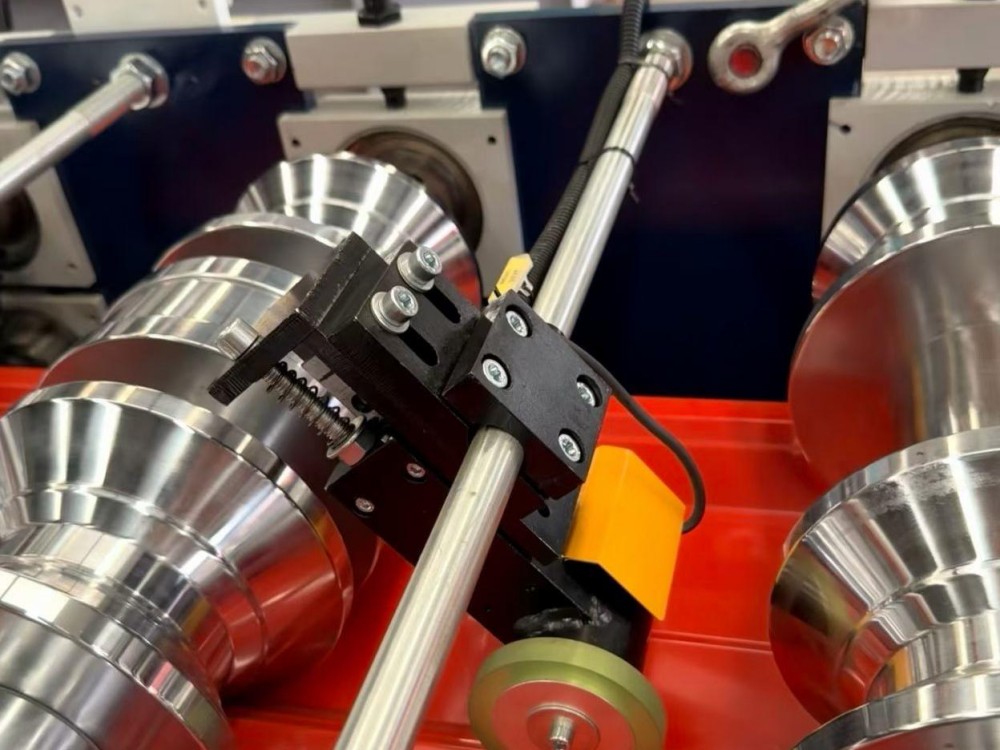
Proven expertise and innovation
Two decades of profile development across roofing, structural and decking applications. The engineering focus is on edge waves, flare, coating cracks and the practical details buyers notice after installation.
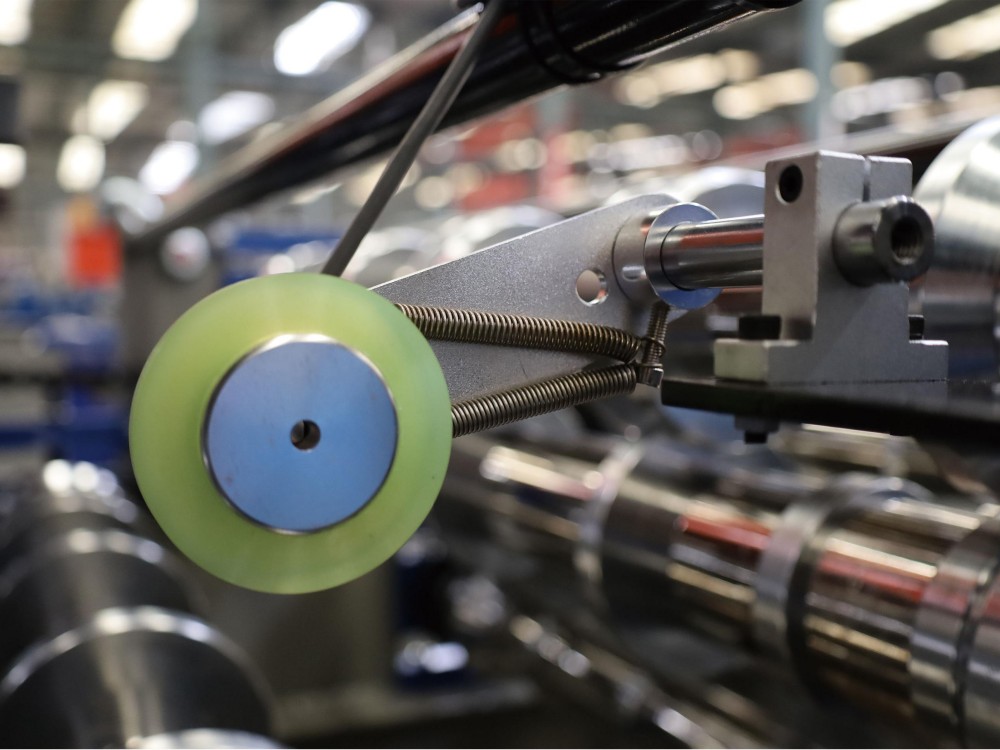
Built for performance and longevity
Rigid frames, precision-machined shafts and hard-chrome plated rollers help maintain profile tolerance shift after shift, protecting margin and reputation with contractors.
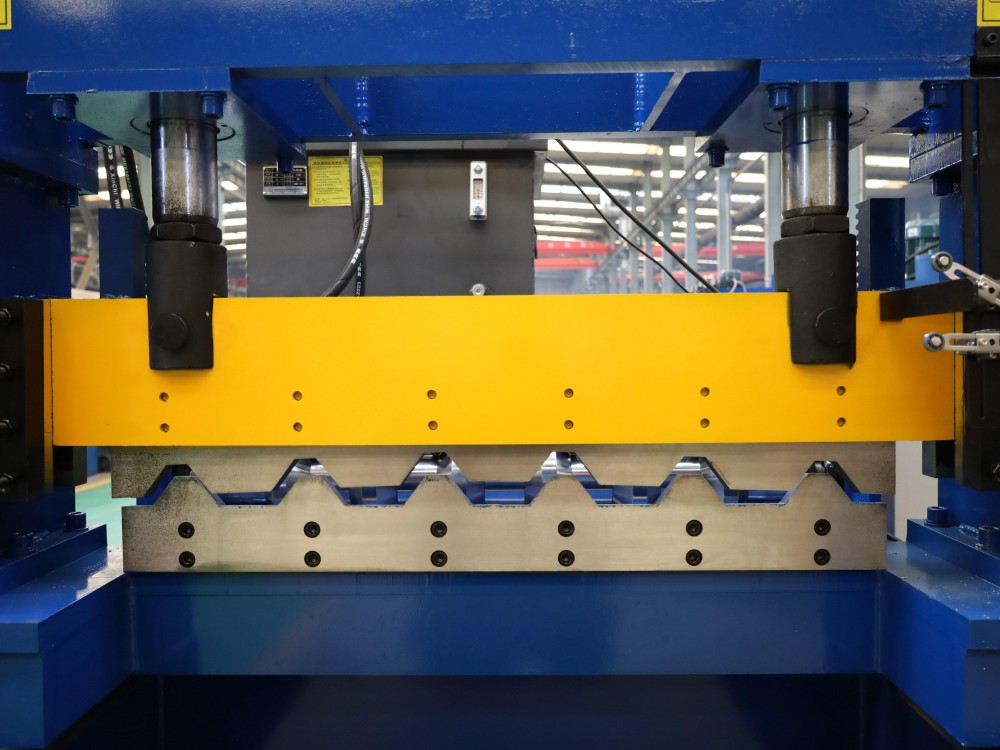
Commitment to customer success
Engineers answer technical questions directly, from pre-sale profile review to commissioning and spare parts, giving buyers one accountable team through the machine lifecycle.

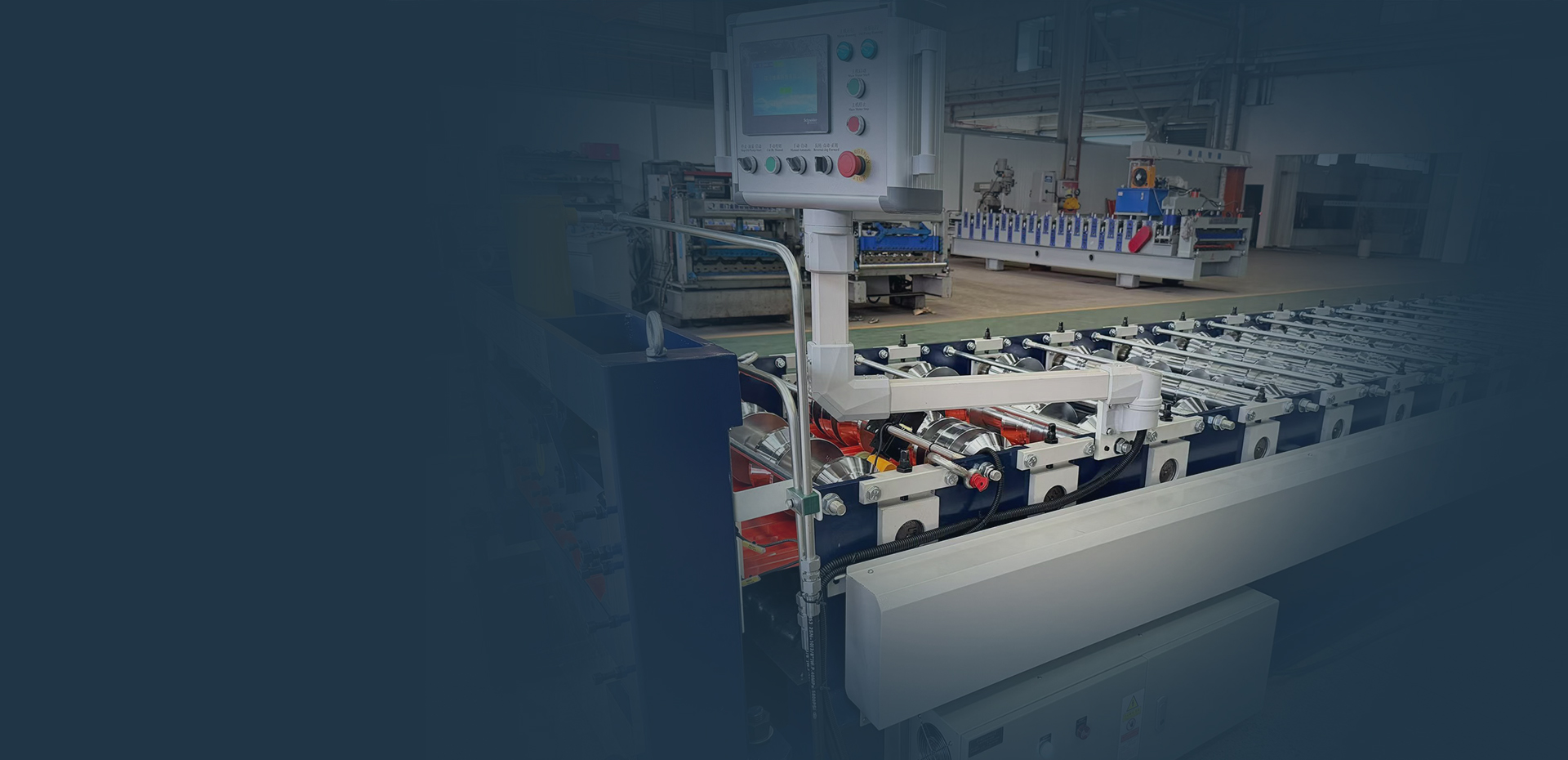



⌁ Engineering Insights from Field Experience
Machine performance is often decided by details that appear after installation: bearing condition, strip tracking, coating cracks, cut-off quality and operator training. These field insights help buyers ask better questions before placing an order.

Roll Forming Advantages and Applications
Why continuous roll forming beats press braking for long, consistent profiles, and which industries gain the most from it.

Bearing Damage in Multi-Stand Roll Forming Stations
Root causes of bearing failure, diagnostic checks, and how they show up as strip tracking loss and coating defects.

Zinc & Color Coating Cracking at Bending Zones
From bend radius to roll pass design, understand what makes coatings crack at the bend line and how coating-safe forming prevents it.
? Buyer FAQ: IBR Metal Roofing Roll Forming Machines
What information do I need to send for an accurate roll forming machine proposal?
Can XC build a roll forming machine for a local or non-standard profile?
How is machine quality verified before shipment?
What is the typical lead time for a roll forming machine?
What after-sales support does XC provide to overseas buyers?
Can machines be configured for my local power supply?
What is an IBR profile, and why does machine quality matter?
What coil materials can an IBR roll forming line run?
How do I evaluate total cost of ownership, not just machine price?
What safety and compliance options should overseas buyers request?
Planning Your Next IBR Roofing Production Line?
Send your profile drawing, coil specification and output target. XC engineers will review the profile, define the roll pass concept and recommend a machine configuration built for your market, voltage and service expectations.
▣ More IBR, Purlin, Standing Seam and Framing Machines
Explore additional machine configurations for IBR roofing, C/Z purlins, glazed tile, standing seam, corrugated roofing, metal studs and U track production. Each product link opens a dedicated machine page with details for quotation.

China Z Purlin Cold Roll Forming Machine Factory, Factories
Dedicated Z-section production with lapping capability for long-span roofs, wall girts and steel structure systems.
View product
China Industrial IBR Sheet Forming Machine for Metal Roofing Factories, Companies
Industrial IBR sheet production engineered for high-rib roof and wall cladding, with controlled forming and cut-off.
View product
China Metal C Stud Roll Forming Machine Manufacturer, Companies
C stud production for drywall and light gauge steel framing, focused on dimensional consistency and efficient output.
View product
China Glazed Tile Roll Forming Machine Factory, Company
Decorative step-tile panels for villa and architectural roofing, with hydraulic pressing synchronized to the control system.
View product
China Nail Strip Standing Seam Panel Machine Manufacturer, Factory
Snap-lock standing seam panels with integrated nailing flange for residential and light commercial roofs.
View product
ODM U Panel Roofing Roll Former Factories, Company
U panel roofing roll forming for practical, economical roof and wall applications with profile-matched tooling.
View product
ODM Metal C Purlin Roll Forming Machine Manufacturers, Factory
Fully automatic C-section production with PLC length control, hydraulic punching and continuous output.
View product
China Double Layer Roll Forming Machine Factory, Company
Two roofing profiles on one frame, reducing floor space and capital cost for suppliers serving mixed markets.
View product