
01


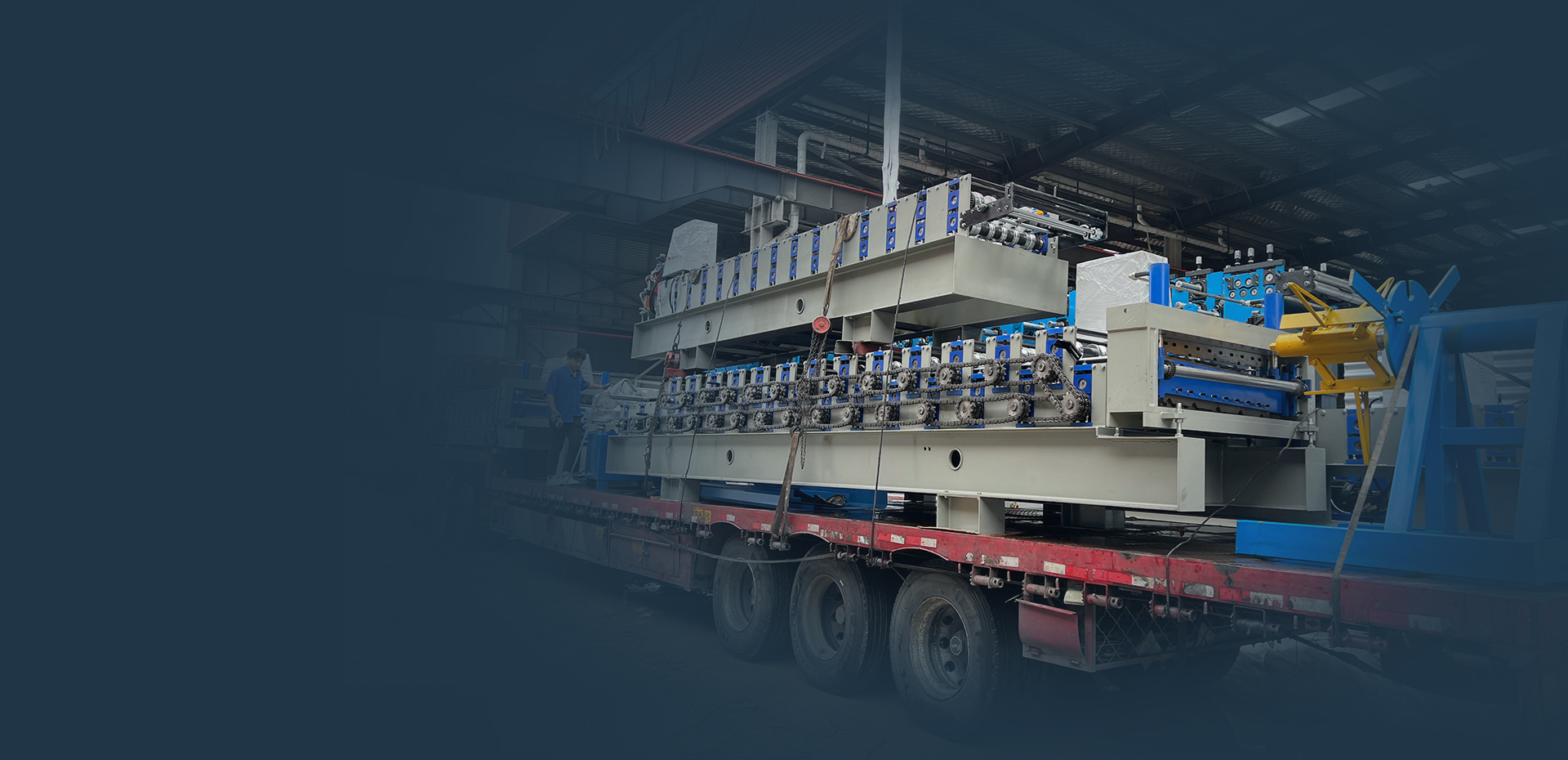
A technical buying guide for commercial metal roofing roll forming lines, including IBR, PBR, U-panel, Tuff-Rib, standing seam, glazed tile, purlin, floor deck and light gauge steel equipment—engineered from your profile drawing, factory-tested before shipment, and supported for local voltage, code review and commissioning.
The product cards below are a working shortlist, not a catalogue limit. Every commercial roofing roll forming machine can be configured around coil thickness, yield strength, profile drawing, target output, local voltage and site documentation. Use the product links as a starting point for a profile-to-machine review.
Commercial roofing roll forming equipment sits at the intersection of construction demand, coil supply, building-code compliance, labor availability and production economics. For distributors, roofing contractors, steel framers and prefabricated building manufacturers, the machine defines panel quality, installation speed, warranty risk and the ability to enter new profile categories.
The strongest manufacturers and factories now supply integrated lines rather than isolated machines: decoiler, entry guide, forming mill, punching, hydraulic cutting, stacking and PLC control are engineered as one production system. This reduces installation friction and protects the buyer from interface problems between sub-suppliers.
Demand is regional. North America favors IBR, PBR, Tuff-Rib and standing seam; Europe emphasizes architectural standing seam and documentation; the Middle East needs heat-ready, long-span capability; Southeast Asia and Africa often prioritize rugged, high-output IBR and tile lines with practical spare-parts support.
A credible quote should state the roll pass logic, station count, roller material and hardness, shaft diameter, drive type, cutting method, tolerance, coil yield range, electrical configuration and acceptance test. Without those details, “commercial roofing roll forming machine price” comparisons are not comparable at all.
A commercial roofing line must be tuned to local profiles, local coil standards, local power supply and local service expectations. The same basic forming mill can require different station counts, roller materials, control languages, safety arrangements and documentation packages when it moves from one region to another.
IBR, PBR, Tuff-Rib, AG panel and standing seam lines are common. Buyers frequently request 480V/60Hz configurations, heavy-duty frames, long panel runs and profile tolerances that suit field installation. A supplier should be able to review lap fit, rib height and seam engagement from a local profile sample.
Architectural standing seam, concealed-fix systems and high-quality coated steel are important. European projects often require clear technical documentation, electrical drawings, HMI language options and traceability from profile drawing to trial-run sample. Local voltage and frequency must be confirmed in the proposal.
High ambient temperature, long-span industrial roofs, coastal corrosion risk and high-volume output shape the specification. Lines are often configured with robust cooling, hydraulic systems, corrosion-conscious finishes and spare-parts stock planning. Localization includes 380–415V/50Hz options and operator training.
Tropical humidity, thin-gauge coated coil, IBR, corrugated, U-panel and glazed tile profiles are widely used. Buyers value economical line speed, coating-safe forming and fast technical response. A practical spare-parts kit and remote commissioning support can be more valuable than extra automation that is difficult to maintain locally.
Infrastructure, warehousing, agriculture and residential roofing create demand for durable IBR, corrugated, tile and purlin lines. Power supply can vary, so motors, hydraulic stations and control cabinets should be configured to the site voltage and frequency. English manuals, wiring diagrams and remote video guidance are essential.
Local construction cultures create distinctive profiles and panel widths. Standing seam, PBR, U-panel, purlin and floor deck lines may all be specified on the same project. A manufacturer with profile-development capability can reproduce a regional drawing or sample more reliably than a factory that only sells fixed catalogue models.
Motors, hydraulic stations and control cabinets are configured to local voltage and frequency, such as 220V, 380V, 415V, 440V or 480V at 50Hz or 60Hz. HMI language options, safety signage and electrical-drawing conventions should be agreed before manufacturing.
English manuals, electrical diagrams, material certificates for key components, inspection photos and trial-run videos create a reliable acceptance trail. Suppliers should state clearly which standards are met and which local approvals remain the buyer’s responsibility.
Remote video guidance, on-site engineer service on request, operator training and spare-parts supply for blades, bearings, sensors and electrical components reduce downtime. The objective is not only to ship a line, but to make the first panel and the ten-thousandth panel consistently.
A roll former is only as good as its weakest station. The technical route below reflects a typical commercial roofing configuration: decoiler, entry guiding, progressive forming, hydraulic post-cutting and PLC/HMI control. Each stage has a measurable effect on straightness, profile tolerance, coating integrity and installation speed.
A manual or hydraulic decoiler feeds coil under controlled tension. Stable unwinding prevents strip wander, which is the first cause of camber and twisted panels. Coil width, bore, weight and inner diameter must be confirmed before shipment.
Adjustable entry guides square the strip to the roll centreline before the first pass. Correct alignment here largely decides the straightness of the finished panel and reduces edge damage on thin, pre-painted coil.
Each station bends the strip a few degrees at a time. XC’s roll pass design, also called the flower pattern, spreads strain evenly to protect zinc and paint coatings and to avoid edge waves on thin coils. Typical commercial roofing lines use 12–30 forming stations.
An encoder measures strip travel and the PLC triggers a profile-matched blade. The result should be burr-free cuts within ±1 mm, without crushing ribs or seam legs. Blade material and cutting clearance are profile-specific.
A touch-screen HMI stores batch lengths and quantities, monitors faults and supports multi-language operation. New operators can get up to speed faster when the control logic, alarm messages and manual match the actual line configuration.
The machine frame can be copied; the flower pattern is much harder to copy. A well-developed roll pass accounts for material yield strength, coating ductility, springback, bend radius, station spacing, shaft deflection and lubrication. For commercial roofing equipment, the difference between a “working” line and a profitable line is often invisible in the brochure: it is the ability to hold profile dimensions across the coil width and through long production runs without edge wave, twist, oil-canning or coating crack.
A commercial roofing equipment purchase becomes reliable only when engineering, manufacturing, testing, documentation and commissioning are connected. The following capabilities are part of the working method behind XC roll forming systems.

XC supplies more than a machine. We deliver complete production lines, including the decoiler, forming mill, punching, cutting, stacking and control system, engineered as one integrated unit so your output starts on schedule.

Our customers range from residential roofing suppliers to large industrial and infrastructure contractors. Each line ships with English manuals, electrical diagrams, spare parts and remote or on-site commissioning, which supports long-term operational reliability.
Built in China and tuned for your market, every line can be prepared for local voltage, profile standards, coil certificates and operator language. Before packing, trial-run video plus inspection photos are shared for approval so the buyer sees the line running with matching coil.
Commercial roofing equipment does not exist in isolation. The same cold roll forming discipline supports building materials, transportation, appliances, new energy and light structural products. This wider application experience improves profile development and production-line integration.

Roofing sheets, wall cladding, standing seam panels, floor decking and C/Z purlins are the core profiles of modern steel buildings, warehouses and residential projects.

Roll formed structural rails, door frame sections and reinforcement beams require repeatable cross-sections and tight length tolerances that feed directly into automated assembly.

Appliance side panels, cabinet frames and trim profiles are formed from pre-painted or stainless coil. Surface protection during forming matters as much as dimension.

Container panels, truck body sections, railway car profiles and highway guardrails are long, heavy-gauge parts that need rigid stands and accurate cut-off.

Solar PV mounting rails, strut channels and support brackets are high-volume parts that benefit from inline punching and fast size changeover.

Shelving uprights, racking beams, cabinet frames and partition studs need consistent hole pitch and straightness to make on-site assembly fast and safe.
Quotes are only comparable when the specifications are. Use these indicative ranges and the key check for each machine type to judge any supplier’s offer, including ours. Final parameters must be engineered to your profile drawing, material yield strength, output target and site power supply.
| Machine Type | Typical Coil Thickness | Forming Stations | Typical Line Speed | What to Verify in a Quote |
|---|---|---|---|---|
| Trapezoidal / IBR Roofing | 0.3–0.8 mm | 16–22 | 15–30 m/min | Roller material and chrome thickness; shaft diameter |
| Corrugated Roofing | 0.3–0.6 mm | 18–24 | 15–30 m/min | Wave pitch accuracy and edge waviness on thin coil |
| Glazed Step Tile | 0.3–0.7 mm | 12–18 | 3–6 m/min | Press-station cycle and step-depth consistency |
| Standing Seam | 0.4–0.8 mm | 12–20 | 10–20 m/min | Seam system compatibility and panel width adjustment |
| C/Z Purlin | 1.5–3.0 mm | 14–20 | 10–20 m/min | Size-change method, manual or automatic, and punching dies |
| Floor Deck | 0.7–1.5 mm | 20–30 | 10–15 m/min | Embossing pattern and frame rigidity for deck depth |
Ranges reflect typical XC configurations for reference only. A commercial roofing roll forming equipment proposal should always state the assumptions behind speed, tolerance and station count.
Sichuan Xiongchang Technology Co., Ltd. (XC) designs and manufactures cold roll forming equipment for roofing, flooring, door and structural components, together with the auxiliary line equipment each system needs to run efficiently.
Our team brings more than 20 years of hands-on roll forming experience. That experience shows in the details buyers notice after installation: rollers that hold tolerance, coatings that do not crack at the bend, and panels that fit on the roof the first time.



Two decades of profile development across roofing, structural and decking applications. We have solved the edge waves, flare and coating cracks that cheaper machines leave to the buyer.

Rigid frames, precision-machined shafts and hard-chrome plated rollers keep profiles within tolerance shift after shift. That protects your margin and your reputation with contractors.

Engineers answer technical questions directly, from pre-sale profile review to commissioning and spare parts. You get one accountable team for the full life of the machine.
A transparent five-step process, so overseas buyers know exactly what happens and when.
Send your drawing, sample or photo plus coil data. Engineers check that the profile can be formed and flag any risks.
You receive the station count, roller material, drive and cutting system, power configuration and a confirmed schedule.
Frames, shafts and rollers are machined and assembled in-house, with inspection at each critical stage.
The line runs with coil matching your specification. Samples are measured, and a video report is shared for approval.
Export packing, documentation, then remote or on-site installation and operator training.
The next competitive advantage will not come from adding more steel to the frame. It will come from simulation-led profile development, coating-safe forming, servo-electric drives, inline quality feedback and modular changeover that lets one line serve more market niches.
Finite-element simulation of springback, strain and coating stress will shorten profile development and reduce trial-and-error. Buyers should ask whether the supplier can show the forming logic, not only a finished sample.
Servo-assisted adjustment, energy recovery and hybrid hydraulic systems can improve energy efficiency and repeatability. For high-mix producers, faster size change and lower scrap matter as much as top line speed.
Cameras, laser sensors and edge-detection algorithms can flag rib height drift, coating scratches, edge wave and cut-length deviation in real time. The practical goal is fewer rejected panels and faster root-cause analysis.
Interchangeable roll sets, cassette stands and recipe-driven PLC control allow one commercial roofing line to serve multiple profiles. This is especially valuable for distributors facing fragmented regional demand.
Experience is useful only when it is transferable. These field notes reflect the problems buyers actually face after installation: bearing runout, coating cracks at bend zones, profile drift and the hidden cost of unclear specifications.

Why continuous roll forming beats press braking for long, consistent profiles, and which industries gain the most from it.

Six root causes of bearing failure, the diagnostic checks to run first, and how they show up as strip tracking loss and coating defects.

From bend radius to roll pass design, this article explains what makes coatings crack at the bend line and how coating-safe forming prevents it.
Straight answers based on the projects we deliver every year. For a profile-specific review, send a drawing or sample photo together with coil thickness, yield strength, coil width, target output and local voltage.
Send your profile drawing or a photo of a sample panel, material type (PPGI, GI, Galvalume or black steel), thickness range, yield strength, coil width, required output per shift, and your local voltage and frequency. With these details our engineers can define the number of forming stations, roller material, cutting system and motor power.
Yes. Most XC machines are built to order. Our engineers develop the roll pass design, or flower pattern, from your drawing or sample, so regional profiles such as IBR, Tuff-Rib, Klip-Lok style or Spanish-style tiles can be matched closely.
Every line is assembled and test-run in our factory with coil that matches your specification. Sample panels are measured against your drawing, and a trial-run video plus inspection photos are shared for your approval before packing.
Standard roofing sheet lines are commonly ready within 30 to 45 working days after drawing confirmation. Purlin, floor deck, double layer and fully customized lines may take longer. The confirmed schedule is stated in each proposal.
XC provides English manuals and electrical diagrams, remote video guidance for installation and commissioning, on-site engineer service on request, and spare parts supply such as blades, bearings and electrical components.
Yes. Motors, hydraulic stations and control cabinets are configured to your site voltage and frequency, for example 220V, 380V, 415V or 440V at 50Hz or 60Hz, with HMI language options for operators.
Commercial roofing lines generally produce wide, thin-gauge exterior panels such as IBR, corrugated, U-panel, standing seam or glazed tile. Light gauge steel framing machines typically produce C studs, U tracks and related structural sections at narrower widths and different tolerance priorities. Some manufacturers build both, but the roll pass design, cutting system and handling equipment are not interchangeable without engineering review.
Start with a coating-safe roll pass that avoids excessive local strain, use suitable roller surface finish and chrome condition, control strip tension and guiding, and verify bend radius against the coating system. Trial-run samples should be inspected at the bend line, not only at the flat surface. For demanding architectural panels, the coil supplier and machine builder should review the coating specification together.
Use the catalog for machine layouts, technical specifications and profile options. Then send your drawing, sample photo and coil data so the proposal can be engineered rather than guessed.
These additional machine families support structural framing, purlin production, standing seam roofing and metal roofing factories. Every link below preserves the original product URL and can be evaluated alongside the banner showcase above.














