 XC XiongChang · Cold Roll Forming Systems
IBR and Metal Roofing Machine Products: First 8
Start with the profile family that matches your market. Every machine below is configured to your coil thickness, yield strength, profile drawing, output target and site power supply. Standard catalogues are a starting point, not a limit.








China IBR Roofing Machine Factories & Company: The Buyer’s Due-Diligence Lens
China is not short of suppliers that list IBR roofing machines. The real question is which factory can convert your local profile, coil specification, output target, voltage and documentation requirement into a stable line that a local crew can run. Buyers searching for “China IBR roofing machine factories & company” are usually comparing three things at once: the machine, the manufacturing evidence behind it, and the support system after shipment.
IBR stands for Inverted Box Rib. In practice, IBR describes a family of trapezoidal metal roof and wall profiles with a raised, stiffened rib. It is not a single global drawing. Rib height, rib pitch, cover width, stiffening dimples, end-lap detail and side-lap geometry differ by market. A factory that can develop the roll pass design from your drawing, sample photo or measured panel is more valuable than a catalogue seller. That is the difference between a machine that makes “similar” panels and one that fits clips, purlins, flashings and the local installer’s method.
A roll forming machine is also a system, not only a frame and rollers. A typical IBR line includes a manual or hydraulic decoiler, entry guides, progressive forming stations, a hydraulic post-cutter, safety guarding, hydraulic power pack, PLC and HMI. The quality of the panel is created station by station: each pass should bend the strip a few degrees at a time, spread strain evenly and protect the zinc and paint coating. Rushed roll pass design often appears later as edge wave, camber, twisted panels, cracked paint at the bend or inconsistent rib height.
The team brings more than 20 years of hands-on roll forming experience. That experience shows in the details buyers notice after installation: rollers that hold tolerance, coatings that don’t crack at the bend, and panels that fit on the roof the first time. This white paper adds the information a normal product page often leaves out: total cost of ownership, the commercial context, local compliance and power configuration, application scenarios, the technology roadmap, and an engineering FAQ. Use it as a comparison framework, including when you evaluate XC.

- Profile-to-machine design from drawing, sample or photo
- In-house machining and assembly
- Factory acceptance test with video report
- Global commissioning and spare-parts support
Factory Capability, Verification and Support Metrics
E-E-A-T is not a slogan. For a China IBR roofing machine factory, it should appear as production area, engineering depth, factory testing, installed base, cut-length control and after-sales responsiveness.
Years of roll forming industry experience and profile development
m² factory area for machining, assembly and testing
Cooperative customers served with remote or on-site commissioning
Team members across engineering and production
Lines test-run before dispatch with matching coil
Encoder-controlled cut-length accuracy on typical configurations
Why IBR Roofing Machines Remain Strategic in 2026
In 2026, IBR and trapezoidal metal roofing continue to gain share in warehouses, factories, cold storage, agricultural buildings, retail boxes, schools and infrastructure. The reasons are practical: steel roofing is fast to install, light, long-span friendly, compatible with insulation and solar mounting, and highly recyclable.

China’s advantage is not only lower component cost. It is the depth of the supply chain: coil processing, roller machining, hard-chrome plating, CNC turning, PLC programming, hydraulic components, export packing and sea-freight consolidation all sit within a mature industrial cluster. That ecosystem can shorten development cycles, but it also raises the buyer’s challenge: separating an engineering-led factory from a trading company that assembles price lists. A serious partner should be able to explain the roll pass design, station count, shaft diameter, roller material, cutting method and voltage configuration before you place a deposit.
Demand is not uniform. In Africa, IBR is widely used for warehouses, workshops, schools and agricultural buildings; buyers often prioritize robust frames, easy operation and local spare parts. In the Middle East, high heat, dust and wind uplift push specifications toward coating durability, rib stiffness and thermal movement control. In Southeast Asia, humidity, monsoon rain and typhoons put attention on end laps, sealant details and coating-safe forming. In Latin America, regional profiles and Spanish-language support matter. In Europe and North America, documentation, CE or UL/CSA-marked components, guarding, traceability and standing seam compatibility can be decisive.
Africa
Warehouses, schools, workshops and agricultural buildings. Prioritize robust frames, easy operation and practical spare-parts access.
Middle East
Heat, dust and wind uplift. Specify coating durability, rib stiffness and thermal movement control.
Southeast Asia
Humidity, monsoon rain and typhoons. Focus on end laps, sealant details and coating-safe forming.
Europe & North America
Documentation, guarding, traceability, local power and certified components can be decisive.
The practical conclusion is simple: “Made in China” is a manufacturing origin, not a quality level. A serious China IBR roofing machine company should demonstrate profile development, in-house machining, factory acceptance testing, voltage localization, documentation and after-sales response. That is the competitive gap where information gain matters.
Inside a Cold Roll Forming Line: Five Control Points That Decide Panel Quality
A roll former is only as good as its weakest station. These five stages explain how XC engineers the line around your profile and coil.
Decoiler & Coil Feeding
A manual or hydraulic decoiler feeds coil under controlled tension. Stable unwinding prevents strip wander, which is the first cause of camber and twisted panels.
Entry Guiding
Adjustable entry guides square the strip to the roll centreline before the first pass. Correct alignment here largely decides the straightness of the finished panel.
Progressive Forming Stations
Each station bends the strip a few degrees at a time. XC’s roll pass design (flower pattern) spreads strain evenly to protect zinc and paint coatings and to avoid edge waves on thin coils.
Hydraulic Post-Cutting
An encoder measures strip travel and the PLC triggers a profile-matched blade. The result is burr-free cuts within ±1 mm, without crushing ribs or seams.
PLC & HMI Control
A touch-screen HMI stores batch lengths and quantities, monitors faults and supports multi-language operation, so new operators get up to speed quickly.
Typical configuration signals: 12–30 forming stations · hard-chrome plated forming rollers · ±1 mm cut-length tolerance · PLC/HMI batch control · 100% factory acceptance test before dispatch.

Industry Solution: Turnkey Cold Roll Forming
XC supplies more than a machine. We deliver complete production lines, including the decoiler, forming mill, punching, cutting, stacking and control system, engineered as one integrated unit so your output starts on schedule.
Explore Machine Lines
Equipment Supply & After-Sales Support
Our customers range from residential roofing suppliers to large industrial and infrastructure contractors. Each line ships with English manuals, electrical diagrams, spare parts and remote or on-site commissioning, which supports long-term operational reliability.
Contact Our EngineersAn Integrated Roll Forming Specialist
Sichuan Xiongchang Technology Co., Ltd. (XC) designs and manufactures cold roll forming equipment for roofing, flooring, door and structural components, together with the auxiliary line equipment each system needs to run efficiently.
Our team brings more than 20 years of hands-on roll forming experience. That experience shows in the details buyers notice after installation: rollers that hold tolerance, coatings that don’t crack at the bend, and panels that fit on the roof the first time. With a 50,000 m² production base, in-house machining and assembly, 1,000+ cooperative customers and 2,000+ team members, XC is structured to support both single-machine buyers and multi-line industrial projects.
- Design from drawing, sample or photo
- In-house machining and assembly
- Video acceptance before payment balance
- Lifetime technical support



Proven Expertise & Innovation
Two decades of profile development across roofing, structural and decking applications. We have solved the edge waves, flare and coating cracks that cheaper machines leave to the buyer.

Built for Performance & Longevity
Rigid frames, precision-machined shafts and hard-chrome plated rollers keep profiles within tolerance shift after shift. That protects your margin and your reputation with contractors.

Commitment to Customer Success
Engineers answer technical questions directly, from pre-sale profile review to commissioning and spare parts. You get one accountable team for the full life of the machine.
Roll Forming Machines by Application
Choose a machine family below. Every model is configured to your coil thickness, yield strength, profile drawing and site power supply. The machine library covers roofing, standing seam, purlin and floor deck production.
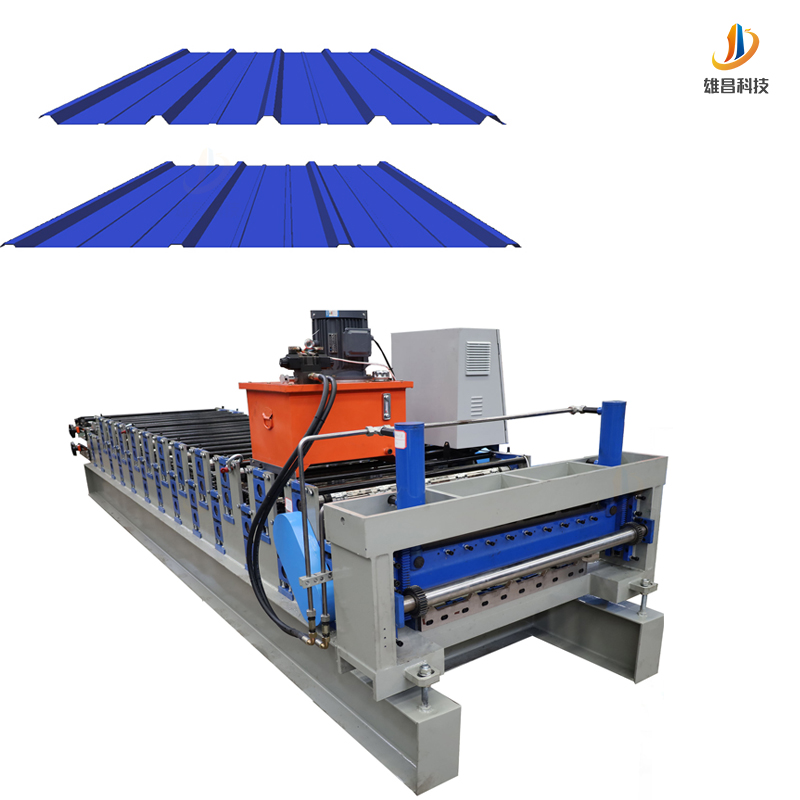
Double Layer Roll Forming Machine
Two roofing profiles on one frame, such as trapezoidal and corrugated. This cuts floor space and capital cost for suppliers serving mixed markets.
View Details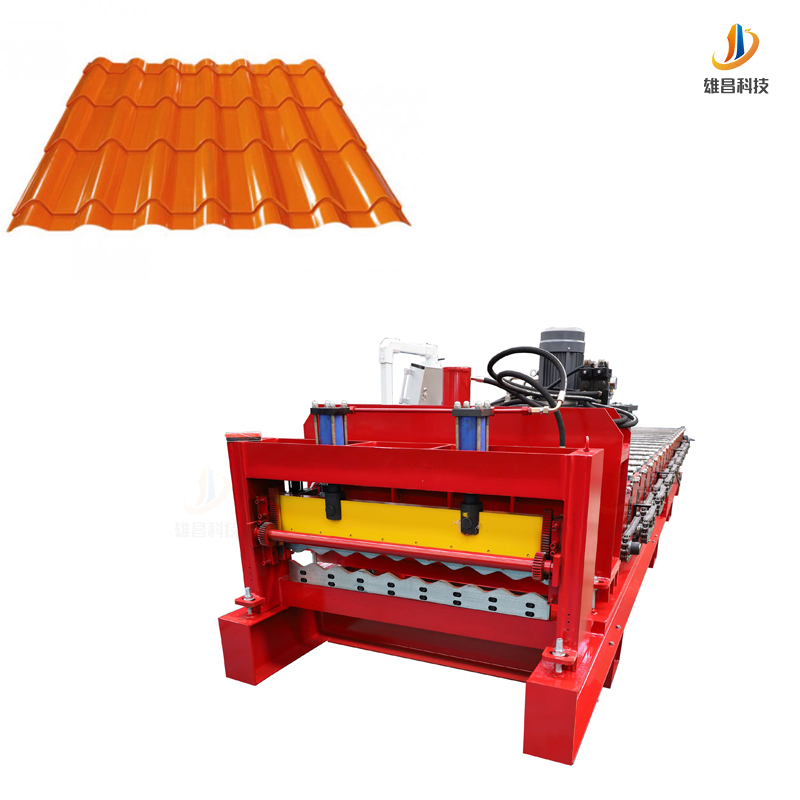
Glazed Tile Roll Forming Machine
Forms decorative step-tile panels. A hydraulic press station is synchronized with the PLC to give uniform step depth and clean tile lines.
View Category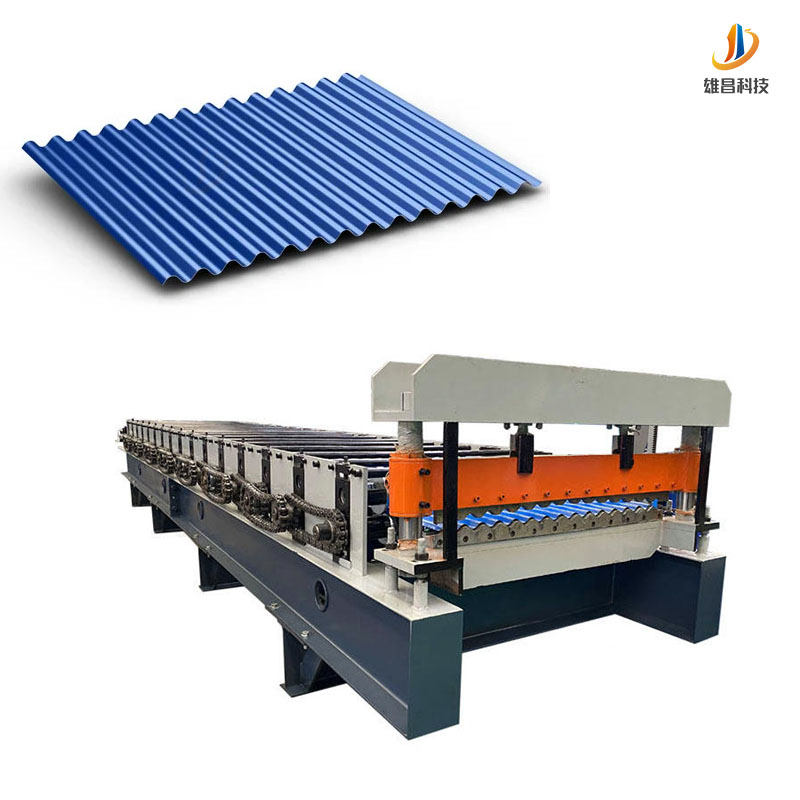
Corrugated Steel Roofing Roll Forming Machine
Rolls sinusoidal corrugated sheets. It is an economical, high-volume profile for agricultural, residential and warehouse roofs and walls.
View Category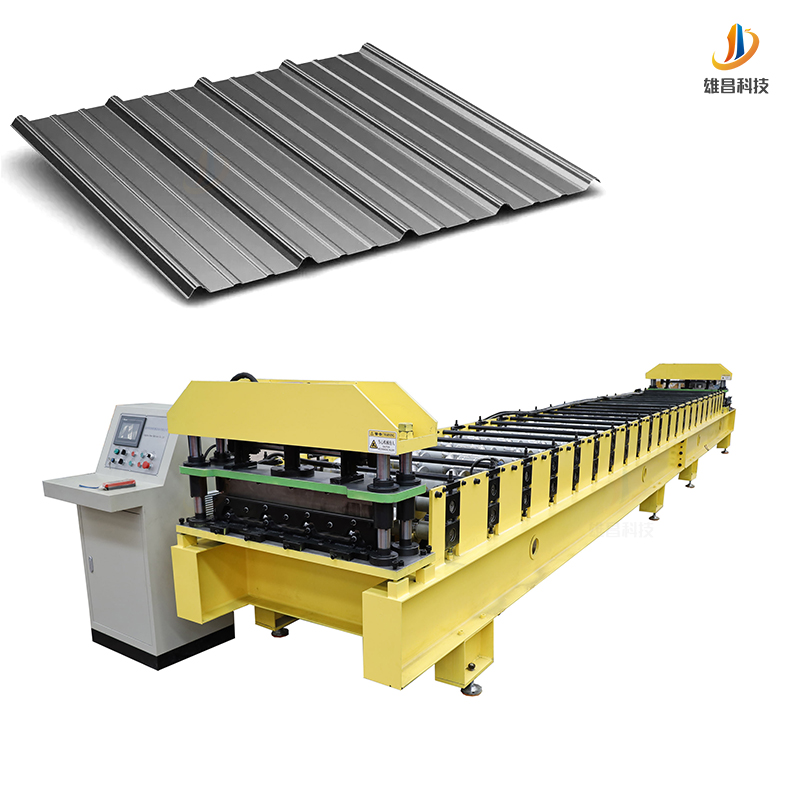
Tuff-Rib (AG Panel) Forming Machine
Produces AG and Tuff-Rib panels with consistent rib height and lap fit. It is built for post-frame and agricultural building suppliers.
View Details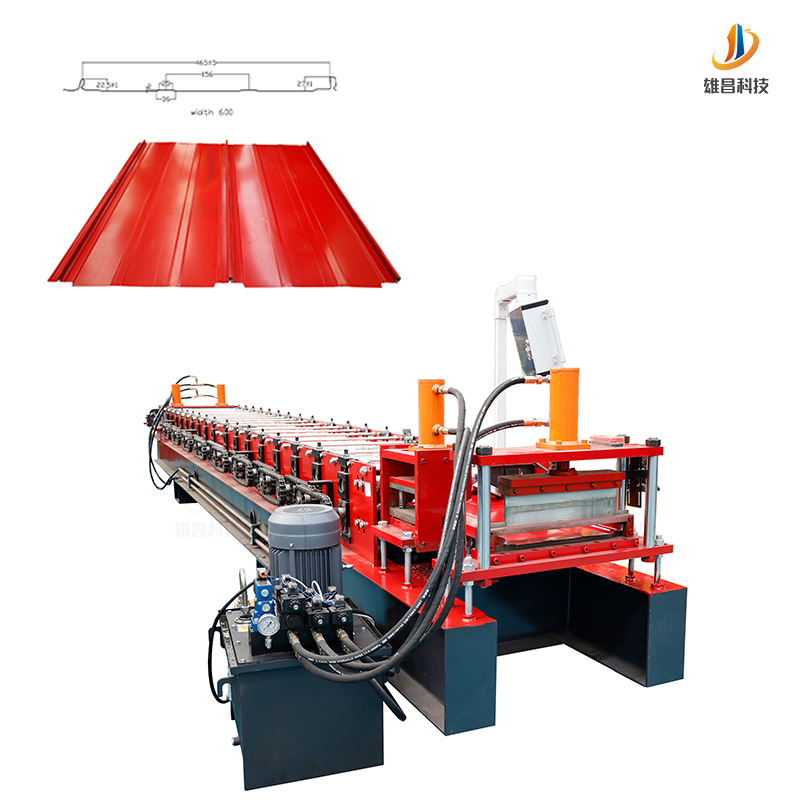
Nail Strip Standing Seam Panel Machine
Snap-lock panels with an integrated nailing flange. No separate clips are needed, which makes it ideal for residential and light commercial roofs.
View Details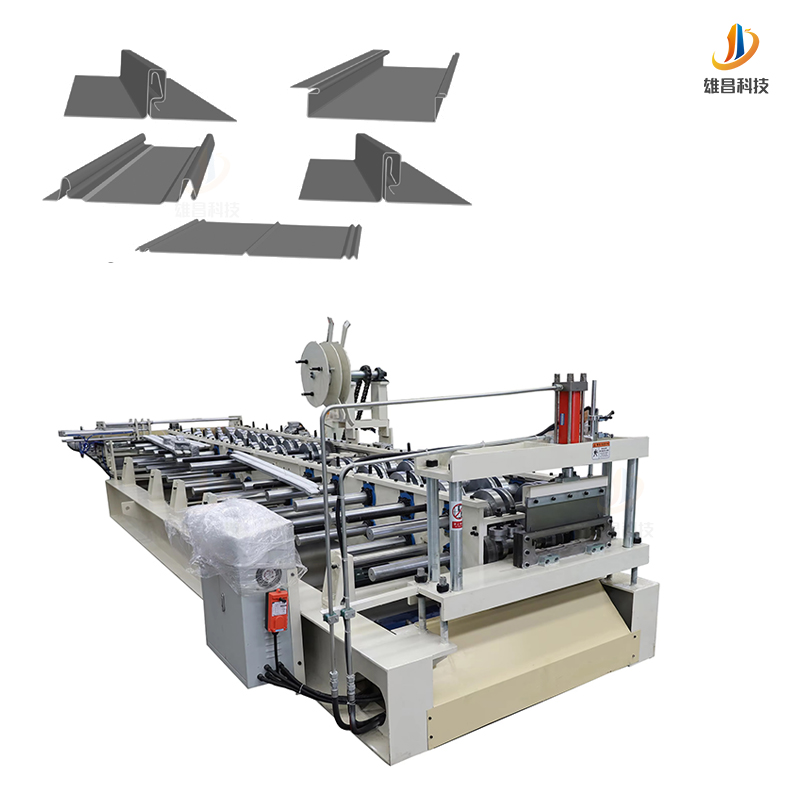
Snap Lock Standing Seam Panel Machine
Forms male and female seam legs that snap together by hand. The fit tolerance is controlled for watertight, field-friendly installation.
View Details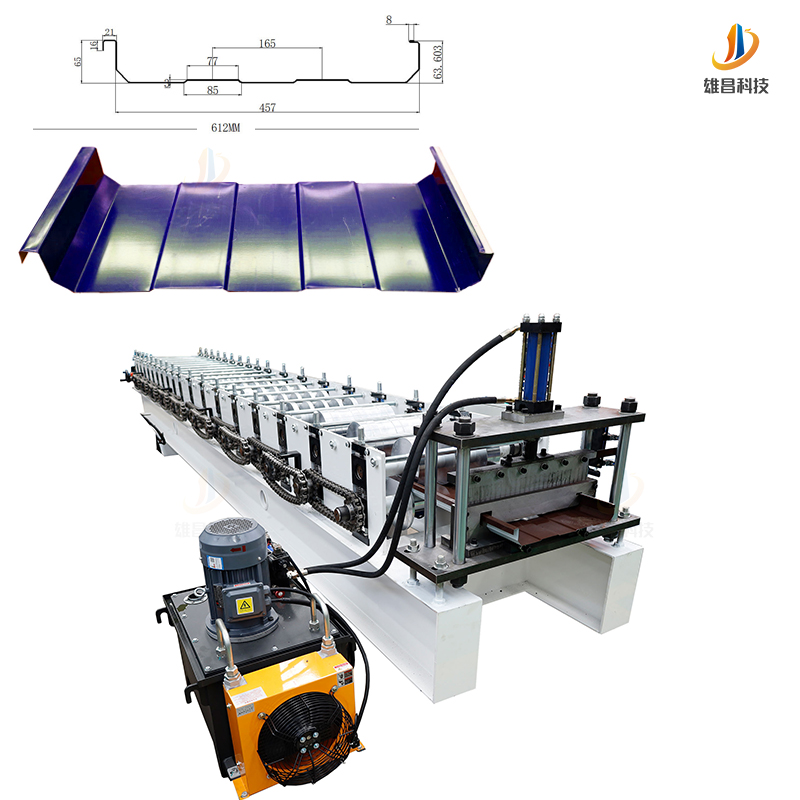
Mechanical Lock Standing Seam Panel Former
High-strength panels for field-seamed single or double lock systems. Wind-uplift resistance makes it suitable for large-span industrial roofs.
View Category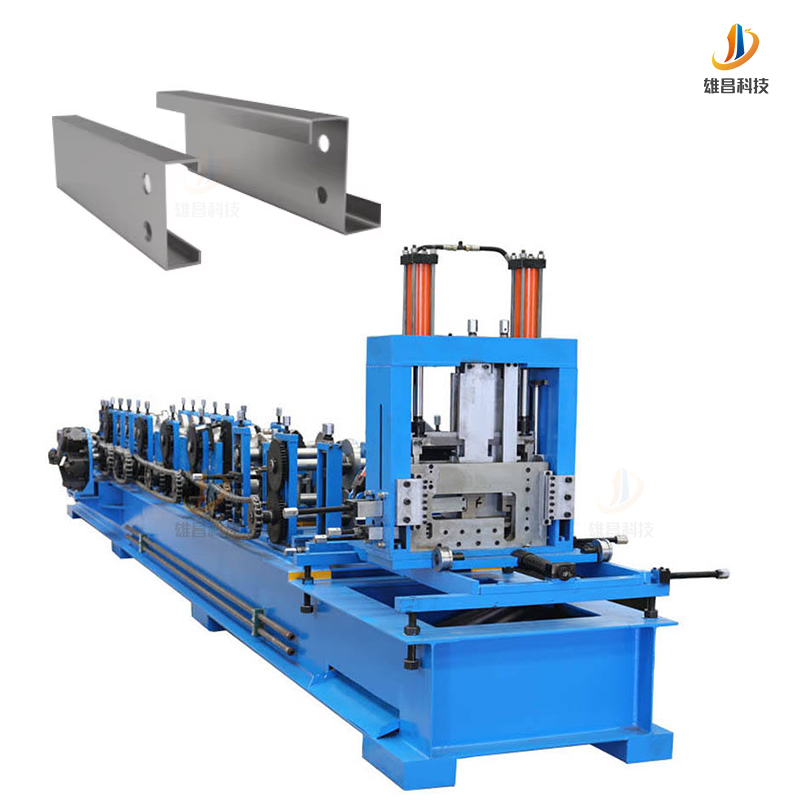
C/Z Interchangeable Purlin Machine
Produces both C and Z purlins on one line with fast size changeover. This keeps one investment flexible across many building projects.
View Category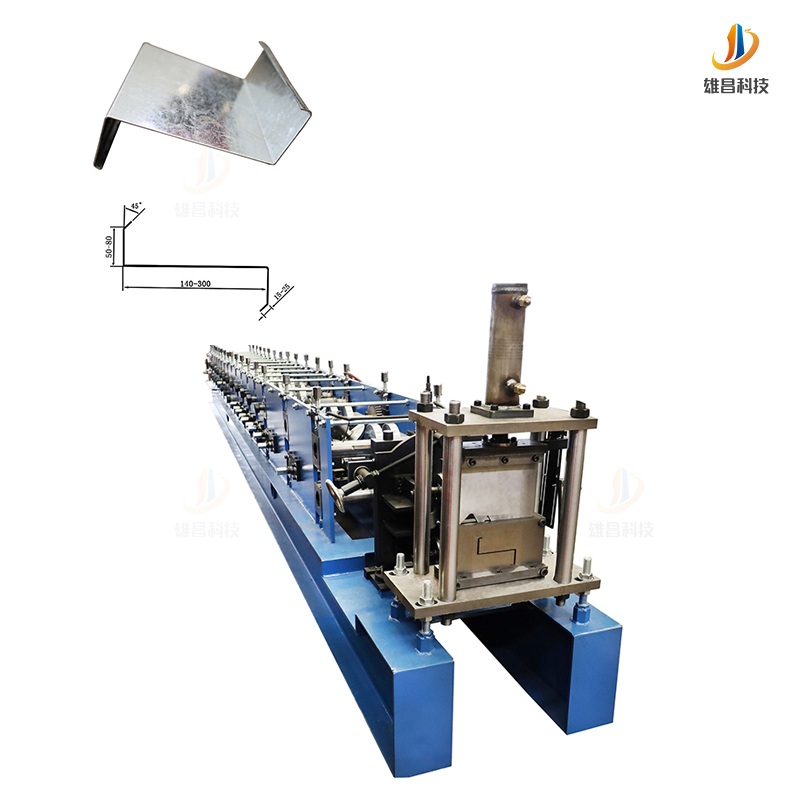
Z Purlin Cold Roll Forming Machine
A dedicated Z-section line with lapping capability for continuous purlin runs on long-span roofs and wall girts.
View Details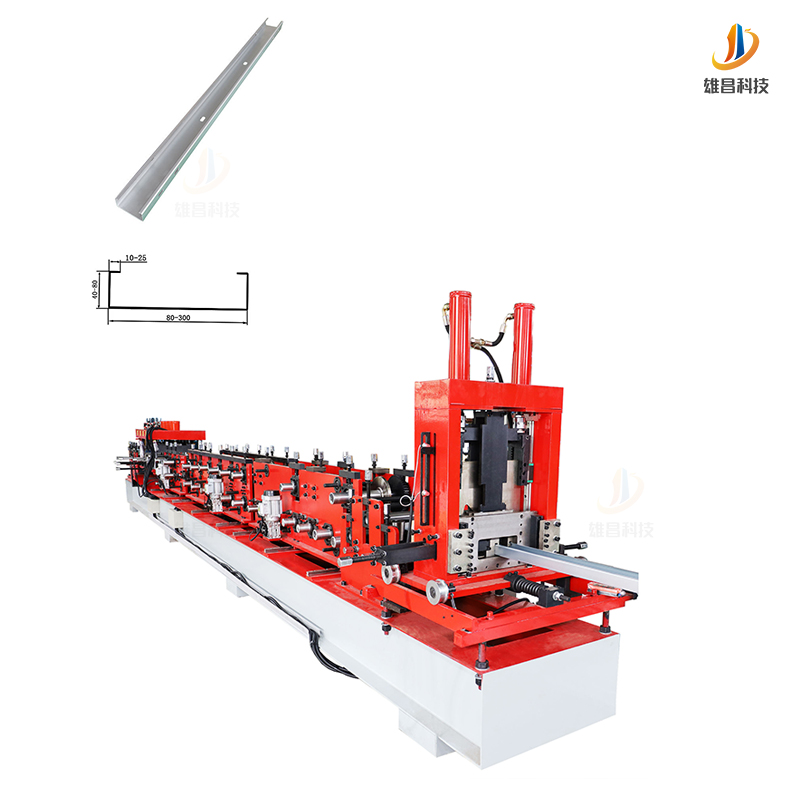
Metal C Purlin Roll Forming Machine
Continuous, fully automatic C-section production with PLC length control and hydraulic punching for bolt holes.
View Details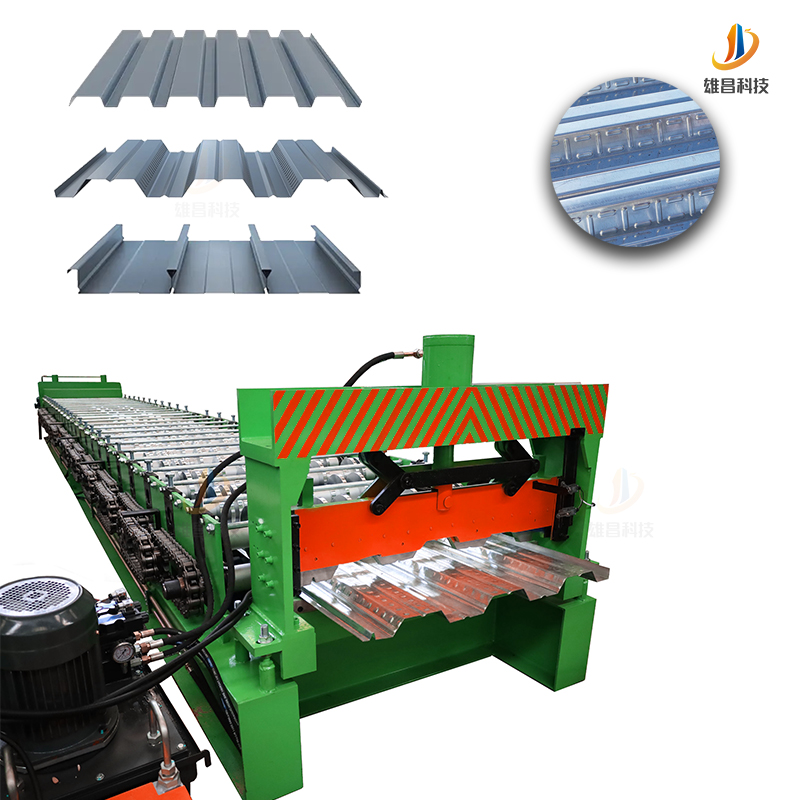
Steel Floor Deck Roll Forming Machine
This line converts galvanized coil into composite floor decking. Embossing rolls create the mechanical bond with concrete, and a heavy-duty frame holds deck depth and cover width over long production runs.
- Typical Material: Galvanized steel, 0.7–1.5 mm
- Key Feature: Embossing for concrete bond
- Frame: Heavy-duty welded or cast stands
- Cutting: Profile-matched hydraulic blade
Compare Roll Forming Machines Before You Request a Quote
Quotes are only comparable when the specifications are. Use these indicative ranges and the key check for each machine type to judge any supplier’s offer, including ours.
| Machine Type | Typical Coil Thickness | Forming Stations | Typical Line Speed | What to Verify in a Quote |
|---|---|---|---|---|
| Trapezoidal / IBR Roofing | 0.3–0.8 mm | 16–22 | 15–30 m/min | Roller material and chrome thickness; shaft diameter |
| Corrugated Roofing | 0.3–0.6 mm | 18–24 | 15–30 m/min | Wave pitch accuracy and edge waviness on thin coil |
| Glazed Step Tile | 0.3–0.7 mm | 12–18 | 3–6 m/min | Press-station cycle and step-depth consistency |
| Standing Seam | 0.4–0.8 mm | 12–20 | 10–20 m/min | Seam system compatibility and panel width adjustment |
| C/Z Purlin | 1.5–3.0 mm | 14–20 | 10–20 m/min | Size-change method (manual or automatic) and punching dies |
| Floor Deck | 0.7–1.5 mm | 20–30 | 10–15 m/min | Embossing pattern and frame rigidity for deck depth |
Ranges reflect typical XC configurations for reference only. Final parameters are engineered to your profile drawing, material yield strength, output target and site power supply.
From Voltage to Documentation: Reducing Installation Risk
A machine that arrives without the right voltage, manual language or safety documentation is not a low-cost machine. It is a delayed project. Localization should be specified before shipment, not fixed after arrival.
Power & Control Localization
Motors, hydraulic stations and control cabinets are configured to your site voltage and frequency, for example 220V, 380V, 415V or 440V at 50Hz or 60Hz, with HMI language options for operators.
Compliance File
English manuals, electrical diagrams, component information, guarding details and maintenance schedules can be prepared for your internal risk assessment. Confirm CE, UL/CSA or local requirements at quotation stage.
Remote & On-Site Commissioning
XC provides English manuals and electrical diagrams, remote video guidance for installation and commissioning, on-site engineer service on request, and spare-parts supply such as blades, bearings and electrical components.
Lead Time & Logistics
Standard roofing sheet lines are commonly ready within 30 to 45 working days after drawing confirmation. Purlin, floor deck, double layer and fully customized lines may take longer. The confirmed schedule is stated in each proposal.
Localized Application Scenarios: Six Industries, One Forming Expertise
The same forming discipline serves industries far beyond roofing. These scenarios show where IBR, purlin, deck and light-gauge lines create measurable production value.

Architecture & Building Materials
Roofing sheets, wall cladding, standing seam panels, floor decking and C/Z purlins. These are the core profiles of modern steel buildings, warehouses and residential projects.

Automobile Manufacturing
Roll formed structural rails, door frame sections and reinforcement beams. Here, repeatable cross-sections and tight length tolerances feed directly into automated assembly.

Home Appliances, Kitchen & Bath
Appliance side panels, cabinet frames and trim profiles formed from pre-painted or stainless coil. Surface protection during forming matters as much as dimension.

Transportation
Container panels, truck body sections, railway car profiles and highway guardrails. These are long, heavy-gauge parts that need rigid stands and accurate cut-off.

New Energy
Solar PV mounting rails, strut channels and support brackets. These high-volume parts benefit from inline punching and fast size changeover.

Furniture & Office Equipment
Shelving uprights, racking beams, cabinet frames and partition studs. Consistent hole pitch and straightness make on-site assembly fast and safe.
Technology Roadmap and Future Outlook 2026–2030
The next competitive step is not simply more stations. It is a forming line that changes faster, reports more clearly and protects coating quality while using less energy and less operator guesswork.
Automation & Quick Change
Servo-driven size adjustment, cassette roll sets, automatic spacer control and inline punching will reduce changeover time for distributors serving several regional profiles.
Digitalization & Remote Diagnostics
PLC data capture, OEE dashboards, fault logging and secure remote support can shorten troubleshooting and make preventive maintenance measurable.
Coating-Safe & Sustainable Forming
Thinner high-strength steels, better flower patterns and controlled lubrication help protect zinc and paint, reduce scrap and support recyclable steel construction.
Modular & Mobile Lines
Containerized or skid-mounted lines can support regional micro-factories and projects far from central plants. The design priority is fast commissioning and stable profile quality.
Buyers should ask three roadmap questions now: Can the PLC and HMI be upgraded? Are spare-part and wiring diagrams complete? Can the line be localized for a second factory or language later?
From Profile Drawing to First Panel
A transparent five-step process, so overseas buyers know exactly what happens and when.
Profile & Coil Review
Send your drawing, sample or photo plus coil data. Engineers check that the profile can be formed and flag any risks.
Roll Pass Design & Proposal
You receive the station count, roller material, drive and cutting system, power configuration and a confirmed schedule.
Manufacturing & QC
Frames, shafts and rollers are machined and assembled in-house, with inspection at each critical stage.
Trial Run & Acceptance
The line runs with coil matching your specification. Samples are measured, and a video report is shared for approval.
Shipping & Commissioning
Export packing, documentation, then remote or on-site installation and operator training.
Field Knowledge from Our Engineers

Roll Forming Advantages and Applications
Why continuous roll forming beats press braking for long, consistent profiles, and which industries gain the most from it.

Bearing Damage in Multi-Stand Roll Forming Stations: The Hidden Cause of Roll Runout
Six root causes of bearing failure, the diagnostic checks to run first, and how they show up as strip tracking loss and coating defects.

Zinc & Color Coating Cracking at Bending Zones: Root Causes and Fixes
From bend radius to roll pass design, this article explains what makes coatings crack at the bend line and how coating-safe forming prevents it.
Questions Overseas Buyers Ask Us Most
Straight answers based on the projects we deliver every year. Need a detail not covered here? Our engineers reply directly.
What information do I need to send for an accurate roll forming machine proposal?
Send your profile drawing or a photo of a sample panel, material type (PPGI, GI, Galvalume or black steel), thickness range, yield strength, coil width, required output per shift, and your local voltage and frequency. With these details our engineers can define the number of forming stations, roller material, cutting system and motor power.
Can XC build a roll forming machine for a local or non-standard profile?
Yes. Most XC machines are built to order. Our engineers develop the roll pass design (flower pattern) from your drawing or sample, so regional profiles such as IBR, Tuff-Rib, Klip-Lok style or Spanish-style tiles can be matched closely.
How is machine quality verified before shipment?
Every line is assembled and test-run in our factory with coil that matches your specification. Sample panels are measured against your drawing, and a trial-run video plus inspection photos are shared for your approval before packing.
What is the typical lead time for a roll forming machine?
Standard roofing sheet lines are commonly ready within 30 to 45 working days after drawing confirmation. Purlin, floor deck, double layer and fully customized lines may take longer. The confirmed schedule is stated in each proposal.
What after-sales support does XC provide to overseas buyers?
XC provides English manuals and electrical diagrams, remote video guidance for installation and commissioning, on-site engineer service on request, and spare parts supply such as blades, bearings and electrical components.
Can machines be configured for my local power supply?
Yes. Motors, hydraulic stations and control cabinets are configured to your site voltage and frequency, for example 220V, 380V, 415V or 440V at 50Hz or 60Hz, with HMI language options for operators.
How should buyers compare China IBR roofing machine factories beyond price?
Compare roll pass design capability, in-house machining, shaft and roller material, cutting accuracy, factory test evidence, documentation package, local power configuration and response time for spare parts. A low quote with undefined roller hardness, missing guarding details or no trial-run video is not comparable to a fully specified line.
What is the biggest hidden cost in an IBR line?
It is usually not the steel frame. It is unplanned downtime and scrap caused by poor strip tracking, coating damage, inconsistent cut length or slow size changeover. Buyers should calculate cost per good panel, not only purchase price.
Get the Technical Catalog Before You Compare Suppliers
Get our full catalog with machine layouts, technical specifications and profile options. It is the fastest way to brief your team and compare suppliers. Send your profile drawing, coil data, output target, voltage and frequency, and required documentation so our engineers can review the line architecture with you.
Sichuan Xiongchang Technology Co., Ltd. (XC)
Location: Sichuan, China
Tel / WhatsApp / WeChat: +86 180 3060 6697
Email: [email protected]
Global supply: Roofing, standing seam, purlin, floor deck and light-gauge steel lines, with remote and on-site commissioning support.
China IBR & Roll Forming Machine Products: Final 8
Compare complementary machines for standing seam, purlin, deck, corrugated roofing and Tuff-Rib / AG panel production. Every product URL is preserved for direct technical review.







