What Are the Top Cold Roll Forming Machine Types in 2026?

Time:2026-11-26 Author:Oliver
0%

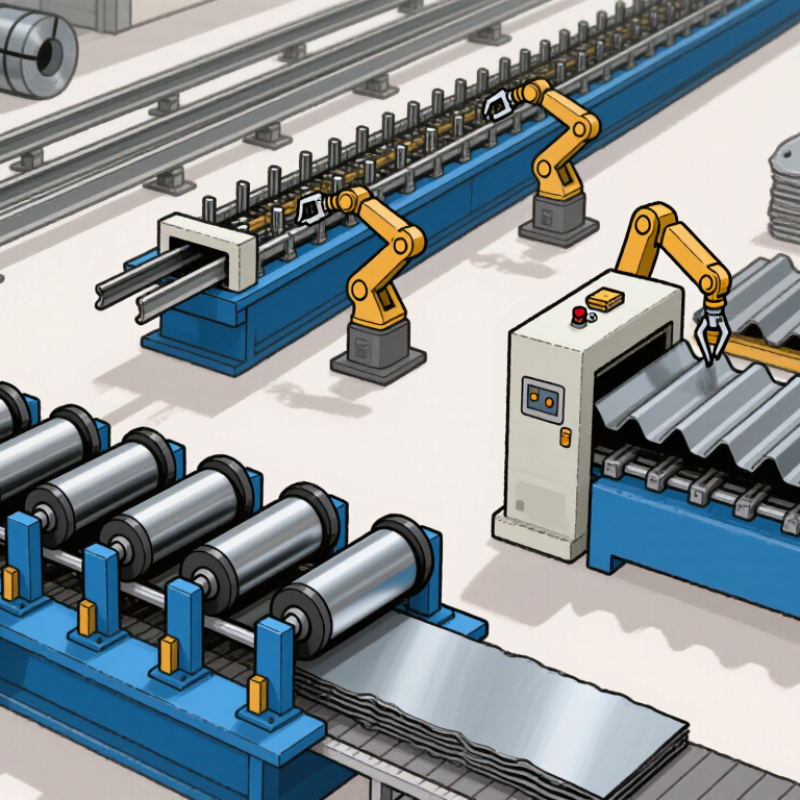
A Cold Roll Forming Machine converts flat metal coil into a continuous profile through a sequence of carefully shaped rollers. In 2026, buyers can choose from machines designed for purlins, roofing panels, steel studs and tracks, cable trays, guardrails, and custom sections. Each type serves a different production task. A roofing line, for example, may need quick profile changes, while a purlin machine must handle heavier material and maintain consistent dimensions.

The right choice depends on the profile, metal thickness, coil width, expected output, and available floor space. Automation matters too. Some lines include automatic cutting, punching, and stacking; others keep these operations separate to reduce upfront cost or simplify maintenance. Ask suppliers for sample parts and production data, not just impressive speed figures. Check how changes in material affect finished dimensions. Small variations can cause fit problems on site.

There is no universal winner. The best machine is the one that matches your product mix and production goals. That distinction is easy to miss. This guide compares the leading machine types, their typical applications, and the practical trade-offs behind each option. It also considers tooling, changeover time, and support after installation. Specifications can look convincing on paper, yet real production brings surprises. Some details deserve a second look. Use the comparisons to prepare better questions before requesting quotes or planning a new line.
What Are the Top Cold Roll Forming Machine Types in 2026?

Cold Roll Forming Basics: Roll Stands, Forming Passes, and Strip-Gauge Capacity

A roll forming line shapes a continuous metal strip through successive roll stands. Each stand makes a small change, guiding the strip toward the finished profile. More forming passes may help with tight bends or complex shapes, but pass count alone does not guarantee accuracy. Roll geometry, stand spacing, material strength, and alignment all matter. A poorly supported strip can twist before the final stand.

Strip-gauge capacity is not one fixed number for every profile. Thicker or stronger steel needs greater forming force, while narrow flanges and sharp bends can increase the risk of distortion. Check the machine’s rated thickness alongside its allowable strip width, shaft capacity, and profile requirements.

The World Steel Association’s World Steel in Figures 2024 reports 1,892.2 million tonnes of crude steel production in 2023. That scale underscores why consistent processing matters, but it does not define any machine’s gauge limits. A tidy pass schedule can still fail in production; real material trials are essential.

Tips: Request a sample run using your actual steel grade and thickness. Measure the first, middle, and final sections for profile height, flange angle, and twist. Keep a record of adjustments. Small setup changes can have surprising effects.

Stud-and-Track Lines: ASTM C645 and C955 Steel-Framing Requirements

What Are the Top Cold Roll Forming Machine Types in 2026?
Stud-and-Track Lines: ASTM C645 and C955 Steel-Framing Requirements

Stud-and-track roll forming lines shape galvanized steel into consistent studs and tracks for building frames. ASTM C645 covers nonstructural steel framing members, while ASTM C955 addresses load-bearing members. The distinction matters. A machine’s tooling, feeding system, and punching pattern should suit the intended profile and project requirements. Neither standard is a machine setting; compliance also depends on the steel, finished dimensions, and applicable installation requirements.

During setup, check web and flange dimensions, lip geometry, punch locations, and cut lengths against approved drawings. Inspect sample pieces at startup, then repeat checks during production. A smooth-looking profile can still have a misplaced punch or a slight twist. It is easy to over-focus on line speed; that can be a mistake. Keep material certificates and inspection records, and verify the current standard editions and project specifications before production.

Tips: Label sample parts by coil and setup. Measure more than one piece. If results drift, pause and investigate before increasing output.

Stud-and-Track Roll Forming Lines: ASTM C645 vs. ASTM C955

A standards-based comparison of commonly cited minimum base-steel thicknesses for nonstructural and structural framing members.

Values are rounded from commonly cited minima: 0.0179 in (about 18 mil) for ASTM C645 and 0.0329 in (about 33 mil) for ASTM C955. These are framing-member benchmarks, not machine capacity specifications; verify the applicable standard edition and project requirements.

Roofing and Wall-Panel Lines: ASTM A653 Coated-Steel Coil Compatibility

Roofing and wall-panel lines need coil that forms cleanly without cracking its protective coating. ASTM A653/A653M covers hot-dip zinc-coated steel sheet and defines coating designations. For example, G90 denotes a triple-spot coating mass of 0.90 oz/ft², or about 275 g/m², across both surfaces. Check the coil certificate, thickness, and coating designation before setting the roll gap.

Small details matter. Excessive roll pressure, misaligned guides, or sharp entry edges can mark the zinc layer. Keep coil edges free of burrs, and inspect the first formed panel under good lighting. ASTM’s coating designation is not a guarantee that every line setup will prevent surface damage. It is a material reference, not a machine-setting recipe. The World Steel Association’s World Steel in Figures 2025 reports 1,882.6 million tonnes of crude-steel production in 2024; that figure indicates industry scale, but does not measure coated-coil use. A practical gap remains: operators must confirm forming performance with the actual coil lot, since coating condition and sheet properties can vary. Start with a short trial run. Check the ribs, laps, and cut edges before full production.

C/Z Purlin Lines: Profile Geometry, Gauge Capacity, and Changeover Design

C and Z purlin lines form similar-looking sections, but their geometry serves different framing needs. C sections have flanges facing one direction; Z sections have opposing flanges that can overlap at supports. That overlap can simplify continuous roof runs, provided the dimensions and connection details match the design. On the shop floor, check web depth, flange width, lip size, and hole locations against actual drawings. Small profile changes matter.

Gauge capacity is more than a thickness number on a machine specification. Steel grade, coil width, profile depth, and roll design all affect forming load and finished shape. A line may process thin material smoothly yet struggle with heavier stock or tight bends. Ask for sample runs using the intended material, then inspect flange angles, twist, and camber. Measure twice. A tidy sample does not guarantee every coil behaves the same.

Changeover design determines how practical a combined C/Z line is during a busy shift. Some systems adjust forming stations; others require tooling changes or repositioning components. Look for clear setup references, accessible adjustment points, and repeatable settings for both profiles. Record changeover time with operators, not just from a brochure. The awkward detail is often alignment after adjustment. If hole punching moves with the profile, verify its position again before production.

Guardrail Lines: AASHTO M 180 Requirements for Corrugated Steel Beam Rails

For a guardrail line, the roll former must produce corrugated steel beam rails that match the project specification, not merely look consistent. AASHTO M 180 addresses key requirements for these rails, including material, dimensions, coating, workmanship, and testing. The applicable edition and road authority requirements should be checked before production begins. Small differences matter.

During setup, operators can inspect the rail’s corrugation, hole locations, and overall profile against approved drawings. A poorly placed hole may complicate field installation, even when the beam appears straight. Coating also deserves close attention: verify the specified coating type and required coverage, then check for damage after forming and handling. These checks create useful records for quality review.

A reliable production plan links incoming steel certificates, machine settings, sample measurements, and finished-part inspections. Keep measurements traceable to the relevant specification and sampling procedure. Still, a smooth-looking rail is not proof of compliance; that assumption is easy to make on a busy shift. Recheck tooling wear and setup after adjustments, and confirm acceptance criteria with the purchasing documents. Field conditions vary, so a setup that worked yesterday may need review today.

What Are the Top Cold Roll Forming Machine Types in 2026? - Guardrail Lines: AASHTO M 180 Requirements for Corrugated Steel Beam Rails

The machine categories below describe common production-line configurations. AASHTO M 180 specifies requirements for corrugated steel beam rails; it does not prescribe a particular roll-former design, station count, or production speed.

Cold Roll Forming Machine Types

Machine type Typical product or use Relevant production details Key setup consideration
W-beam guardrail roll-forming line Two-wave corrugated beam rail commonly used in roadside barrier systems. A common nominal profile is about 12.25 in (311 mm) wide and 3.25 in (83 mm) deep. Common sheet gauges include 12 gauge (about 2.67 mm) and 10 gauge (about 3.43 mm). Set roll tooling, feed, cutoff, and hole locations to the approved product drawings and specified material thickness.
Thrie-beam guardrail roll-forming line Three-wave corrugated beam used where the specified barrier design calls for a deeper rail profile. A common nominal profile is approximately 20 in (508 mm) wide and 3.25 in (83 mm) deep; actual dimensions and tolerances depend on the governing specification and approved drawing. Use profile-specific tooling. Do not assume W-beam tooling or punching patterns can produce a compliant thrie-beam rail.
Flexible W-beam / thrie-beam line A production line configured to make more than one beam profile using changeover tooling or separate forming sections. Profile widths, corrugation geometry, material thickness, and hole patterns differ by product. Confirm that each setup has its own validated tooling, guides, punch program, and quality checks.
Inline punching and slotting line Produces bolt holes, slots, or other specified openings before or during forming. Opening dimensions and locations are drawing- and system-specific; there is no single universal hole pattern for every guardrail installation. Control punch position relative to the rail ends and profile, and verify the pattern against the approved project drawings.
Cut-to-length and end-processing line Cuts formed rail to specified lengths and may include end shaping or related finishing operations. Rail length and end details are determined by the product design and project requirements, rather than one universal length. Check cut-length accuracy, end condition, and compatibility with the specified splice and terminal details.

AASHTO M 180: Manufacturing and Inspection Reference Points

Requirement area Reference information Practical production check
Scope AASHTO M 180 covers corrugated steel beam rail elements for highway guardrail applications. Confirm the applicable M 180 edition, project specification, and approved rail drawings before production.
Beam profile and dimensions The required beam configuration, dimensions, and permitted tolerances must follow the applicable specification and approved product details. Inspect profile geometry and dimensions using the acceptance criteria in the governing documents; nominal examples are not substitutes for those criteria.
Base steel and thickness Steel type, grade, thickness, and related requirements depend on the applicable M 180 provisions and purchase documents. Common guardrail products include 12-gauge and 10-gauge material. Check material certifications and measure incoming and finished material as required by the specified acceptance procedure.
Zinc coating class M 180 includes Class A and Class B zinc-coating designations. Commonly cited minimum coating weights are 1.8 oz/ft² (about 550 g/m²) for Class A and 3.6 oz/ft² (about 1,100 g/m²) for Class B, expressed as total coating on both sides. Verify the applicable edition and measurement basis. Confirm the ordered class and verify coating weight and coverage using the test method and acceptance requirements specified for the project.
Holes, slots, and splice details Hole and splice arrangements must match the specified rail design and approved drawings. Verify hole size, location, spacing, and alignment after punching and forming.
Protective coating after fabrication The specified coating and fabrication sequence must comply with the governing requirements; requirements may differ depending on whether material is coated before or after fabrication. Check formed surfaces, cut edges, punched areas, and any specified repair or coating provisions against the applicable standard and project documents.
Barrier performance qualification M 180 material compliance alone does not establish that a complete barrier system meets a particular crash-test performance level. System selection and performance criteria are addressed by the applicable roadway safety requirements. Use the barrier configuration approved for the project, including compatible posts, spacers, terminals, connections, and installation details.

Note: Values described as common nominal dimensions or coating weights are reference points, not a substitute for the current applicable AASHTO M 180 edition, project specifications, material certifications, and approved drawings.

FAQS

What is the difference between ASTM C645 and ASTM C955?

C645 covers nonstructural steel framing members. C955 addresses load-bearing members. That distinction matters. Machine setup alone does not establish compliance.

What should operators inspect when setting up a stud-and-track line?

Check web and flange dimensions, lip geometry, punch locations, and cut lengths against approved drawings. Inspect samples at startup and during production.

Why can a good-looking stud still have a problem?

A smooth profile can hide a misplaced punch or slight twist. Appearance is not enough. Measure the part.

What should the team do when dimensions drift?

Pause and investigate before increasing output. Compare measurements with setup records and approved drawings. I sometimes focus too much on line speed.

How do C and Z purlins differ?

C-section flanges face one direction. Z-section flanges face opposing directions and may overlap at supports. Confirm dimensions and connection details.

What affects a purlin line’s gauge capacity?

Steel grade, coil width, profile depth, and roll design affect forming load. Test the intended material. Inspect flange angles, twist, and camber.

What should operators check when changing between C and Z profiles?

Review adjustment access, setup references, and repeatability. Some lines adjust forming stations; others require tooling changes or component repositioning. Record changeover time with operators.

What should be rechecked after a profile change?

Verify alignment and hole positions before production. Label samples by coil and setup. One tidy sample may not represent every coil.

Conclusion

A Cold Roll Forming Machine shapes continuous steel strip through a sequence of roller stations, with the number of forming passes and the machine’s strip-gauge capacity selected to suit the required profile. Understanding these fundamentals helps buyers compare equipment for different applications and assess whether a line can maintain consistent dimensions and production quality.

In 2026, common machine types include stud-and-track lines designed around framing profiles and relevant ASTM C645 and C955 requirements; roofing and wall-panel lines suited to compatible ASTM A653 coated-steel coils; and C/Z purlin lines that balance profile geometry, gauge range, and changeover needs. Guardrail lines form corrugated steel beam rails, with design and production considerations guided by AASHTO M 180. The right choice depends on the intended product, material specifications, profile complexity, and desired flexibility.

Oliver

Oliver

Oliver is a seasoned marketing professional with a wealth of expertise in driving brand awareness and engagement. With a deep understanding of our company's product offerings, he consistently delivers high-quality content that enriches our professional blog. His insights not only shed light on......